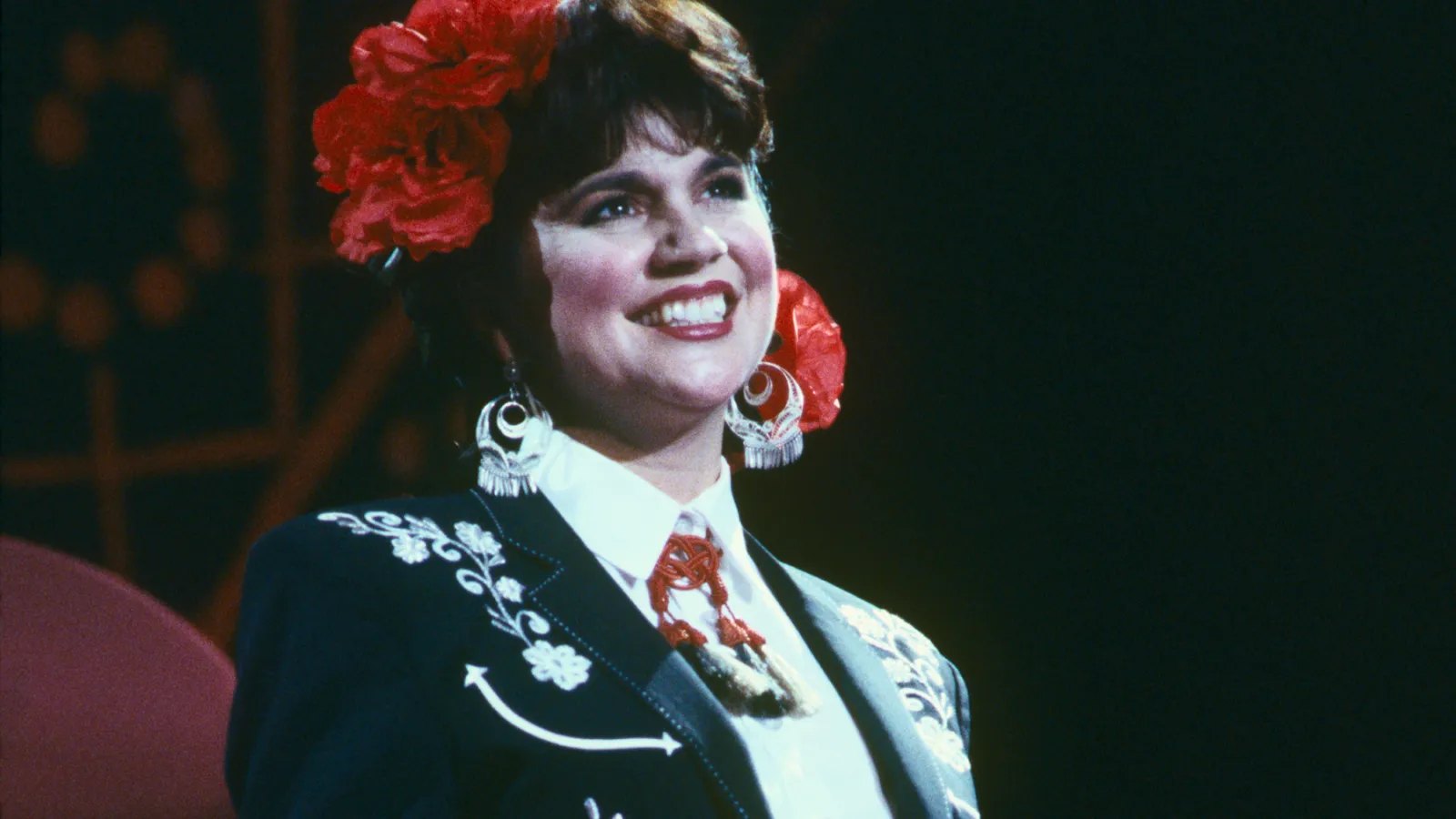
On “Hurt So Bad”, Linda Ronstadt sings heartbreak like a dare, balancing ache, force, and flawless control. In the sharper, nervier world of Mad Love, that precision became the sound of her 1980 reinvention.
When Linda Ronstadt released “Hurt So Bad” from Mad Love in 1980, it did far more than become another hit. The single rose to No. 8 on the Billboard Hot 100, while Mad Love itself reached No. 3 on the Billboard 200, and together they confirmed something important at the start of a new decade: Ronstadt could step into a harder, tighter, more contemporary rock-pop sound and still cut straight to the emotional center. That was not a small achievement. By 1980, radio was changing, the edges were getting sharper, and artists who had ruled the previous decade often sounded as if they were trying to catch up. Ronstadt did not sound like she was chasing a trend. She sounded as if she had simply found a new blade for an old wound.
That is why “Hurt So Bad” matters so much in her catalog. Written by Teddy Randazzo, Bobby Hart, and Bobby Weinstein, and first made famous by Little Anthony and the Imperials in 1965, the song already carried deep pop history before Ronstadt touched it. But her version is not a museum piece, and it is not a nostalgic retread. She takes the song’s original ache and puts it under pressure. The arrangement on Mad Love is leaner, more urgent, less cushioned by softness. Instead of drifting through sorrow, Ronstadt attacks it with startling precision. The result is a performance that feels both disciplined and dangerously exposed, as if every note had to cross a wire suspended over open air.
Listen closely to the way she shapes the title phrase, “Hurt So Bad”. This is where the performance reveals its real genius. She does not simply emote. She controls the rise into the line, tightens the consonants, then releases the vowel just enough to let the hurt bloom without turning sentimental. It is a master class in vocal calibration. Many singers can convey pain by breaking apart. Ronstadt does something rarer: she conveys pain while staying in command of every syllable. That tension between control and feeling is what gives the record its sting. The heartbreak is not vague or dreamy. It is immediate, clear-eyed, almost physical.
The meaning of the song has always been devastatingly simple. It is about the kind of love that does not heal by staying close to it. The singer knows that remaining in the presence of the beloved will only deepen the wound. There is dignity in that realization, but there is no peace in it. Ronstadt understands that contradiction perfectly. She sings the lyric not as a melodramatic collapse, but as a fierce act of recognition. That choice is everything. In her hands, the song becomes less about self-pity and more about the brutal intelligence of the heart, the moment when someone knows exactly what is damaging them and still feels the pull. Few singers have ever been better at embodying that kind of emotional double truth.
Mad Love is essential to this story because the album gave “Hurt So Bad” its setting. During the 1970s, Linda Ronstadt had already become one of the defining voices in American popular music, moving through country-rock, pop, balladry, and standards with unusual grace. But Mad Love, produced by Peter Asher, carried a tauter, more modern energy. The guitars were more clipped, the pulse more restless, the atmosphere less sunlit than some of her earlier records. It was a reinvention, yes, but not an abandonment of self. What she preserved was the core of her artistry: immaculate phrasing, emotional honesty, and a refusal to fake feeling. If anything, the stiffer musical frame made her gifts more visible. There was less room to hide behind atmosphere, and she did not need any.
That is why calling this a great vocal is still somehow not enough. It is a great vocal because of the range, of course, and because of the sheer athletic confidence with which Ronstadt scales the song’s peaks. But it is even greater because she never lets the athleticism become the point. The high notes are thrilling not because they are high, but because they feel necessary. Every ascent sounds tied to meaning. Every held note sounds like resolve meeting vulnerability in real time. That is the “high-wire” quality people still hear in the record. One wrong move and the performance would become too polished, too showy, too detached. Ronstadt never makes that wrong move. She keeps the balance all the way through.
There is also a deeper reason the record still lands with such force. In retrospect, “Hurt So Bad” captures the exact place where classic pop craftsmanship and modern rock tension briefly met in perfect proportion. Ronstadt had always respected the architecture of a song, but on Mad Love she sang with a new edge, as if the emotional weather had changed. That made the old theme of romantic pain sound newly dangerous. The song was familiar, yet suddenly it felt contemporary again. This was one reason it became a Top 10 hit instead of merely a tasteful cover. It reached people not as a tribute to the past, but as a living performance charged by the anxieties and tempo of 1980.
In the end, Linda Ronstadt’s “Hurt So Bad” endures because it proves that reinvention does not have to mean losing yourself. Sometimes it means revealing your strengths under harsher light. On Mad Love, Ronstadt did exactly that. She took an already beloved song, tightened its emotional screws, and sang it with such exactness that the ache still feels fresh decades later. Plenty of hit records survive because they remind us of a time. This one survives because the performance still feels dangerous in the best way. It still sounds like a singer standing at the edge of feeling, refusing to fall, and somehow making that refusal hurt even more.
