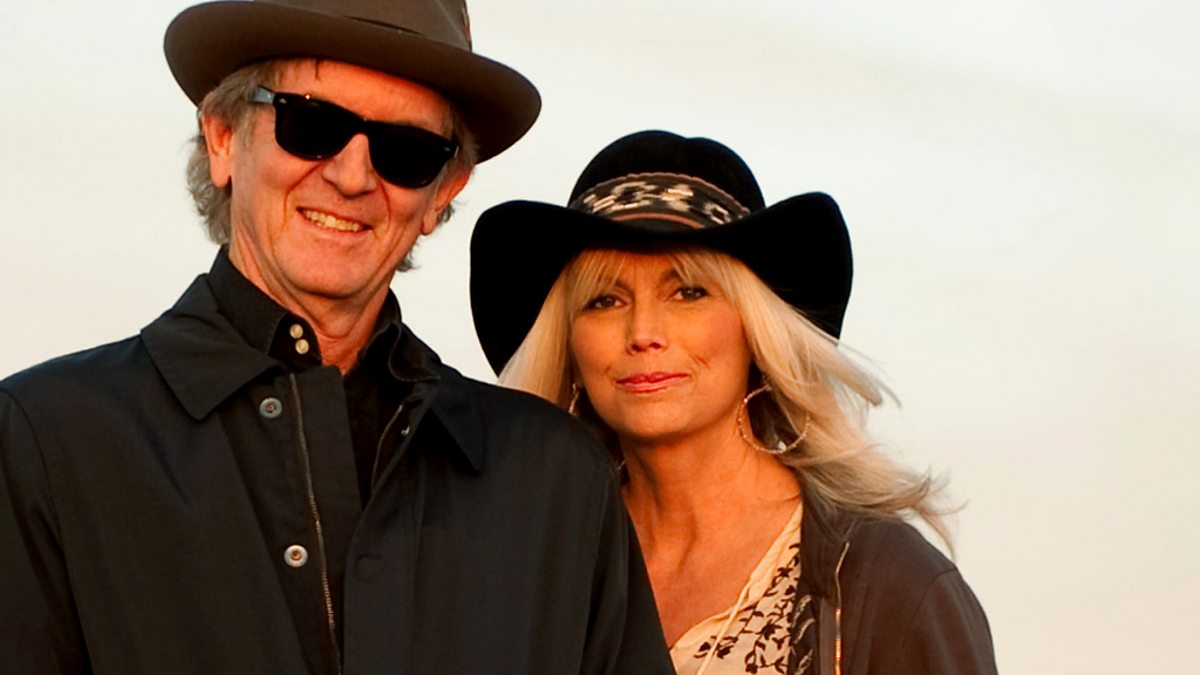
Wrecking Ball was the moment Emmylou Harris stopped preserving her past and began singing from a deeper, darker place, with Daniel Lanois giving that change its haunted, unforgettable shape.
When Emmylou Harris released Wrecking Ball in 1995, it did not arrive as a simple continuation of the sound that had made her one of the most beloved voices in country and roots music. It felt like a turning point, a quiet but unmistakable declaration that an artist with nothing left to prove could still surprise the world. The album reached No. 73 on the Billboard 200, a respectable showing for such an unconventional record, but its true importance was never going to be measured only by chart numbers. Wrecking Ball became the record that reintroduced Harris not as a custodian of tradition, but as a restless, fearless interpreter willing to walk into the shadows and sing from there.
That transformation had everything to do with the creative partnership between Emmylou Harris and producer Daniel Lanois. By the mid-1990s, Harris had already lived several artistic lives. She had honored country roots, folk storytelling, cosmic American music, and the elegant ache of balladry. But popular country radio was changing, and many artists of her generation were being pushed toward the margins. Instead of resisting time, Harris made a bolder choice: she changed. She sought out Lanois, already known for his atmospheric work with U2, Peter Gabriel, and Bob Dylan, and together they built an album that sounded like dusk settling over an open road.
Lanois did not bury Harris beneath production. He reframed her. That is the crucial difference. On Wrecking Ball, the echo, the misty guitars, the distant drums, and the low-burning ambience were never there to overpower her voice. They were there to reveal new colors inside it. The voice that had once floated so cleanly through traditional country arrangements now seemed to hover in half-light, wiser and more weathered, but if anything more intimate. It is one of the most moving aspects of the album: Emmylou Harris did not lose herself in reinvention. She found a more elusive, more spiritual version of herself.
The title track, written by Neil Young, set the emotional tone immediately. In Harris’s hands, “Wrecking Ball” became less a rock song than a meditation on endurance, impact, and the strange force of love and memory. From there, the album unfolded like a collection of letters written in the middle of the night. Songs such as “Goodbye” by Steve Earle, “Orphan Girl” by Gillian Welch, “Sweet Old World” by Lucinda Williams, “Every Grain of Sand” by Bob Dylan, and “All My Tears” by Julie Miller gave Harris a sequence of texts about longing, separation, grace, fatigue, and quiet perseverance. She was not merely covering great songwriters. She was curating a worldview.
That is one reason Wrecking Ball remains such a pivotal album. Its meaning lies not in one storyline, but in the atmosphere created by the songs together. This is music about surviving change without hardening, about carrying sorrow without surrendering to it, about accepting that beauty often arrives wrapped in loss and uncertainty. Many albums promise maturity; this one actually sounds lived-in. There is no rush in it, no need to flatter the listener, no attempt to chase fashion. Even in 1995, it felt slightly outside of time.
There is also something quietly courageous about when this record appeared in Harris’s career. Reinvention is often celebrated when it happens early, when youth makes risk look glamorous. It means something different later on. By the time she made Wrecking Ball, Emmylou Harris was already a revered figure. She could have continued to make fine records in the expected mold and no one would have blamed her. Instead, she made an album that asked her audience to meet her in a new place. That kind of artistic confidence is rare. So is the humility behind it, because Harris approached these songs as a listener first, as someone still searching.
The recording context matters deeply here. Daniel Lanois brought not just sonic texture, but a sense of space. The album feels as though it was recorded in the company of silence, memory, and weather. Instruments do not simply accompany; they drift, glow, tremble, and recede. The arrangements leave room for mystery. That production style gave Harris a new dramatic frame, one that leaned away from polished genre boundaries and toward something more dreamlike and elemental. It was still rooted in American songcraft, but it breathed like art rock, folk meditation, and country lament all at once.
In the years since, Wrecking Ball has only grown in stature. It earned Emmylou Harris a Grammy for Best Contemporary Folk Album and opened the door to the adventurous later chapter of her career, including records that continued to value mood, language, and emotional risk over easy classification. Its influence can be heard in countless roots and Americana recordings that followed, especially in the way older forms of song were allowed to live inside modern, atmospheric production without losing their soul.
What makes the album last, though, is not its influence. It is the feeling it leaves behind. Listening to Wrecking Ball now, one hears a great artist refusing to become a museum piece. One hears a voice stepping into uncertainty and sounding stronger for it. One hears Daniel Lanois understanding that reverence does not mean keeping a singer frozen in amber. Sometimes reverence means building a new room around an old truth, then letting the truth sing differently.
That is why Wrecking Ball still matters so deeply. It was not just a successful comeback, nor simply an intriguing stylistic detour. It was a reckoning, a renewal, and a reminder that the most enduring artists do not protect their legend by standing still. They protect it by risking change. In 1995, Emmylou Harris did exactly that, and the result was one of the most haunting reinventions in modern American music.
