
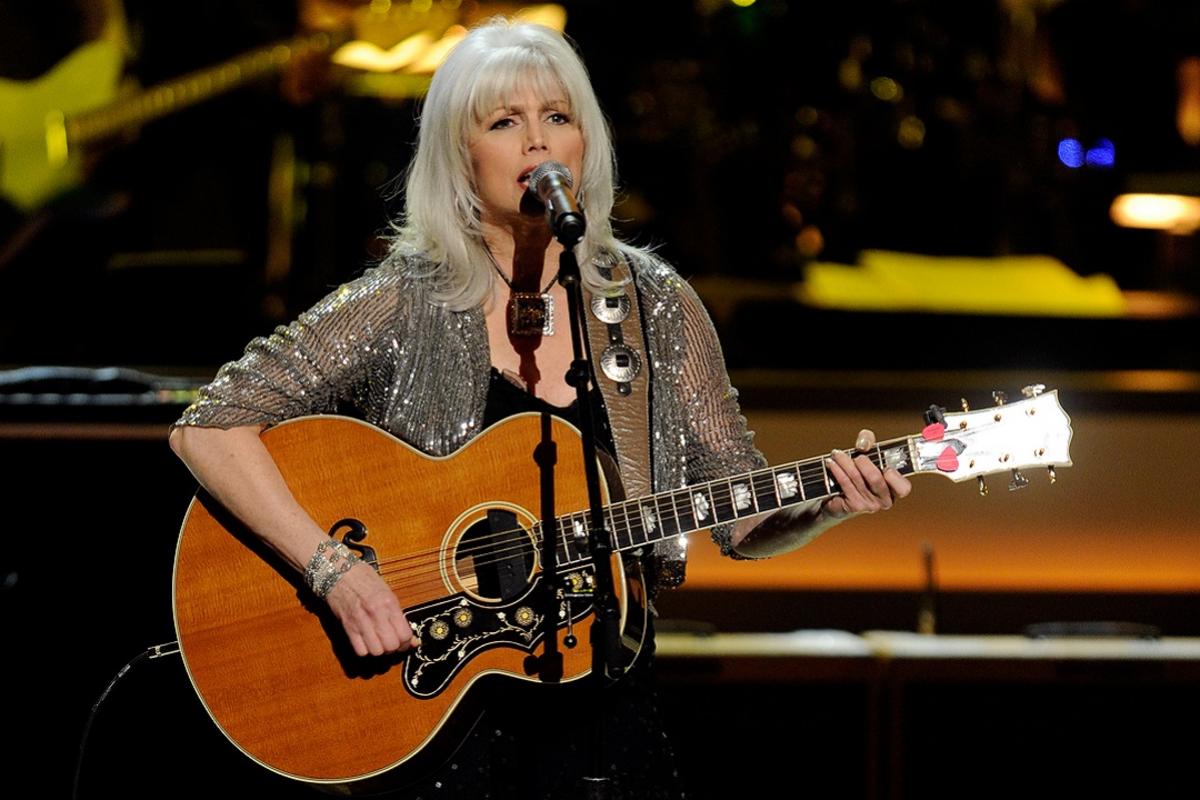
Going Back to Harlan is not simply a song about returning to a place. In Emmylou Harris’ hands, it becomes a tender reckoning with memory, family roots, and the homes that continue to live inside us long after we have left.
When Emmylou Harris recorded Going Back to Harlan for her 1995 album Wrecking Ball, she was no longer trying to prove herself to country radio. That chapter had already been written years earlier. By the mid-1990s, she was making deeper, riskier records, and this song arrived as part of one of the most important artistic rebirths of her career. Written by Anna McGarrigle, Going Back to Harlan was never a big chart single, and it did not become a Billboard country hit in the way some of Harris’ earlier recordings had. But that detail almost seems beside the point now. Some songs are made for the charts. Others are made for the soul, and this one has always belonged to the second category.
Wrecking Ball, produced by Daniel Lanois, gave Harris a new sonic landscape: spacious, shadowed, intimate, and beautifully weathered. It was a bold move at the time, and it remains one of the defining albums of her later career. The record went on to win the Grammy Award for Best Contemporary Folk Album, and its reputation has only grown with time. Within that album, Going Back to Harlan stands out as one of the most emotionally grounded performances. It does not ask for attention with a dramatic chorus or a flashy arrangement. Instead, it reaches the listener the old-fashioned way, by telling the truth quietly.
The title points to Harlan County, Kentucky, a place whose name carries the weight of Appalachian history: coal country, hard labor, family loyalty, long memory, and the ache of leaving. Even for listeners who have never been there, Harlan feels instantly familiar. That is part of the song’s power. It names one place, but it speaks to many. In that sense, Going Back to Harlan is not only about eastern Kentucky. It is about the hometown that shaped you, the family stories that marked you, and the feeling that no matter how far you travel, some part of you is always turning back.
What makes Harris’ version so moving is the way she refuses to oversing the emotion. She lets the words breathe. Her voice carries tenderness, weariness, wisdom, and a kind of clear-eyed affection that feels earned. There is no sentimentality here, and that matters. The song does not romanticize the past as some perfect lost world. Instead, it understands that home can be beautiful and burdensome at the same time. It can comfort you, and it can unsettle you. It can call you back even when you know that return is never simple.
That emotional complexity is the heart of the song’s meaning. Going Back to Harlan is about more than geography. It is about identity. It asks what we owe the places that formed us, and whether we ever fully escape them. In many songs about returning home, the journey ends with reunion or closure. Here, the feeling is more complicated than that. The past is still alive. The roads are still there. The names, the faces, the old pull of belonging all remain. Yet the person returning is no longer the same. That tension gives the song its quiet brilliance.
There is also something striking about the way Harris placed this song within Wrecking Ball. The album is filled with material that deals in spiritual endurance, emotional distance, and the search for meaning in a fractured world. Against that backdrop, Going Back to Harlan feels almost like an anchor. It is earthy and rooted, even as the production gives it a misty, dreamlike atmosphere. That contrast is one reason the performance lingers. It sounds like memory itself: vivid in feeling, softened at the edges, impossible to hold still.
For longtime admirers of Emmylou Harris, the song also reveals something essential about her gifts as an interpreter. She has always had a rare ability to choose songs that carry history inside them, then sing them in a way that makes them feel both timeless and immediate. She never treats a song as a museum piece. She finds the human center of it. On Going Back to Harlan, that center is longing, not just for a place, but for a version of the self that once lived there.
Many years after its release, the song still resonates because the world it describes has not disappeared. People still leave small towns. Families still carry the marks of work, sacrifice, pride, and silence. And all across America, there are still men and women who hear a place name in an old song and feel their whole past rise up for a moment. That is the quiet miracle of Going Back to Harlan. It takes one county, one memory-soaked return, and turns it into something universal.
In the end, perhaps that is why this song remains so beloved, even without chart glory. Emmylou Harris understood that songs do not need to be loud to last. Sometimes the ones that endure are the ones that sound like an old road at dusk, a voice in the next room, a thought you have carried for years and never quite said aloud. Going Back to Harlan is one of those songs. It reminds us that home is not always where we live. Sometimes it is simply the place inside us that never stopped calling.
