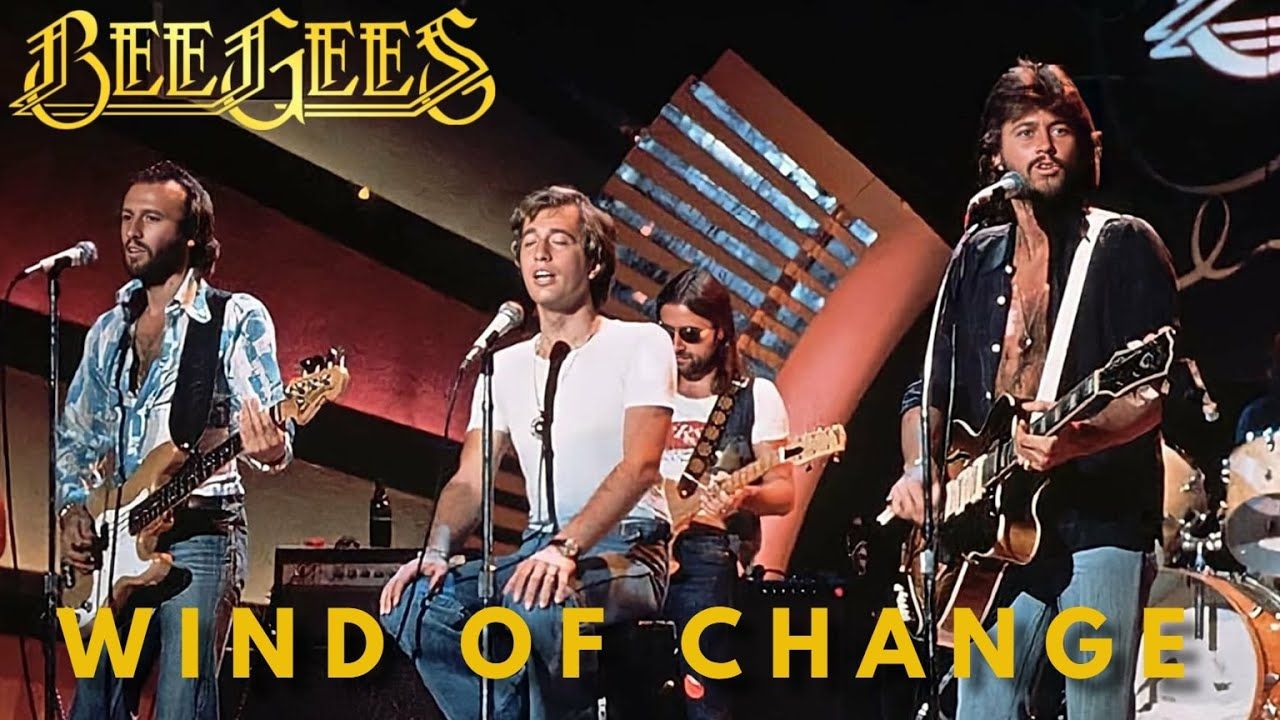
A bright, tender song from the Bee Gees’ final studio chapter, Walking On Air sounds like pure romantic lift on the surface, yet in hindsight it carries the quiet glow of a band still making elegance seem effortless.
There are songs that announce themselves with drama, and then there are songs like “Walking On Air” by the Bee Gees, which arrive with a softer grace and stay in the heart for reasons that take years to fully understand. Released on the 2001 album This Is Where I Came In, the track did not become one of the group’s major chart singles. In fact, it lived more quietly within the album, while the title song drew more public attention and helped the album reach No. 6 on the UK Albums Chart. But that modest chart profile is part of what gives Walking On Air its lasting charm. It feels discovered rather than delivered, like a private gem hidden inside the last great stretch of the Bee Gees’ studio journey together.
By the time This Is Where I Came In was released, the Bee Gees had already lived several musical lifetimes. They had been baroque-pop craftsmen, emotional balladeers, disco architects, and survivors of every fashion swing the music business could create. What makes this album so moving, and Walking On Air in particular, is that it does not sound like a group chasing relevance. It sounds like brothers who still believed in melody, harmony, and emotional clarity. There is no strain in it, no need to prove anything. The song simply floats.
That floating quality is the very heart of its meaning. Walking On Air is, on one level, a love song about emotional lift, about that almost impossible feeling of being carried above ordinary life by affection, warmth, and connection. The title itself suggests weightlessness, but the song is not naïve. This is not teenage fantasy. It feels more mature than that, more knowing. The joy here is not wild or reckless. It is calm, assured, and deeply melodic, as if the song understands that love can be both exhilarating and steady at the same time. That is one of the most appealing things about late-period Bee Gees music: even when they sing of happiness, there is life experience in the phrasing.
Musically, the record carries the polished pop craftsmanship that the Gibbs had mastered over decades. Barry Gibb’s lead vocal gives the song its gentle forward motion, while the unmistakable family blend adds warmth and light around him. The arrangement is smooth, melodic, and unhurried. It does not force a grand climax. Instead, it creates a mood of elevation, where the harmonies do the emotional work in the way only the Bee Gees could manage. Even after all their eras and reinventions, that vocal chemistry remained their greatest signature. On Walking On Air, it is used not for spectacle, but for tenderness.
One reason the song has grown in emotional power over time is the place it holds within the band’s story. This Is Where I Came In would become the final studio album completed by the trio, which gives every strong moment on the record an added poignancy in retrospect. That does not mean Walking On Air should be treated as a farewell song in any literal sense. It is not written as goodbye. But listeners returning to it now often hear something more than a romantic pop tune. They hear a late-career ease, a confidence without noise, a band still capable of beauty without needing to lean on its own legend.
And that may be the real story behind the song. Unlike some famous Bee Gees classics, Walking On Air is not surrounded by a towering myth, a chart battle, or a dramatic recording-room anecdote that overshadowed the music itself. Its backstory is quieter and, in some ways, more touching. It comes from a period when the group was reflecting on its identity, drawing from different parts of its long musical past, and proving that subtle songs could still matter. On an album that moved between classic Bee Gees touches and more contemporary textures, Walking On Air stood out as a reminder that emotional lift could still be one of their most natural gifts.
For listeners who grew up with the many phases of the Bee Gees, the song can feel almost like a conversation with memory itself. It does not ask to compete with “How Deep Is Your Love” or “Stayin’ Alive”. It knows it belongs to another season. Yet that is exactly why it matters. Some songs earn their place not by dominating the radio, but by deepening with time. Walking On Air is one of those songs. What once sounded simply pleasant now feels quietly profound, because we hear it alongside everything the brothers had already given, and everything this final chapter would come to mean.
In the end, Walking On Air endures because it captures something the Bee Gees always understood better than most: melody can carry emotion in a way words alone never can. The song is warm without being sentimental, polished without feeling cold, and uplifting without losing its human scale. It is a late-period jewel from This Is Where I Came In, and for many listeners, it grows more affecting with every revisit. Sometimes the songs that did not storm the charts are the ones that age with the most grace. This is one of them.
