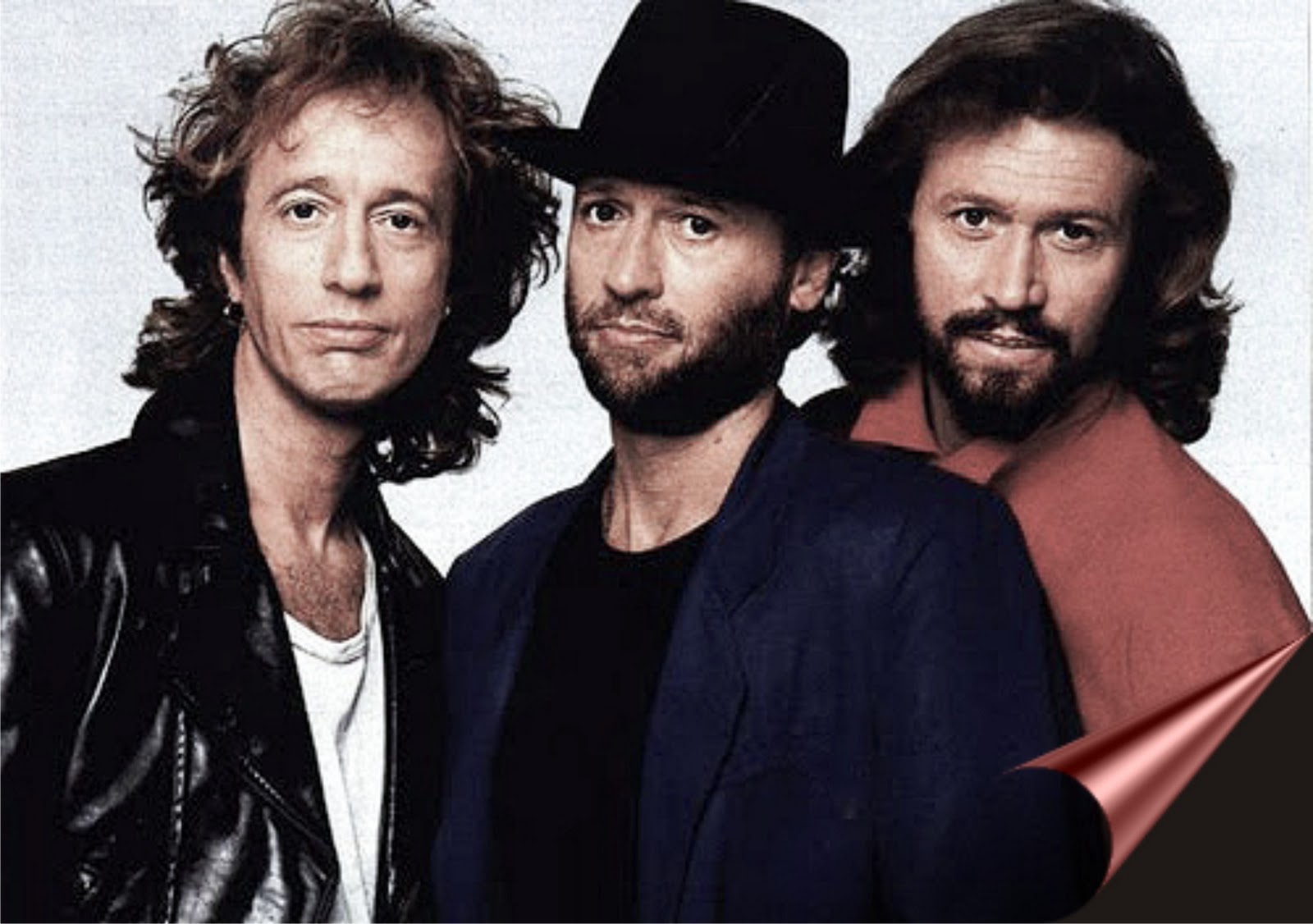
Throw a Penny is one of those deeply human Bee Gees songs that never shouted for attention, yet quietly reveals how loneliness, compassion, and emotional distance can live in the very same breath.
There are songs that become classics because the whole world sings them, and there are songs that endure because they stay with the listener long after the record ends. “Throw a Penny” by the Bee Gees belongs to that second category. Released on the 1971 album Trafalgar, it did not arrive as a headline single, and it did not carve out a chart life of its own. In fact, because it was not pushed as a major standalone single in most markets, “Throw a Penny” did not register separately on the main singles charts. But its parent album, Trafalgar, reached No. 34 on the Billboard 200 in the United States, and it arrived during one of the most emotionally rich periods in the group’s career, just after the enormous success of “How Can You Mend a Broken Heart”, which became the Bee Gees’ first American No. 1.
That context matters, because “Throw a Penny” is not merely an album track tucked into the middle of a record. It is part of the sound of a band rediscovering itself. By the time Trafalgar was released, Barry Gibb, Robin Gibb, and Maurice Gibb had come through internal strain, separation, and reunion. The Bee Gees of 1971 were no longer simply the bright harmony group of the late 1960s. They were older in spirit, more bruised, more reflective, and more willing to let uncertainty enter the songs. You can hear that maturity all over Trafalgar, and “Throw a Penny” is one of its most understated examples.
Written by Barry, Robin, and Maurice Gibb, the song carries the kind of lyric that does not hand over its meaning all at once. Its title sounds almost casual, even ordinary, but the emotional atmosphere is anything but light. The phrase suggests a small gesture, a token offering, perhaps even an act of pity or charity. Yet in the world of the song, that image feels more complicated. This is not really about a coin. It feels like a meditation on what people give each other when they no longer know how to give very much at all. A word, a glance, a little mercy, a little understanding, something small tossed into the silence in hopes that it might still matter.
That is one reason the song lingers. The Bee Gees were masters of grand feeling, but they were just as effective when they worked in half-shadows. “Throw a Penny” moves with a hushed, thoughtful grace. Instead of chasing a big chorus designed for instant applause, it lets mood do the work. The arrangement, shaped within the elegant and often orchestral sonic world of Trafalgar, supports that mood beautifully. There is a drifting melancholy in the record, but also restraint. Nothing feels overplayed. The brothers allow the emotion to arrive slowly, and that patience gives the song its special dignity.
Listening now, what stands out most is how fully the performance trusts the listener. The Bee Gees do not insist on a single clear interpretation. The song can be heard as a reflection on emotional neglect, on the scraps of kindness people offer one another, or on the uneasy gap between what is needed and what is given. It may also strike some listeners as a quiet portrait of spiritual emptiness, where even the smallest act takes on enormous weight. That openness is part of the song’s strength. It invites memory. It invites the listener to bring a life to it.
And that is often how overlooked songs become beloved ones. Unlike the immediately recognizable Bee Gees hits, “Throw a Penny” does not announce itself in the first few seconds as a standard-bearer. It asks for a little more attention, and in return it offers something more intimate. For many listeners, songs like this become more meaningful with time. They do not belong only to the year they were released. They grow into later years, into quieter evenings, into moments when the loud certainty of youth gives way to reflection.
It is also worth remembering how remarkable the Bee Gees were as album artists in this era. Before the disco era would redefine their public image, they had already built a body of work full of chamber-pop elegance, baroque feeling, and emotional intelligence. Trafalgar is one of the clearest windows into that side of the group, and “Throw a Penny” helps explain why the album still rewards careful listening. It sits in that space where craftsmanship and feeling meet: never flashy, never cold, never trying too hard to prove itself.
The deeper meaning of “Throw a Penny” may finally rest in its sense of emotional economy. So often in life, the things people need most cannot be measured, bought, or neatly spoken. The song seems to understand that. It understands how little offerings can feel precious, and how sometimes those same offerings can feel painfully insufficient. That emotional contradiction gives the song its quiet ache.
For anyone who knows the Bee Gees mainly through their biggest radio moments, “Throw a Penny” is a reminder of another truth about them: they were exceptional at writing songs that trembled softly instead of soaring loudly. This one may not have climbed the charts, but it carries the unmistakable mark of three brothers who knew how to turn uncertainty into music. And decades later, that soft-spoken honesty is exactly why it still matters.
