
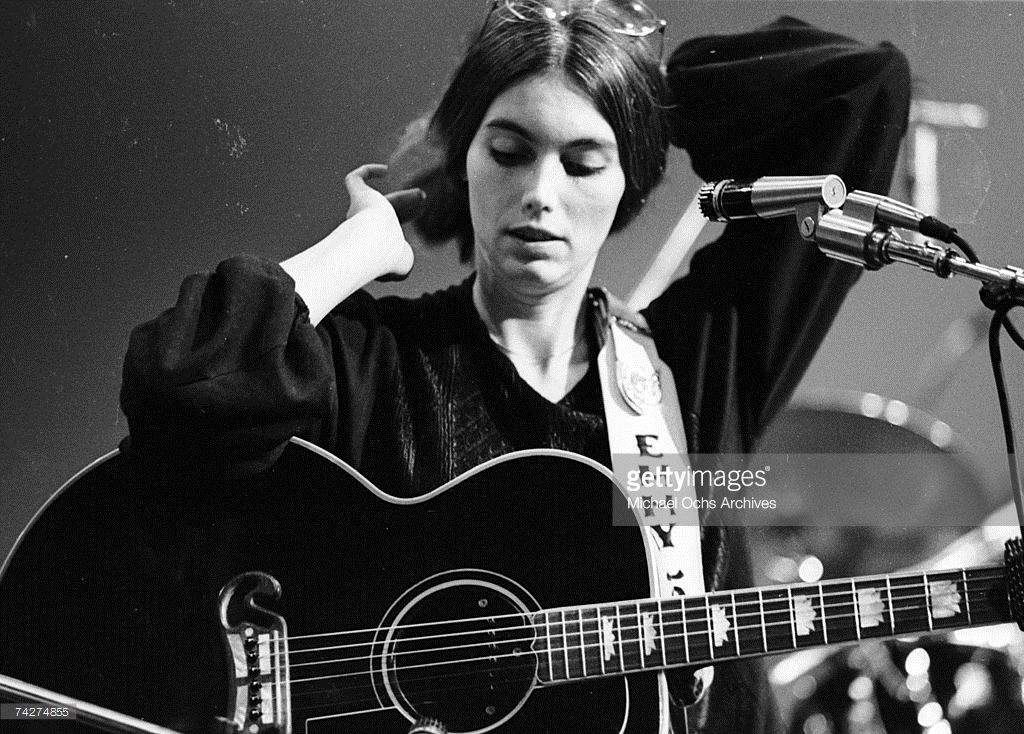
On Little Drummer Boy, Emmylou Harris turns a familiar Christmas carol into something tender, humble, and deeply human, and the 2004 remaster lets that quiet grace breathe even more clearly.
Some holiday recordings aim for grandeur. Emmylou Harris chose something far more lasting. Her version of Little Drummer Boy, heard again through the 2004 remaster, is not built on spectacle or seasonal excess. It is built on stillness, on reverence, on the old-fashioned power of a voice that never has to push to be heard. Originally released on her 1979 Christmas album Light of the Stable, the song was not a major standalone chart single and did not post a notable Billboard pop or country peak of its own. That matters, because its reputation was never created by chart momentum. It survived, and then endured, because listeners kept finding their way back to it.
The 2004 remaster is especially important for a performance like this one. It does not try to modernize the song or make it louder than it was meant to be. Instead, it reveals the gentle architecture already inside the track. The acoustic textures feel more open, the space around the vocal feels more natural, and Harris’s phrasing comes through with even greater intimacy. On a song so closely tied to mood and atmosphere, that added clarity becomes part of the emotional experience. You hear not just the melody, but the restraint. You hear not just the words, but the hesitation and humility inside them.
By the time Emmylou Harris recorded Light of the Stable, she had already established herself as one of the most elegant and respected interpreters in American music. She could sing country, folk, gospel, and old-time material without ever sounding like she was changing costumes. Everything passed through the same clear emotional intelligence. That gift serves Little Drummer Boy beautifully. Where some versions turn the carol into a dramatic Christmas centerpiece, Harris understands that its real strength lies in its smallness. This is a song about arriving with almost nothing and offering that nothing with sincerity.
The song itself has a long life before it reached Harris. What many people know as Little Drummer Boy began as Carol of the Drum, written by Katherine K. Davis in 1941. Its rise into Christmas-standard status came later, especially after the Harry Simeone Chorale popularized it in 1958. At the center of the lyric is one of the simplest and most moving ideas in all of holiday music: what can a poor child bring when everyone else seems to have something finer? The answer is not money, status, or decoration. The answer is presence. Rhythm. Heart. A willing spirit.
That meaning fits Emmylou Harris almost uncannily well. Few singers have built a career so beautifully on understatement. She has always understood that emotion grows stronger when it is not overexplained. On this recording, she sings as if she is preserving something old and fragile rather than performing for applause. There is no sense of vocal showmanship for its own sake. No oversized sentiment. No forced holiness. What she gives the song is sincerity, and because of that, the familiar lyric suddenly feels less like a children’s pageant and more like an adult meditation on dignity. Many listeners first hear Little Drummer Boy as a Christmas staple. Harris makes them hear it as a song about offering whatever is honestly yours to give.
There is also something deeply rooted in the sound of Light of the Stable that helps this performance linger. The album, produced by Brian Ahern, carries the organic warmth that defined so much of Harris’s finest work in the 1970s. Even when the arrangements are carefully shaped, they never feel crowded. There is room for breath, room for silence, room for spiritual weight. Elsewhere on the album, the sense of musical fellowship is part of its charm, but on Little Drummer Boy, the emotional center remains inward. The song feels close to the body, close to memory, close to the private side of faith and winter reflection.
That is why the 2004 remaster matters beyond simple audio maintenance. A song like this can easily be flattened by time, filed away as seasonal tradition and little more. But when the remaster restores warmth and detail, it reminds us what made the performance special in the first place. Harris does not merely sing a beloved Christmas song; she reinterprets its emotional balance. The emphasis shifts away from pageantry and toward vulnerability. The child in the lyric is no longer just symbolic. He feels real. The gift is no longer quaint. It feels necessary.
In the end, Little Drummer Boy in the hands of Emmylou Harris becomes a song about grace without display. That may be why it continues to touch people so deeply. In a season often filled with noise, this performance chooses gentleness. In a culture that frequently measures worth by what can be shown, this carol insists that the most meaningful offering may be the simplest one. The 2004 remaster does not change that truth. It simply lets us hear it with fresh ears, as if an old room has been dusted and the air has cleared. And once that happens, the song no longer sounds merely traditional. It sounds timeless.
