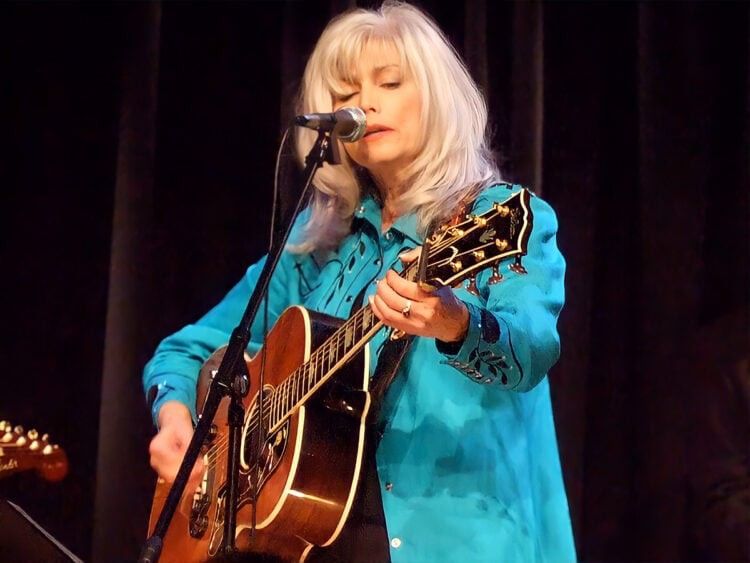
“Darkest Hour Is Just Before Dawn” is a gospel truth turned into a lantern-song—Emmylou Harris singing as if she’s walking beside you through the last stretch of night, steadying your steps until the first hint of morning.
When Emmylou Harris recorded “Darkest Hour Is Just Before Dawn” for Roses in the Snow—released April 30, 1980—she wasn’t chasing the pop marketplace so much as returning to older, tougher comfort: the kind found in hymns, mountain harmonies, and songs that have carried people when ordinary words fail. The album itself was a major moment for her on the charts, reaching No. 2 on Billboard’s Top Country Albums and No. 26 on the Billboard 200. Yet “Darkest Hour Is Just Before Dawn” wasn’t promoted as a hit single with its own chart climb. Its power is of a different kind—an album track that becomes a personal refuge, discovered like a small light left burning in a window.
The facts, placed plainly, only deepen the feeling. Roses in the Snow was recorded in Nashville in July 1979, produced by Brian Ahern, and shaped by a bluegrass-leaning palette that made Emmylou sound both timeless and startlingly present. In the middle of that sound-world, “Darkest Hour Is Just Before Dawn” appears as track 5, running 3:22, written by the great Ralph Stanley. That songwriting credit matters: Stanley’s music carries a particular kind of Appalachian gravity—faith without gloss, sorrow without self-pity. And Emmylou approaches it with reverence that never turns stiff. She sings it like something lived, not merely “performed.”
The album’s guest list reads like a gathering of kindred spirits around a shared fire—Ricky Skaggs, Dolly Parton, Linda Ronstadt, Willie Nelson, and others appearing across the record. That community feeling is part of what makes this song land so deeply. Gospel, after all, is rarely meant to be solitary. Even when one voice carries the verse, the song’s true shape is made by the sense of people standing close—breathing together, answering one another, refusing to let despair have the final word.
And the phrase at the center—the darkest hour is just before dawn—is one of those lines that seems almost too simple until life tests it. It is not a denial of darkness. It is an acknowledgement that darkness has weight, duration, and texture—and still, it insists on the possibility of change. The lyric frames hardship not as punishment, but as passage. There’s a road implied in it, a narrow way forward, the idea that you keep moving not because you feel brave, but because stopping would mean surrendering the chance to see the sky brighten.
Years later, looking back across her own catalog, Emmylou spoke about bringing Ralph Stanley’s “Darkest Hour Is Just Before Dawn” to life as “the melancholy mountain song it was always intended” to be—calling it “a magnificent piece.” That’s a telling description: melancholy isn’t treated as an enemy here. It’s treated as a companion that keeps you honest. The beauty comes from how the song holds sorrow and hope in the same hands—no cheap victory, no forced smile—just the quiet insistence that dawn is real, even when you can’t yet see it.
So if you come to “Darkest Hour Is Just Before Dawn” expecting the thrill of a chart moment, you may miss its true ranking. Its highest position is not on a numbered list; it’s in the private geography of memory—where certain songs become places you return to when the world feels heavy. On Roses in the Snow, surrounded by bluegrass textures and voices that sound like old friends, Emmylou Harris turns Ralph Stanley’s gospel into something both ancient and immediate: a song that doesn’t promise an easy life, only a faithful one—step by step, night by night, until the horizon finally softens.
