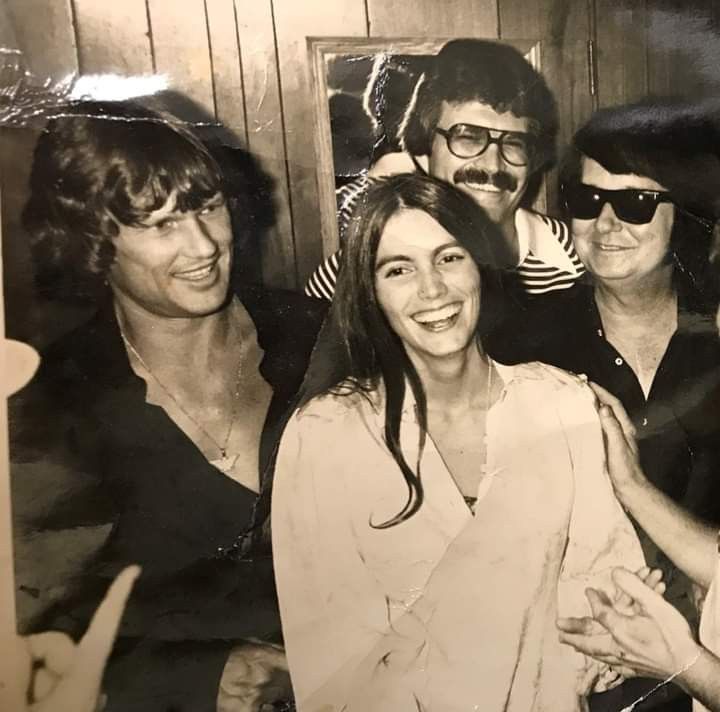
“Red Dirt Girl” is Emmylou Harris turning memory into a warning-light—beautiful, compassionate, and unafraid to look straight at the places where dreams quietly go to die.
It’s a song about the ones who don’t “make it out,” and about the thin, frightening line between their story and ours.
“Red Dirt Girl” is the title track of Emmylou Harris’s 2000 album Red Dirt Girl—her first solo studio album since Wrecking Ball (1995), and a major pivot in how the world heard her: not only as the great interpreter, but as a songwriter with a novelist’s eye. The album was released in September 2000 on Nonesuch Records, produced by Malcolm Burn; discographies commonly cite September 12, 2000 as the North American release date, while Nonesuch’s own album page lists September 5, 2000.
In chart terms—what the public “said” at the moment of arrival—the story is told more by the album than by the song as a standalone single. Red Dirt Girl peaked at No. 3 on Billboard’s Top Country Albums and won the Grammy Award for Best Contemporary Folk Album (awarded in 2001). The title track “Red Dirt Girl” itself wasn’t launched as a major charting single with a headline-making debut; its impact has always been slower, deeper—something you discover, then carry. (Even the album’s basic premise signals that depth: 11 of its 12 tracks were written or co-written by Harris, a marked departure from the cover-heavy reputation that had followed her for decades.)
And then there’s the story inside the song—its human weather. Lillian and her blue tick hound dog Gideon, the front porch, the Alabama heat, the small-town gravity that can feel like comfort until it becomes confinement. What makes “Red Dirt Girl” so piercing is that it refuses to romanticize that world, even as it renders it lovingly. The red dirt isn’t just scenery; it’s fate, it’s class, it’s geography with a hand on your shoulder. The lyric moves like a short story, but the emotional truth lands like a personal letter: one “red dirt girl” makes choices that close the horizon; another slips out—by luck, by timing, by some unseen mercy.
Harris herself has described the title character as a fictional composite, rooted in memories of her Alabama childhood, and she has spoken about seeing herself in the divide between narrator and protagonist—“two red-dirt girls,” either of whom she might have become if life had tipped differently. That confession is the key that unlocks the song’s tenderness. Because the point is not to pity Lillian from a safe distance; the point is to admit how frighteningly close her life can feel to any life, given the wrong door, the wrong night, the wrong kind of loneliness.
The song’s origin story, as it’s been recounted in longform writing about Harris, carries the same sense of unsettled revelation: she began writing after traveling through Meridian—that name that recurs like a boundary line in the lyric—and she connected the song’s mood to the feeling of young lives trapped by circumstance, an emotional jolt she associated with seeing the film Boys Don’t Cry. Whether you focus on the drive or the film, the deeper point is the same: “Red Dirt Girl” isn’t sightseeing—it’s empathy under pressure, the moment when observation turns into obligation.
Musically, the recording mirrors the lyric’s modern-traditional tension. Malcolm Burn’s production keeps the air around Harris’s voice—part organic, part subtly contemporary—so the song feels present tense, not sepia. Harris sings with that familiar, clear ache, but here the ache is sharpened by authorship: she isn’t merely inhabiting a song; she is accounting for it.
What lingers, long after the last line fades, is the song’s moral quietness. It doesn’t sermonize. It simply tells the truth that polite culture often avoids: some lives end in silence, “no mention in the news of the world,” and the absence of headlines doesn’t make the loss smaller. That is the lasting meaning of “Red Dirt Girl”—a hymn for the overlooked, and a reminder that the distance between “the one who got out” and “the one who didn’t” can be heartbreakingly thin.
