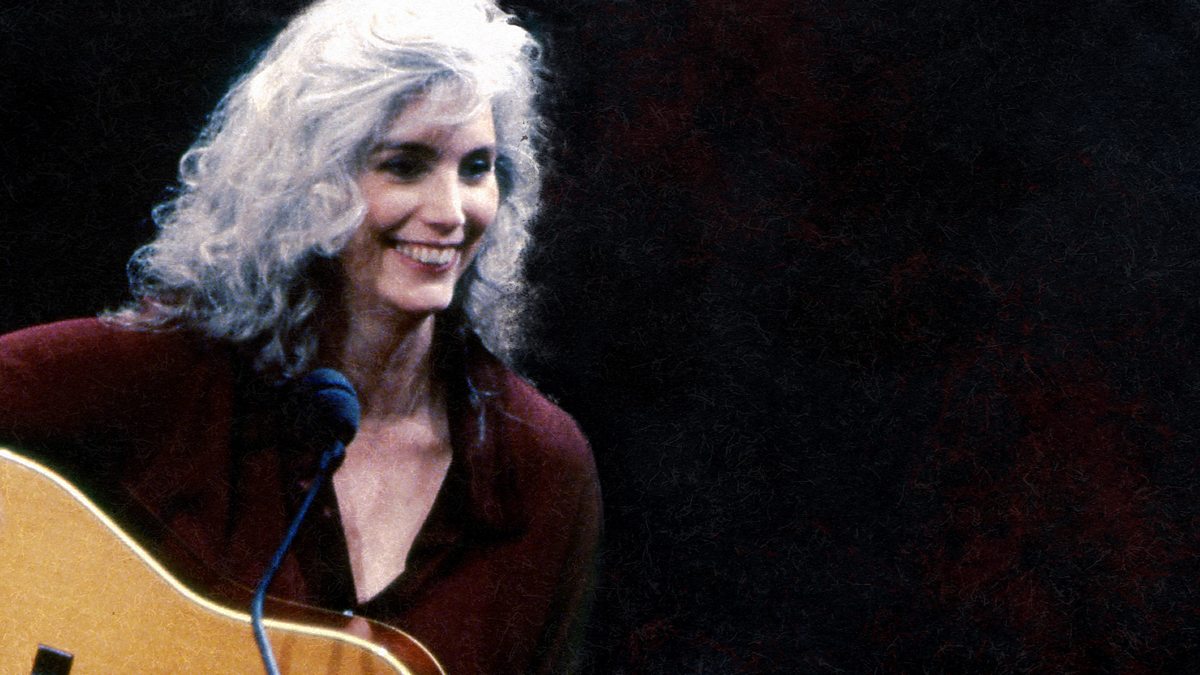
“Prayer in Open D” is a hushed confession set to ringing strings—an honest walk through inner ruin toward the faint, stubborn shine of home.
“Prayer in Open D” sits at the emotional center of Emmylou Harris’s 1993 album Cowgirl’s Prayer—released September 28, 1993—and it is one of the rare moments in her catalog where the voice we trust as an interpreter steps forward as a songwriter speaking plainly in her own name. On the album’s official track list it appears as track 5, credited to Harris, running 4:17—a modest length for a song that somehow feels like it contains an entire season of remorse and recovery.
At release, Cowgirl’s Prayer didn’t roar through the marketplace the way her classic late-’70s records once did; it peaked at No. 34 on Billboard Top Country Albums and No. 152 on the Billboard 200 (and No. 19 on Canada’s RPM Country Albums). The context matters: the album arrived in a period when, as the record’s history is often summarized, “older artists were being dropped from country radio playlists,” and despite strong reviews it received little airplay—an industry chill that helped push Harris toward the artistic left turn that would later become Wrecking Ball. In other words, “Prayer in Open D” is born in that peculiar weather: when an artist realizes the spotlight is shifting away, and decides—almost with relief—to sing for something deeper than the spotlight.
The title is a small masterstroke. Open D is a guitar tuning that lets the instrument bloom into a full chord with a single strum—strings ringing sympathetically, notes stacking like light through stained glass. You can almost hear the room change when a song is built in an open tuning: suddenly there’s space for overtones, for lingering resonance, for the kind of silence that isn’t empty but listening. And that is exactly what this piece feels like—less a performance than a room you enter. The prayer isn’t shouted. It’s laid down.
Lyrically, Harris paints the inner landscape in stark, elemental images: a “valley of sorrow” in the soul, thunder rolling “like the sound of a distant gun,” shadows “built with my own hand,” a “river of darkness” in the blood, and the ache of consequences that cannot be unmade. It’s not a vague sadness; it’s responsibility. The song refuses the easy comfort of blaming fate or other people. The narrator stands amid the wreckage and admits: I did this. I helped build this cold place.
And then—quietly, almost unbelievably—the song turns its face toward possibility. There is a “highway risin’ from my dreams,” a gleam in the heart, a vision “stretching wide… clear on across to the other side,” and finally the line that breaks open like dawn: someday… it will lead me home. That word home lands with unusual force in an Emmylou Harris song, because her whole career has been a kind of traveling—between genres, between collaborators, between the old songs and the new. Here, she isn’t traveling to escape. She’s traveling to return.
Part of what makes “Prayer in Open D” so affecting is the way the track’s craft serves the song’s conscience. Credited performance details underline how carefully the atmosphere is built: Emmylou Harris on acoustic guitar, Richard Bennett also on acoustic guitar, Edgar Meyer on bass, and a small string ensemble (including Grace Bahng on cello, Kris Wilkinson on viola, Connie Heard on violin), with Emory Gordy handling string arrangement; production is credited to Richard Bennett and Allen Reynolds. These are not “big statement” choices. They’re choices made for closeness—for the feeling that the song is happening at arm’s length, where you can hear breath and wood and bow, where emotion doesn’t need decoration.
If you’ve lived long enough to recognize the shape of regret, this song doesn’t flatter you with false hope. It acknowledges the “hard and bitter tear” that won’t be erased. Yet it also insists—without preaching—that a way through can exist, even if it starts as nothing more than a dream of a road. That’s the deepest meaning of “Prayer in Open D”: not that pain disappears, but that the heart can still imagine direction. The prayer is not for perfection. It’s for passage—out of the valley, over the river, onward to the other side, and finally, if grace allows it, home.
