A quiet 1969 television duet, I Never Will Marry revealed how deeply Linda Ronstadt already understood sorrow, tradition, and the plainspoken beauty of country music.
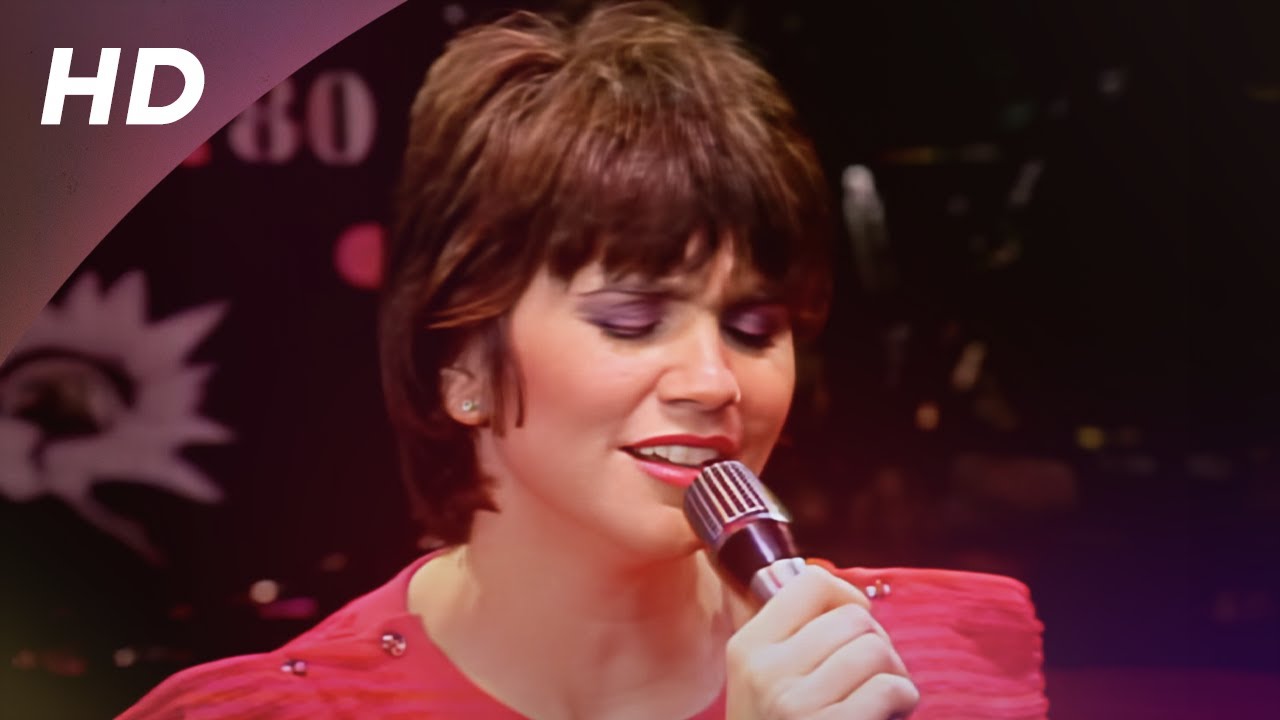
The 1969 performance of I Never Will Marry by Linda Ronstadt and Johnny Cash on The Johnny Cash Show was never a charting single, and that matters because it reminds us what this moment truly was: not a commercial event, but a revealing one. It was the kind of television appearance that, over the years, grows larger in memory. A young singer still early in her solo journey stood beside one of the most commanding figures in American music, and instead of being overshadowed, she sounded startlingly at home.
That is why this performance still lingers. In 1969, Ronstadt was just beginning to define herself beyond her work with the Stone Poneys. Her first solo album, Hand Sown… Home Grown, had been released that same year and reached No. 164 on the Billboard album chart. It was not yet the era of her major commercial reign, but the musical identity was already there: folk roots, country feeling, and a voice that could hold both ache and steel in the same note. Appearing on The Johnny Cash Show, which began its influential ABC run in 1969, gave her national exposure in exactly the kind of setting that suited her gifts.
Johnny Cash, of course, brought his own authority to the song. By then he was no ordinary host. He was a cultural force, fresh from the renewed artistic momentum that had followed At Folsom Prison and on the verge of an even wider television-era reach. Yet what made the duet so compelling was not celebrity contrast. It was musical truth. I Never Will Marry is an old traditional song, shaped by the folk process long before television cameras ever found it. Like many songs carried through generations, it survives because the emotion is immediate: a vow spoken out of hurt, resignation, pride, and something more complicated than simple heartbreak.
That deeper feeling is what gives the song its unusual power. On the surface, the lyric sounds final. The singer says no to marriage, no to the old promise of romantic peace. But traditional songs are rarely that simple. Beneath the refusal is disappointment. Beneath the firmness is memory. And beneath the plain language is the feeling that love has already left its mark. In a duet setting, especially one shared by Cash and Ronstadt, the song becomes even richer. It no longer feels like one person’s private declaration alone. It begins to sound like a conversation across time, gender, and experience, as if each voice carries a different kind of wound.
What makes this 1969 television performance so affecting is its restraint. There is no need for theatrical flourish. Cash sings with that weathered steadiness that made him sound as if he were speaking directly from the center of the American songbook. Ronstadt, by contrast, brings clarity and youth, but never innocence in the shallow sense. Even then, her voice held a kind of emotional knowledge beyond her years. She does not merely decorate the melody. She enters it. She gives the old song brightness without removing its loneliness.
Listening now, it is hard not to hear a quiet forecast of the artist she would become. Before the platinum albums, before the arena-sized fame, before Heart Like a Wheel made her a defining voice of the 1970s, there was this: a traditional song, a national TV stage, and a singer proving that emotional precision could be more powerful than volume. Ronstadt would later record I Never Will Marry in the studio for Silk Purse in 1970, but this earlier televised duet has its own special glow. It catches her in motion, still ascending, yet already unmistakable.
There is also something important about the setting itself. The Johnny Cash Show was one of the rare network programs willing to treat country, folk, gospel, and roots music with seriousness and grace. Artists were not asked to disguise where they came from. In that environment, Linda Ronstadt did not have to become anything other than what she already was. For viewers at the time, this may have felt like a lovely duet. Seen from a longer distance, it feels like a document of transition, the sound of one generation welcoming another into the circle.
And perhaps that is why the performance still touches people so deeply. I Never Will Marry is not a grand anthem. It does not rely on spectacle. It works through simplicity, through old words and honest phrasing. When Johnny Cash and Linda Ronstadt sang it together in 1969, they gave the song exactly what it needed: dignity, patience, and room to breathe. Some performances chase applause. This one earns remembrance.
For anyone who loves the crossroads where folk and country meet, this duet remains a treasure. It preserves Ronstadt at a beautifully early moment and places her beside an artist whose respect for tradition was never academic, only lived. In that brief exchange, the song stops being just an old ballad and becomes something else entirely: a small, lasting piece of musical inheritance passed from one great American voice to another.
