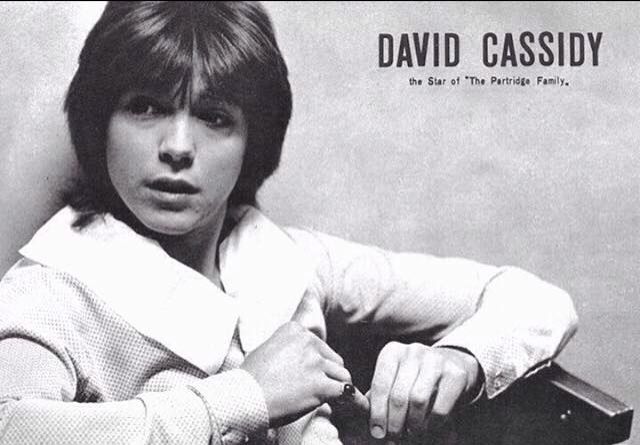
Come On Get Happy sounded like pure sunshine, but in David Cassidy‘s voice it became something deeper: a weekly invitation into a brighter world that television turned into memory.
When people remember David Cassidy, they often remember the smile first, the hair second, and then almost immediately that opening burst of melody from ‘Come On Get Happy’, the song forever tied to The Partridge Family. It premiered with the ABC series in 1970 and quickly became one of the most familiar musical signatures on American television. Its chart story, however, is very different from the show’s blockbuster pop singles. Unlike ‘I Think I Love You’, which reached No. 1 on the Billboard Hot 100 in late 1970, ‘Come On Get Happy’ was not the major U.S. chart event of the franchise. Its real triumph was something more intimate and, in many ways, more lasting: it arrived in living rooms every week and became part of the emotional furniture of an era.
One detail many viewers have forgotten is that the theme itself had an evolving life. In the earliest run of The Partridge Family, the opening used the longer song ‘When We’re Singin”, which folded into the familiar ‘come on get happy’ refrain. Later, the show streamlined that idea into the tighter, brighter version that most people now instantly associate with the series. That matters because it tells us something important about television music in the early 1970s: themes were not always just jingles or placeholders. Sometimes they were carefully built pop objects, shaped to be catchy enough for TV and warm enough to feel like part of the family ritual.
And that is where David Cassidy became essential. The Partridge Family may have been a fictional band, loosely inspired by the real-life family pop success of The Cowsills, and much of its studio sound was created by elite Los Angeles session players. But the emotional center was real. Cassidy’s voice gave the project its pulse. Alongside Shirley Jones, he helped turn what could have been a glossy television concept into something that listeners actually believed in. On record and on screen, he brought a natural ease that did not sound forced, and that quality is all over ‘Come On Get Happy’. It is cheerful, yes, but never merely mechanical.
The lyric itself is wonderfully simple, almost disarmingly so. It promises love, music, togetherness, movement. There is no heavy poetry there, no grand mystery. But that simplicity was the point. The song sold a feeling before it sold a story. It offered the fantasy that a bus full of music, color, and family harmony might roll into your life and make the hour lighter. In a period when America was moving out of the turbulence of the late 1960s and into a more domesticated but still emotionally restless new decade, that invitation mattered. ‘Come On Get Happy’ was not asking for analysis. It was asking people to exhale.
Yet the reason it still resonates is that, beneath the brightness, there was a subtle tension. David Cassidy was not just a cheerful television son. He was a young singer with real presence, real instincts, and soon, very real pressure on his shoulders. The overwhelming popularity that followed The Partridge Family turned him into one of the defining teen idols of the early 1970s, but even at the beginning there was something more than packaging in his performance. He sounded like someone trying to make a manufactured world feel human. That may be the hidden emotional truth of the theme: it represents a polished television fantasy, but the feeling that survives inside it comes from an artist who gave the fantasy genuine warmth.
There is also a cultural reason the song endures. Many famous songs belong to the radio. ‘Come On Get Happy’ belongs to repetition, to anticipation, to the opening seconds of a familiar show before the story even begins. That is a different kind of immortality. It means the song is tied not only to melody but to habit, to family rooms, to after-school viewing, to the sound of a set turning on in the evening. It became a doorway. And once a song becomes a doorway, it never quite leaves people. It lives not only in memory but in muscle memory.
For all its brightness, the theme also captures the strange genius of The Partridge Family as a whole. The series offered an idealized image of togetherness, but the music was polished enough to stand outside the show. That is why the theme is still worth talking about today. It was not just attached to a successful program; it helped create the emotional identity of that program. The colorful bus, the smiling faces, the promise of music and motion, the sense that life might be a little kinder for the next half hour, all of that is packed into a tune that lasts only moments.
So if ‘Come On Get Happy’ seems small on paper, history has already corrected that impression. It may not have dominated the American charts as a standalone single, but it conquered something just as hard to reach: affection. And in the center of it was David Cassidy, whose voice made a television theme feel less like a cue and more like an invitation that people were still accepting decades later. Some songs become hits. Some become symbols. This one became a welcome mat to a whole emotional world.
