
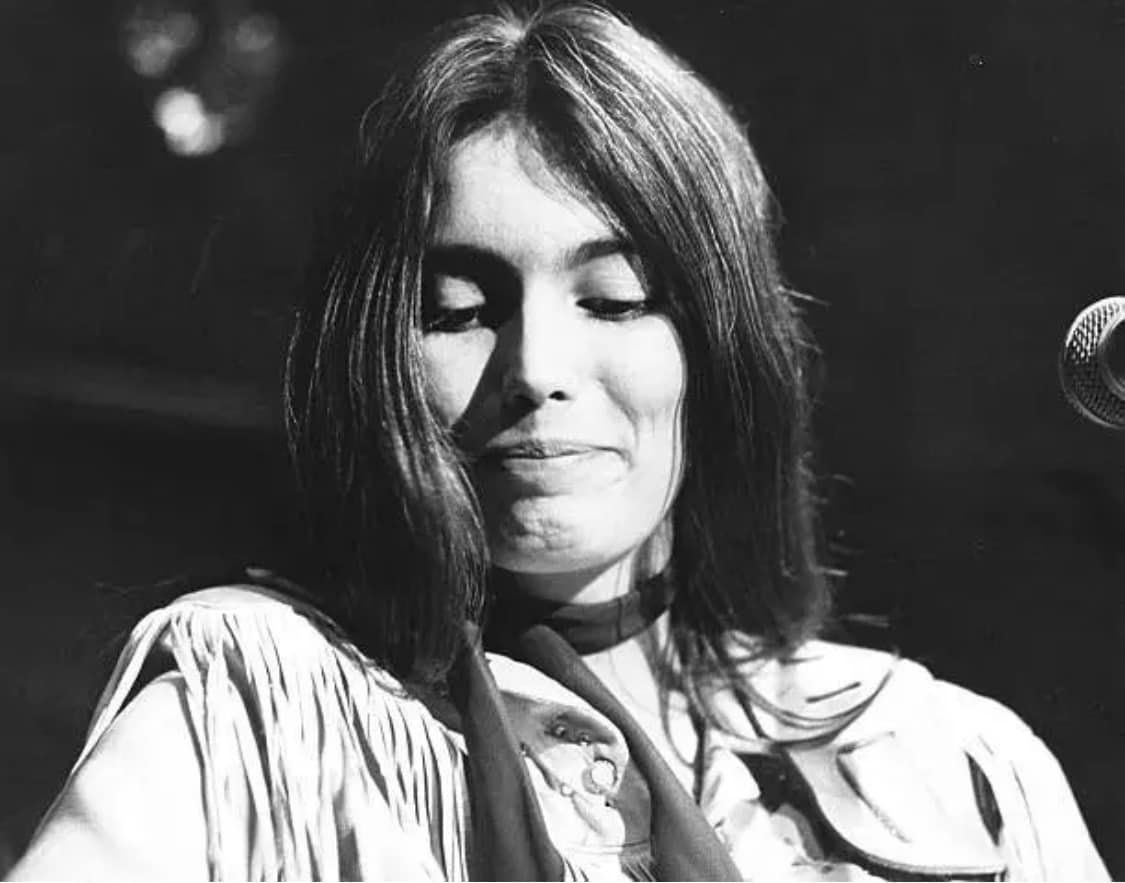
In the voice of Emmylou Harris, You Never Can Tell (C’est La Vie) stops being only a clever old hit and becomes something warmer: a graceful salute to young love, small beginnings, and the quiet miracle of building a life together.
Few singers have ever understood the emotional afterlife of a song the way Emmylou Harris did. When she recorded You Never Can Tell (C’est La Vie), she was not simply reviving a familiar classic. She was showing how a song could travel from one American tradition into another and somehow sound even more lived in. Her version became a Top 10 country hit, reaching No. 6 on Billboard’s Hot Country Singles chart, and that success made perfect sense. She had a rare gift for taking a song listeners thought they already knew and opening a quieter, deeper room inside it.
The song itself was written by Chuck Berry, one of the architects of rock and roll. He wrote it during his imprisonment in the early 1960s, a detail that gives the song an even more remarkable emotional contrast. Out of confinement came a lyric full of movement, humor, hope, and domestic promise. Released in 1964, Berry’s original reached No. 14 on the Billboard Hot 100. Its story was simple on the surface but rich in feeling: a young couple in New Orleans marry early, set up home with very little, scrape together the symbols of adulthood piece by piece, and somehow create a life that feels full. A two-room apartment, a coolerator, a television set, a hi-fi, records, work, children, and eventually a little prosperity. It is one of the great American songs about ordinary happiness.
That is what makes the refrain so enduring. C’est la vie, say the old folks, it goes to show you never can tell. In lesser hands, that line might sound throwaway, almost playful. But the brilliance of the song is that it holds two truths at once. Life is uncertain, yes, but uncertainty is not always tragic. Sometimes it is generous. Sometimes two young people with almost nothing make it through on faith, rhythm, and stubborn affection. That is the heartbeat of the song, and Emmylou Harris understood it instinctively.
Her recording keeps the buoyancy of the original, but she shifts the emotional light. Chuck Berry sang it with wit, sparkle, and a storyteller’s grin. Emmylou Harris brings in tenderness. She does not strip away the song’s motion; instead, she gives it a softer glow, as if the story is being remembered through years rather than lived in a rush. The arrangement leans into a country-rock swing that suits her beautifully. There is still bounce in it, still a sense of the road and the dance floor, but there is also poise. Her voice carries the lyric with calm assurance, never crowding it, never overplaying its sentiment. That restraint is part of what makes the recording so moving.
It also fits beautifully within the broader spirit of Profile: Best of Emmylou Harris, where the song found a natural home among performances that had already defined her as one of the finest interpreters of her era. By that point, she had become a bridge between country, folk, rock, and bluegrass, and You Never Can Tell (C’est La Vie) was another example of how elegantly she crossed those lines. She could honor the roots of a song while making it feel as though it had been waiting for her voice all along.
What gives her version such staying power is not novelty, but recognition. She recognizes that the song is not really about furniture, gadgets, or even youthful romance in the abstract. It is about the dignity of making a life. It is about small victories that look modest from the outside and enormous from within. A first apartment. A record player. Money stretched carefully. Workdays turning into years. Children growing. Love becoming less theatrical and more dependable. Those details land differently when sung by Emmylou Harris, because she brings a reflective warmth that makes the song feel almost like a blessing over the ordinary milestones people carry in their hearts for decades.
That may be why the song continues to resonate so deeply. It does not depend on grand drama. It trusts memory. It trusts the listener to understand that some of the most meaningful love stories are the ones without spectacle. No grand declarations, no impossible fantasy, just two people stepping into life and finding that the days add up to something beautiful. In an age that often celebrates extremes, You Never Can Tell (C’est La Vie) remains precious because it celebrates steadiness. Emmylou Harris sings it as though she knows that steadiness is its own kind of romance.
And perhaps that is the deepest meaning of her version. It reminds us that songs survive not only because they are catchy, but because they carry a truth we keep returning to. Chuck Berry wrote a deceptively bright little masterpiece about love, luck, and the mystery of how lives are built. Emmylou Harris took that same song and let it breathe in a new register, one touched by grace, memory, and country soul. The result is a recording that still sounds fresh, but even more importantly, it still sounds kind. Long after the chart run ended, that kindness is what lingers.
Some songs entertain for three minutes and disappear. This one stays because it honors something people never stop believing in: that a humble beginning can still lead somewhere lovely. In the hands of Emmylou Harris, You Never Can Tell (C’est La Vie) becomes not just a charming story, but a quiet testimony that love, music, and time can make a modest life shine.
