
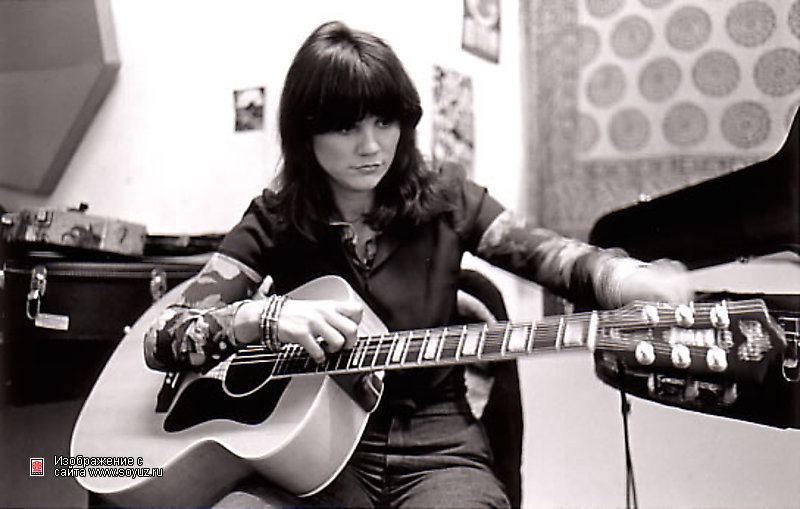
Birds is a song about love ending without a slammed door or a final scene—only distance, memory, and the aching wisdom that some hearts drift apart as gently as wings fading into the sky.
Linda Ronstadt built an extraordinary career on songs that felt lived-in, and “Birds” belongs to that special class of performances where commercial statistics matter far less than emotional truth. The song was written by Neil Young and first released on his landmark 1970 album After the Gold Rush, an album that reached No. 8 on the Billboard Top LPs chart in the United States. “Birds” itself was not a major chart single, and Ronstadt’s interpretation was never one of those radio-driven hits that stormed the Hot 100. But that is precisely why the song still feels so intimate. It survived not because it was pushed, but because it was felt.
That matters when speaking about Linda Ronstadt. She was one of the great interpreters of modern American song, and her genius was never limited to the obvious crowd-pleasers. Yes, she could take a song like “Blue Bayou” or “You’re No Good” and turn it into something immense, but she was just as compelling when she stepped into a quieter room. With “Birds”, she met Neil Young on deeply human ground: the place where resignation and tenderness exist at the same time. There is no need to force the pain. The song already knows what it is.
The story behind “Birds” is part of what makes it so enduring. Neil Young wrote it during a period when his songwriting was becoming more spare, reflective, and emotionally elusive. On the surface, the lyric is simple. Beneath that simplicity lies a profound truth: some relationships do not end in rage. They end in recognition. Two people look at each other, and somewhere in the silence they understand that the season has changed. That is the central meaning of “Birds”. It is about love giving way to inevitability. Not because the feeling was false, but because time has its own weather, and not every heart can remain in the same sky forever.
That theme suited Ronstadt beautifully. Few singers have ever understood the emotional architecture of a song the way she did. She did not merely sing melody; she located the bruise inside the lyric. In her approach to “Birds”, what stands out is restraint. She does not overdecorate the sorrow. She allows the song to breathe, and that breathing space is where the listener enters. Her voice had always carried both strength and vulnerability, and here those two qualities seem to hold hands. The result is not theatrical heartbreak. It is something more difficult and more lasting: acceptance.
There is also a larger artistic context worth remembering. Linda Ronstadt spent much of the 1970s and beyond proving that interpretation could be as revealing as songwriting. She moved through country-rock, folk, pop, Mexican traditional music, and the Great American Songbook with astonishing fluency, yet she always remained recognizably herself. That is why a song by Neil Young could sound wholly natural in her world. She had already shown an affinity for his writing elsewhere, and “Birds” fits that connection perfectly. Young often wrote as if he were tracing emotion through mist; Ronstadt sang as if she could warm that mist with breath. The mystery remained, but the human nearness grew stronger.
Musically, “Birds” has the kind of softness that can fool a casual listener. It seems slight at first, almost like a passing thought. But the more time one spends with it, the more devastating it becomes. The phrasing leaves room for hesitation. The melody moves like recollection rather than declaration. It feels less like someone making a speech and more like someone realizing, in real time, what must be let go. That is why so many listeners return to the song over the years. It does not age out of relevance. If anything, it deepens. Life teaches us that not every parting is loud. Some of the most permanent ones arrive quietly.
And that is where Linda Ronstadt leaves her mark. She had a rare ability to make even a well-written song feel newly discovered. In lesser hands, “Birds” could remain a beautiful but distant composition. In hers, it becomes personal. She sings as though she understands that memory can be tender even when it hurts. There is a generosity in that kind of performance. She never stands above the material. She enters it. She trusts the song, and in doing so she earns the listener’s trust as well.
If one is looking only for chart history, “Birds” may seem like a footnote beside the larger commercial milestones in Linda Ronstadt’s career. But if one is listening for emotional truth, it becomes something else entirely: a reminder of why her artistry meant so much. Some songs become famous because the whole world hears them at once. Others become beloved because they wait patiently for the right heart. “Birds” is one of those songs. And in Linda Ronstadt’s voice, it feels less like a performance than a soft confession carried on the evening air—brief, beautiful, and impossible to forget.
