
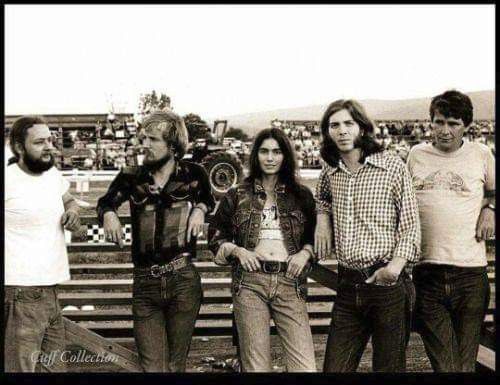
“Boy From Tupelo” lets Emmylou Harris look past the myth of Elvis and back toward the shy Southern dreamer who carried hope, hunger, and heartbreak into American music.
There are songs that celebrate fame, and then there are songs that quietly step behind it, open the back door, and ask us to look at the person before the spotlight. “Boy From Tupelo” belongs to that second kind. In the hands of Emmylou Harris, a title that immediately points toward Elvis Presley does not become a flashy tribute or an act of imitation. It becomes something more intimate: a meditation on origins, innocence, and the strange distance between the young man from Tupelo, Mississippi and the cultural giant the world later came to know.
One important thing to say at the beginning is that “Boy From Tupelo” is remembered more as a thoughtful piece within the wider emotional landscape of Harris’s work than as a major chart event. It was not one of the towering commercial singles that defined a radio season, and it is not usually the first title mentioned when casual listeners list her best-known hits. That, in a way, is part of its beauty. Songs like this often live a little deeper in the catalog. They wait for listeners who care about atmosphere, history, and feeling more than simple familiarity.
And feeling is exactly where Emmylou Harris has always been extraordinary. Her singing has never depended on force. It depends on phrasing, grace, and that rare ability to sound as if memory itself has found a melody. In “Boy From Tupelo”, she leans into a Southern image that carries enormous emotional weight. To say “the boy from Tupelo” is to invoke more than a birthplace. It is to summon the whole American story of transformation: poverty to fame, local sound to global echo, private longing to public myth.
What makes the song so affecting is that Harris does not seem interested in the myth for its own sake. She is drawn instead to what existed before the legend hardened into history. The title alone turns Elvis from an icon back into a son of the South, a young man shaped by gospel, country, rhythm and blues, and the restless promise of movement. That perspective matters because Emmylou Harris has always understood American roots music as a conversation between people, places, and inheritances. She never sings these stories as museum pieces. She sings them as living memory.
The emotional meaning of “Boy From Tupelo” lies in that act of return. It asks what happens when the world keeps the image but risks losing the person. It suggests that before there was the headline, there was yearning. Before there was the legend, there was a voice trying to find its place. Harris has long been one of the finest artists at locating tenderness inside cultural history, and this song fits that gift beautifully. It feels less like a monument and more like a conversation held late in the evening, when the noise has faded and only truth remains.
That is one reason the song resonates so strongly with listeners who value not only great singing, but context. Elvis Presley has been analyzed endlessly, celebrated endlessly, and sometimes reduced to symbol. Yet “Boy From Tupelo” gently reminds us that symbols begin as human beings. Harris approaches that reality with compassion rather than grand statement. She seems to understand that the deepest tributes are often the quietest ones.
Musically, the song sits naturally within the thoughtful, roots-conscious spirit that has defined so much of the Emmylou Harris catalog. Even when she sings about famous figures, she rarely loses the texture of real life. There is usually dust on the road, ache in the harmony, and a sense that history is being carried in the voice rather than announced from a distance. That quality makes “Boy From Tupelo” feel timeless. It does not chase trend or spectacle. It trusts mood, image, and emotional intelligence.
It also reflects something central to Harris’s artistic identity. Throughout her career, she has served as both singer and keeper of the flame, preserving the emotional lineage of country, folk, and roots music while still making every song feel personal. Whether interpreting classics, honoring lost voices, or reframing familiar stories, she brings elegance without coldness. Here, that elegance helps turn a potentially obvious subject into something reflective and unexpectedly moving.
Perhaps that is why the song lingers. Not because it tries to outshout the legend of Elvis, but because it refuses to. It steps back. It remembers the beginning. It remembers the geography of longing. And in doing so, Emmylou Harris gives us a song that feels less like commentary and more like understanding.
In the end, “Boy From Tupelo” is about more than one famous name. It is about the fragile space between who we are and what the world turns us into. Few artists have explored that space with as much grace as Emmylou Harris. She sings as if the past is still breathing somewhere just over our shoulder, and in this song, that past comes back not as noise, but as memory with a heartbeat.
