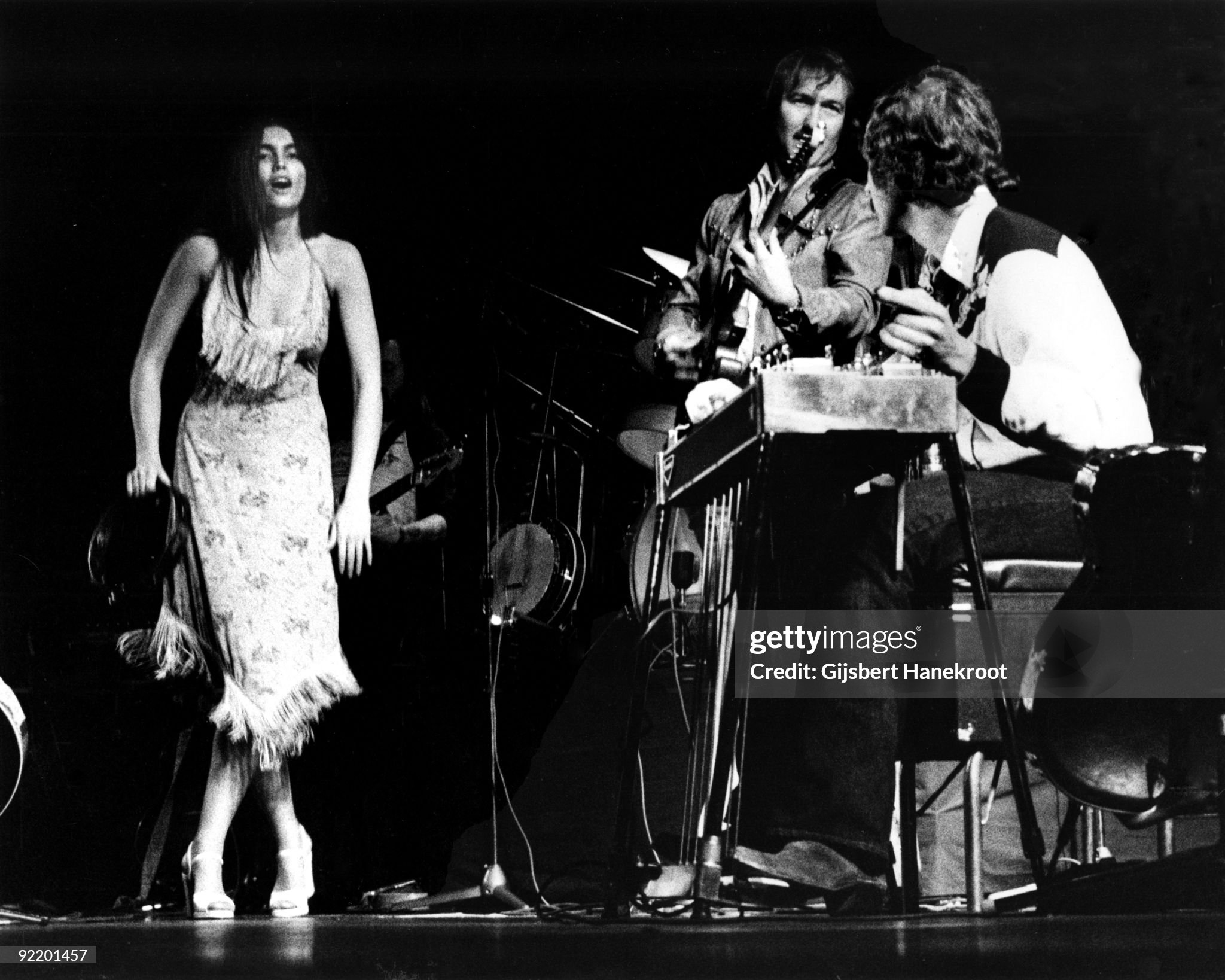
Dolly Parton’s life story takes on new grace in “Coat of Many Colors,” and in Emmylou Harris’ hands, a song already rich with memory becomes even more tender, more luminous, and somehow more quietly devastating.
Some songs carry their own truth so fully that anyone who touches them must approach with care. “Coat of Many Colors” is one of those songs. It was already bound to Dolly Parton’s own childhood story long before Emmylou Harris sang it — the tale of a little girl whose mother stitched a coat from scraps, sewing love into poverty and dignity into want. Dolly wrote the song in 1969, later recording and releasing it in September 1971, and it rose to No. 4 on the U.S. country chart. Over time, Parton would speak of it as one of the songs dearest to her own heart, which only deepened its place in country music memory.
That alone is a powerful hook, because the song is never just a song. It arrives already carrying family, hardship, faith, and the strange beauty of being rich in love while poor in everything else. The image at its center is unforgettable: a mother making something precious from what the world would discard. There is humility in it, but no humiliation in the deepest sense, because the child understands what the other children do not. The worth of the coat is not in the cloth. It is in the devotion sewn into every stitch. Dolly’s own official account of the album and song keeps that emotional truth close, placing the title track at the center of one of the most cherished chapters in her early work.
When Emmylou Harris recorded “Coat of Many Colors” for Pieces of the Sky, released on February 7, 1975, she did not try to compete with Dolly’s authorship or overwhelm the song with vocal display. She did something subtler and, in its own way, more haunting. She gave the song new grace. On an album that became the major-label debut that truly launched her career and climbed to No. 7 on Billboard’s country albums chart, Harris placed Dolly’s song among a remarkable set of material that also included “Boulder to Birmingham,” “If I Could Only Win Your Love,” and “For No One.” That context matters because it shows the kind of artist Emmylou already was: a singer with the taste to choose songs of deep emotional intelligence, and the restraint to let them breathe.
What changes in her version is not the story itself, but the light falling on it. Dolly Parton sings from within the memory, with the vivid, lived authority of someone telling her own life back to the world. Emmylou Harris sings it from a little farther away, and that distance gives the song another shade of feeling. The pride remains. The tenderness remains. But there is also a hush around it now, as though the story has passed from lived experience into something almost mythic — not less human, but more reflective, more touched by time. In Emmylou’s voice, the song seems to drift into that rare place where memory stops being anecdote and becomes inheritance.
That is why the performance lingers. Harris was never a singer who needed to press emotion too hard. Her gift was to make sadness sound refined, to make reverence feel intimate, to let compassion do the work that louder singers might force. In “Coat of Many Colors,” that instinct serves the song beautifully. She does not make it bigger; she makes it gentler. And in doing so, she reminds the listener that the power of the song has never depended on spectacle. It depends on the old truths it carries so simply — that love can dignify poverty, that shame can be answered by inner worth, that a mother’s hands can transform scraps into something unforgettable.
There is also something quietly moving in the way this recording links two great female voices in country music across a shared emotional language. Dolly’s song is rooted in her own life, yet Emmylou recognizes in it something universal enough to inhabit without disturbing its honesty. That takes unusual grace from a singer. She has to honor the autobiographical core while still finding her own way into the feeling, and Harris does exactly that. Her version never sounds borrowed. It sounds understood.
So the hook is powerful because it begins with truth: Dolly Parton’s life story is already there inside the song, inseparable from its meaning. But the deeper beauty comes from what Emmylou Harris adds. She takes a song built from hardship, devotion, and memory, and she lets it bloom with a quieter radiance. The coat is still patched. The child is still mocked. The love is still the real wealth. Yet in Emmylou’s hands, the story seems to glow with a softer, sadder light — one that makes the song feel not only autobiographical, but timeless. That is why her “Coat of Many Colors” continues to hold such power. It does not merely retell Dolly Parton’s story. It honors it with such tenderness that the grace inside it becomes impossible to miss.
