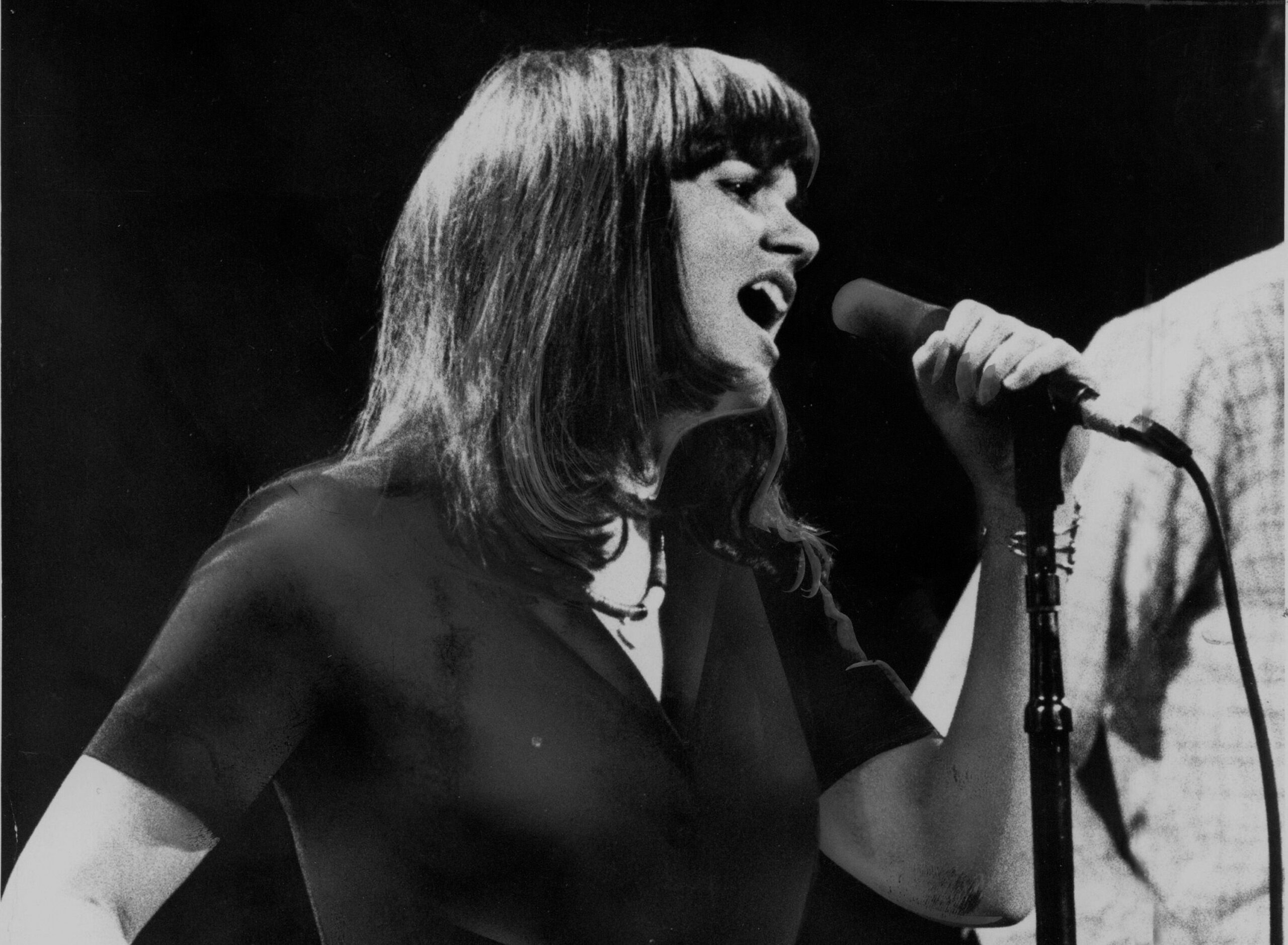
“Heart Like a Wheel” may be Linda Ronstadt’s most emotionally devastating performance because it does not merely sing of heartbreak—it moves like heartbreak itself, turning slowly, helplessly, with a grace that makes the pain feel almost unbearable.
When Linda Ronstadt recorded “Heart Like a Wheel,” she was not chasing a hit in the ordinary sense. The song was never the commercial engine of the album that bore its name. It was not the record that climbed furthest up the singles charts, and it was never the obvious crowd-pleaser beside “You’re No Good” or “When Will I Be Loved.” Yet for many listeners, it remains the emotional center of Heart Like a Wheel, the album released on November 19, 1974, that became Ronstadt’s first No. 1 album on the Billboard 200 and the true commercial breakthrough of her career. The album also spent four weeks at No. 1 on Billboard’s Country Albums chart, stayed 51 weeks on the album chart, and later entered both the National Recording Registry and the Grammy Hall of Fame. Those facts matter because they place the song exactly where it belongs: not as an isolated curiosity, but at the heart of the record that changed everything for her.
The song itself came from Anna McGarrigle, one of the extraordinary McGarrigle sisters, and that origin is crucial. Ronstadt had heard the song years earlier and was deeply affected by it, long before she recorded it herself. Critics writing about the album later emphasized just how powerfully the composition had struck her, and why she held onto it until the right moment. There is a reason for that attachment. “Heart Like a Wheel” is not built like a conventional confession of romantic pain. Its central image is stranger and more memorable than that: the heart is compared to a wheel, something that turns, bends, and once damaged may never quite return to its original shape. It is a metaphor of movement and damage together—love not as still devotion, but as a mechanism worn down by feeling. That image alone gives the song a haunting force.
What makes Linda Ronstadt’s performance so devastating is the restraint with which she enters that emotional space. She does not attack the song. She does not try to wring drama from every line. Instead, she allows the pain to accumulate gradually, almost helplessly, until the listener begins to feel that the song is not being performed at all but endured. This was one of Ronstadt’s greatest gifts. She could sing with enormous power, but she also understood when power would spoil the truth of a lyric. On “Heart Like a Wheel,” she chooses patience. The result is a kind of emotional inevitability. The song does not break apart in public. It keeps its dignity. And precisely because it keeps that dignity, it hurts more.
Within the album, the placement of the song is revealing. Heart Like a Wheel was packed with songs that helped define Ronstadt’s ascent: “You’re No Good” became her first No. 1 single on the Billboard Hot 100; “When Will I Be Loved” reached No. 2; “I Can’t Help It (If I’m Still in Love with You)” earned her a Grammy. But the title track carried a different burden. It was not there to prove her hit-making power. It was there to deepen the album’s soul. Even contemporary reviews recognized its stature. In Rolling Stone, Stephen Holden called the title track “a masterpiece of writing and arrangement.” That judgment has endured because the song feels like more than a strong album cut. It feels like the still point around which the whole record turns.
There is also something revealing in the contrast between the song and Ronstadt’s public image at the time. By the mid-1970s, she was becoming one of the most visible and commercially successful women in American popular music. Her records could sound bright, radio-ready, and effortlessly open. But “Heart Like a Wheel” shows another side of her artistry—the side that understood emotional exhaustion, resignation, and the peculiar dignity of surviving disappointment. This is not a song of theatrical collapse. It is a song of inward damage. The singer is not pleading to be saved. She is recognizing, with devastating calm, what love has already done.
That calm may be why the performance lingers so painfully. Some heartbreak songs announce their misery with grand gestures. “Heart Like a Wheel” does something subtler and, in the end, harsher. It suggests that sorrow can become part of the machinery of being alive. The wheel keeps turning. The heart keeps moving. But something essential has been bent, and no amount of motion can quite repair it. Ronstadt sings that realization with such tenderness that the song never becomes bitter. It remains wounded, but never cruel. That balance is rare. It is easy to sing grief; it is far harder to sing grief without self-pity.
And so the performance stands as one of the clearest examples of why Linda Ronstadt mattered so deeply. She did not write the song, yet she made it sound like lived truth. She took Anna McGarrigle’s remarkable composition and found inside it a private devastation that words alone could not fully explain. On an album that transformed her career, this was the moment that revealed the full emotional authority of her voice—not just its beauty, not just its strength, but its capacity to make sorrow sound noble, intimate, and unforgettable.
That is why “Heart Like a Wheel” may indeed be her most emotionally devastating performance. Not because it is louder than the others, and not because it was bigger on the charts. It is devastating because it understands that the worst heartbreak is often the heartbreak that has already settled in, already done its work, already changed the shape of the soul. And in Linda Ronstadt’s voice, that truth turns slowly, mournfully, and with such aching elegance that one hardly hears a performance at all—only the sound of someone carrying what cannot be mended.
