
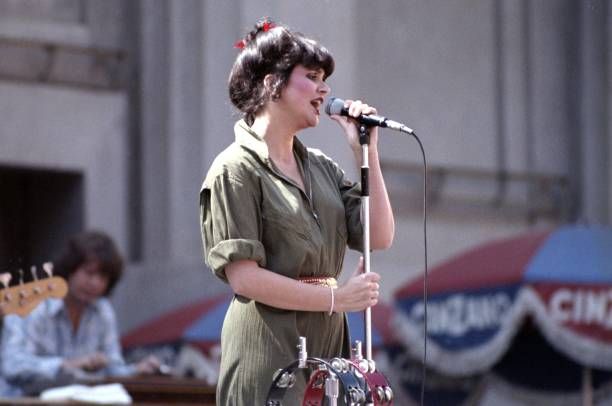
A song about living in the space between hope and surrender, I Can Almost See It lets Linda Ronstadt turn uncertainty itself into something tender, human, and unforgettable.
I Can Almost See It may not be the first title that comes up when casual listeners name their favorite Linda Ronstadt songs, but that is exactly why it deserves a closer listen. Released on her 1973 album Don’t Cry Now, the song arrived just before the great commercial breakthrough that would soon make Ronstadt one of the defining voices of the 1970s. It was not one of the album’s major chart singles, so it did not build its reputation through a big Billboard showing of its own. Instead, its importance lives in placement, mood, and timing. As the opening track of Don’t Cry Now, it set the emotional weather for the whole record. The album itself became an important step forward in Ronstadt’s rise, reaching the Billboard 200 Top 50 and helping clear the path to Heart Like a Wheel the following year.
That moment in her career matters. By 1973, Linda Ronstadt was already respected, already admired, already known by listeners who paid attention to country-rock, West Coast songwriting, and emotionally honest singing. But she had not yet become the towering mainstream presence she would soon be. Don’t Cry Now caught her at a fascinating crossroads: seasoned enough to command a song with total conviction, but still hungry enough to sound as if every line had something to prove. That is part of what makes I Can Almost See It so affecting. It feels like the sound of an artist standing at the edge of a larger destiny, even while singing about emotions that remain unresolved.
The title alone carries much of the song’s power. I Can Almost See It is built around a feeling many people recognize immediately: that moment when the future seems visible but not reachable, when the truth is near enough to sense and still too far away to hold. In Ronstadt’s hands, that idea becomes more than simple longing. She gives it weight, patience, and a kind of bruised dignity. She does not overplay the sadness. She does not rush toward melodrama. Instead, she lingers in that uncertain middle ground, where memory, desire, and resignation sit together in the same room. That restraint is one of the great signatures of her finest performances.
Musically, the track fits beautifully into the country-rock language that Ronstadt helped define, but it is the emotional phrasing that makes the performance stand apart. She had one of those rare voices that could sound powerful without pushing, intimate without shrinking, elegant without losing earthiness. On I Can Almost See It, she sings with the kind of control that makes every small inflection matter. There is no need for showy vocal acrobatics. The ache is in the shading, in the slight lift of a phrase, in the way she lets a line settle instead of forcing it to announce itself. The arrangement supports that choice. Rather than crowding the song, it gives her room to live inside it.
What makes the song even more meaningful in retrospect is how clearly it reveals Ronstadt’s gift as an interpreter. She was never simply a singer who covered songs; she was an artist who could locate the emotional center of a composition and make it feel newly lived. That is an easy thing to say about a great vocalist, but not all great vocalists do it this completely. With Linda Ronstadt, the result was often startling: a song could feel both deeply personal and universally familiar at the same time. I Can Almost See It is a fine example of that talent. Even listeners who come to it decades later often feel as if they have known it much longer than they actually have.
The story behind the song, then, is not a tale of blockbuster chart numbers or radio saturation. Its story is quieter, and in some ways richer. It was part of the album that announced Ronstadt was moving into a deeper, more assured phase of her recording life. Before Heart Like a Wheel brought major hit singles and solidified her crossover appeal, Don’t Cry Now showed that she already possessed the emotional authority of a major artist. Opening that album with I Can Almost See It was a meaningful choice. It told listeners that the heart of the record would not be noise, trend, or pose. It would be feeling—carefully observed, beautifully sung, and impossible to fake.
There is also something especially moving about returning to a song like this after knowing the larger arc of Ronstadt’s career. Later, the world would hear the chart triumphs, the stylistic range, the fearless movement from rock to country to pop standards to Mexican music. But early recordings such as I Can Almost See It remind us what was there from the beginning: taste, discipline, sorrow, warmth, and a rare instinct for emotional truth. That is why the song still lingers. It does not ask for attention the way a hit single does. It simply stays with you. And sometimes, years later, those are the songs that mean the most.
So if I Can Almost See It feels a little hidden beside the better-known landmarks in Linda Ronstadt‘s catalog, that may be part of its beauty. It belongs to the chapter just before everything changed, when the voice was already unmistakable and the future was just beginning to come into view. In that sense, the song’s title almost tells the story of Ronstadt herself in 1973: she could almost see it, and listening now, so can we.
