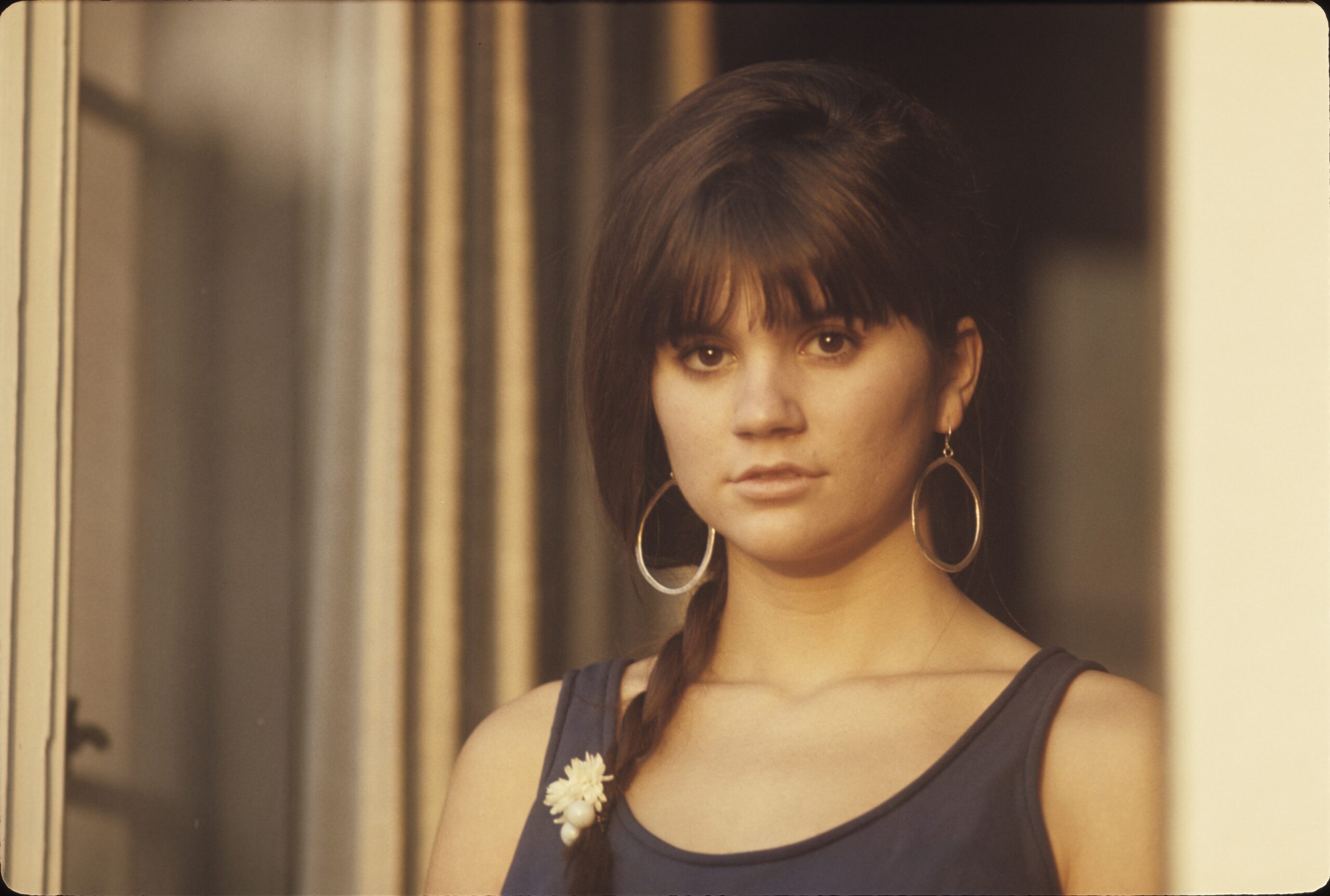
“I’ll Be Your Baby Tonight” in Linda Ronstadt’s hands is a soft promise spoken at closing time—less a pickup line than a brief, merciful shelter from the long night outside.
Before it became a standard passed from singer to singer, “I’ll Be Your Baby Tonight” began as Bob Dylan’s surprising act of warmth at the end of a stark, inward-looking album. He recorded it in 1967 and first released it on John Wesley Harding (issued in December 1967). In the U.S. it wasn’t introduced to the world as a major chart single; its early “life” was album-born—quiet, almost casual, as if Dylan wanted the song to feel like an offer made without witnesses. Later, it was released as a single by EMI in the UK and parts of Europe, reinforcing that it could live as pop, not just as an album epilogue.
Linda Ronstadt arrived at the song early—long before the stadium years and the platinum inevitability. Her version appears on Hand Sown … Home Grown, released in March 1969 by Capitol Records, widely noted as the first studio album to credit her alone (after the Stone Poneys era). On the track listing, “I’ll Be Your Baby Tonight” sits on Side 2, clocking in at 3:43, a choice that already hints at her instinct: let the tune stretch, let the tenderness linger a little longer than “radio efficiency” might demand.
If we talk about “chart position at release,” the honest, accurate answer is nuanced. Ronstadt’s recording wasn’t pushed as the A-side of a hit single with its own chart run. In 1969, Capitol issued a 7-inch single with “Baby You’ve Been on My Mind” as the titled side, paired with “I’ll Be Your Baby Tonight” (Capitol 15612). In Linda Ronstadt’s singles discography, “Baby You’ve Been on My Mind” (1969) is shown with a dash for U.S. chart position—meaning it did not chart on the U.S. listings used there—so there is no U.S. peak number to attach to her “Baby Tonight” as a contemporary hit moment. That lack of chart drama, though, is part of the song’s charm in her catalog: it has always felt like something you find rather than something that finds you.
The story behind Ronstadt’s version is really the story of who she was becoming. Hand Sown … Home Grown is described as a set of mostly covers fusing country rock and folk, and the Dylan selections—two of them—are specifically highlighted as part of the album’s identity. In 1969, Ronstadt hadn’t yet become the definitive voice of mainstream West Coast pop; she was still carving out a sound that could hold Nashville ache and Los Angeles clarity in the same mouth. Dylan gave her a song that looks simple on paper—an invitation, a little reassurance, the promise of companionship for one night—yet it contains a subtle emotional risk: say it too sweetly and it becomes naïve; sing it too tough and it becomes a dare.
Ronstadt’s gift was always emotional credibility. Even when she’s singing a line that could be flirtation, you believe there’s a person behind it—someone who knows that “tonight” is both comforting and fleeting. That’s the deeper meaning of “I’ll Be Your Baby Tonight” when she sings it: not a fantasy of forever, but an honest bargain with loneliness. It’s the humane side of romance—the moment when pride loosens its grip, and two people agree, without speeches, to make the darkness less heavy.
So the song’s legacy in Ronstadt’s world isn’t measured in chart peaks. It’s measured in hindsight: hearing a young Linda Ronstadt already practicing the art she would later master—taking another writer’s story, stepping inside it, and making it sound like a memory you didn’t realize you were carrying.
