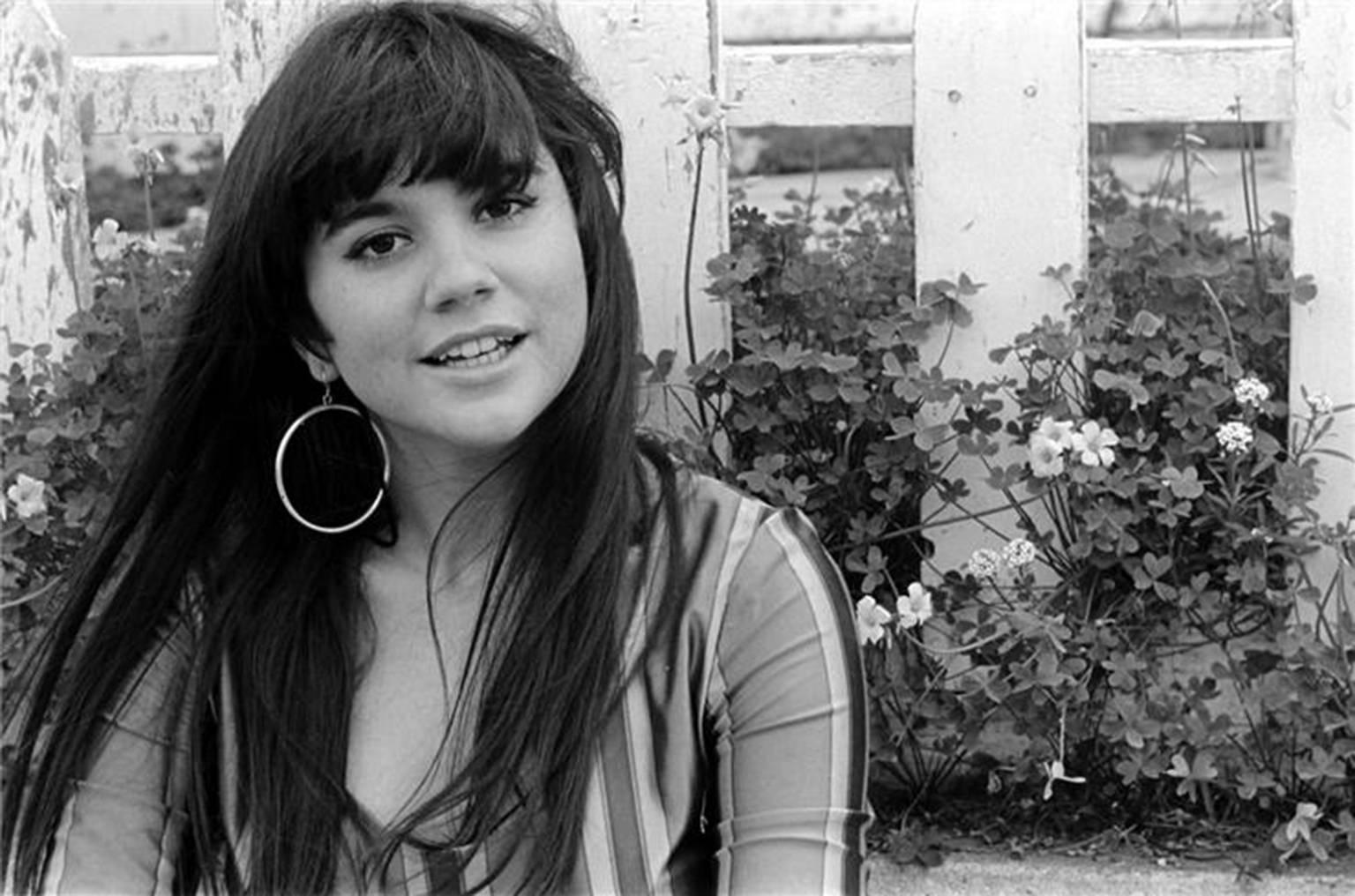
“I’ve Got a Crush on You” is a love confession dressed in elegance—where Linda Ronstadt doesn’t chase romance, she holds it still, like a close-up in an old film that refuses to fade.
When Linda Ronstadt stepped into “I’ve Got a Crush on You,” she did something braver than a genre shift: she chose quiet in an era that rewarded volume. Her recording appears on What’s New—released September 12, 1983, produced by Peter Asher, and arranged/conducted by Nelson Riddle—the first album in her celebrated trilogy of Great American Songbook collaborations. The album itself wasn’t a tasteful side project; it was a major cultural event, holding No. 3 on the Billboard 200 for weeks and ultimately going triple-platinum in the U.S. In other words, this wasn’t Ronstadt “visiting” standards—this was Ronstadt reintroducing them to a new generation with the authority of a superstar who had nothing left to prove.
The song’s own pedigree is pure Gershwin—music by George Gershwin, lyrics by Ira Gershwin—and its history is more theatrical than most people realize. It first appeared in the Broadway musical Treasure Girl in 1928, then resurfaced in the revised Strike Up the Band in 1930, with publication tied to that 1930 version. And though it’s now treated as a timeless standard, scholarly accounts note it didn’t truly bloom in popular consciousness until Lee Wiley recorded it in 1939, softening its original dance-number identity into the ballad we tend to hear today. That arc—stage to rediscovery to standard—is part of why the lyric feels so eternal: it has survived because it keeps accepting new emotional climates.
Ronstadt’s climate was the early 1980s, when “old pop” was often dismissed as relic material. Yet What’s New was a deliberate rebuttal to that cynicism. Ronstadt herself later described these songs as “little jewels,” worth rescuing from cultural neglect. And “I’ve Got a Crush on You” was already living in her bloodstream before the album: she had performed it on The Muppet Show in 1980, a wonderfully improbable moment that now reads like a preview of her coming pivot—one foot in mass pop culture, the other in the velvet-lined tradition of the American standard.
At release, the “ranking” story belongs to the single’s adult-standards pathway rather than rock radio. “I’ve Got a Crush on You” reached No. 7 on the US Adult Contemporary chart and No. 1 on Canada’s RPM Adult Contemporary chart. It’s a fitting chart profile: this song doesn’t kick the door down. It enters the room like perfume—soft, persuasive, lingering.
And what does it mean, in Ronstadt’s hands? The lyric is famously playful—full of witty self-awareness—yet it also carries a small, human humiliation: the singer is publicly undone. “The world will pardon my mush,” it says, as if love has made a dignified person suddenly speak in embarrassing poetry. Ronstadt understands that embarrassment, and she doesn’t hide it behind irony. Instead, she sings with the composure of someone who has learned that true vulnerability isn’t loud. It’s controlled—almost mannerly—because it’s afraid of being seen.
That’s where Nelson Riddle matters, too. His orchestral world doesn’t smother Ronstadt; it frames her like soft lighting. The arrangements recall an age when romance was allowed to be grown-up—when yearning could be elegant instead of frantic. Ronstadt, often celebrated for power, chooses precision: she shapes the lines as if each syllable is a careful step across a polished floor. The result is not nostalgia as costume. It’s nostalgia as emotional truth—proof that a “crush” can feel like fate when you’ve lived long enough to know how rarely the heart is surprised.
In the end, “I’ve Got a Crush on You” becomes more than a standard revived. It becomes a small act of faith: that tenderness still deserves craftsmanship, that melody still deserves patience, that the old language of romance can still say something honest about the present. And when Ronstadt sings it, you don’t just hear a woman with a crush—you hear an artist reminding the world that elegance can be its own kind of courage.
