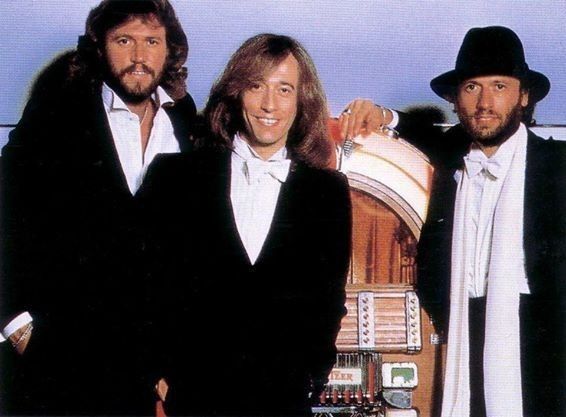
On Stop (Think Again), the Bee Gees turned a slow R&B ballad into a study in how much feeling could be built from three voices moving as one.
Stop (Think Again) appears on the Bee Gees album Spirits Having Flown, released in 1979 on RSO at the very height of the group’s late-seventies power. Coming after the worldwide phenomenon of Saturday Night Fever, the album carried enormous expectations, and its best-known singles — Too Much Heaven, Tragedy, and Love You Inside Out — became defining markers of the group’s commercial peak. Yet tucked into the album’s deeper stretch is this sprawling six-minute R&B ballad, a recording that does not try to win attention through speed, glitter, or obvious drama. It asks for patience. It lets the room widen. It gives the brothers time to build emotion the way they often built their finest work: not by rushing toward impact, but by layering voices until the air itself seems to thicken.
That is what makes Stop (Think Again) such a revealing piece of the Spirits Having Flown era. By 1979, the Bee Gees were sometimes reduced in public memory to falsetto hooks and dance-floor dominance, as if the sound that made them famous had been a simple formula. This track tells a more complicated story. It is a slow-burn soul ballad shaped by discipline, restraint, and harmonic intelligence. The falsetto is not merely a signature color placed on top of the song; it is part of the song’s architecture. The high register carries tension, while the surrounding harmonies soften, answer, and sometimes seem to suspend the emotion in midair.
The brothers had been singing together since childhood, and that lifelong familiarity matters here. Their blend was never just about hitting the right notes. It was about instinct — the tiny movements of timing, breath, vowel shape, and emotional pressure that happen when voices know one another almost before thought enters the room. On Stop (Think Again), those instincts are stretched across a longer form. The length of the track gives the harmonies space to shift rather than simply arrive. A phrase can bloom, retreat, and return with a slightly different shade. The effect is intimate, but also carefully constructed, as if vulnerability and precision are working side by side.
Musically, the song sits apart from the more immediate attack of the album’s big singles. Tragedy moves with theatrical urgency; Too Much Heaven floats on gospel-touched sweetness; Love You Inside Out glides with polished sensuality. Stop (Think Again) is slower and more patient, closer to an R&B lament than a pop showcase. Its six-minute span allows the arrangement to breathe, and that breathing is essential. The song does not feel designed to grab a radio moment and disappear. It feels like a private conversation made grand through harmony, a plea repeated until it becomes less like persuasion and more like reflection.
The title itself carries a small but powerful interruption: stop, then think again. It is not a command shouted across a room; in the context of the recording, it sounds more like a voice asking for one last reconsideration before something important is lost. That emotional pause suits the Bee Gees especially well. They often wrote songs where romance was not simply joy or sorrow, but a state of negotiation — between desire and pride, memory and decision, closeness and distance. Here, the falsetto heightens that feeling because it lives at the edge of strain. It can sound weightless, but it is never casual. It suggests someone trying to remain graceful while the feeling underneath grows harder to contain.
The production world of Spirits Having Flown was sleek and highly polished, shaped by the group with longtime collaborators Albhy Galuten and Karl Richardson. That polish can sometimes make listeners overlook how much human craft is inside the surface. Stop (Think Again) rewards closer listening because the song’s drama is not concentrated in one obvious moment. It lives in the slow accumulation of voices, the way the upper lines hover over the rhythm, the way the arrangement lets the brothers’ blend become the main emotional instrument. In a period when the Bee Gees were surrounded by the noise of fame, sales, backlash, and cultural saturation, this album track feels almost like a reminder of the thing that existed before all of it: three brothers listening closely to one another.
Heard now, Stop (Think Again) helps restore the scale of what the Bee Gees were doing in 1979. They were not only making hits; they were refining a vocal language. Their falsetto harmonies could be bright, seductive, aching, or almost orchestral, depending on how they were placed inside a song. On this track, they become a slow-moving maze of feeling, drawing the listener through doubt and longing without needing to explain too much. It may not be the first song people name from Spirits Having Flown, but it is one of the recordings that shows how deep the group’s craft ran beneath the shine. The song lingers because it does not hurry its sorrow. It lets the voices rise, overlap, and search — and in that search, the Bee Gees sound less like stars at the center of a cultural moment than like craftsmen trusting the power of harmony to say what ordinary speech cannot.
