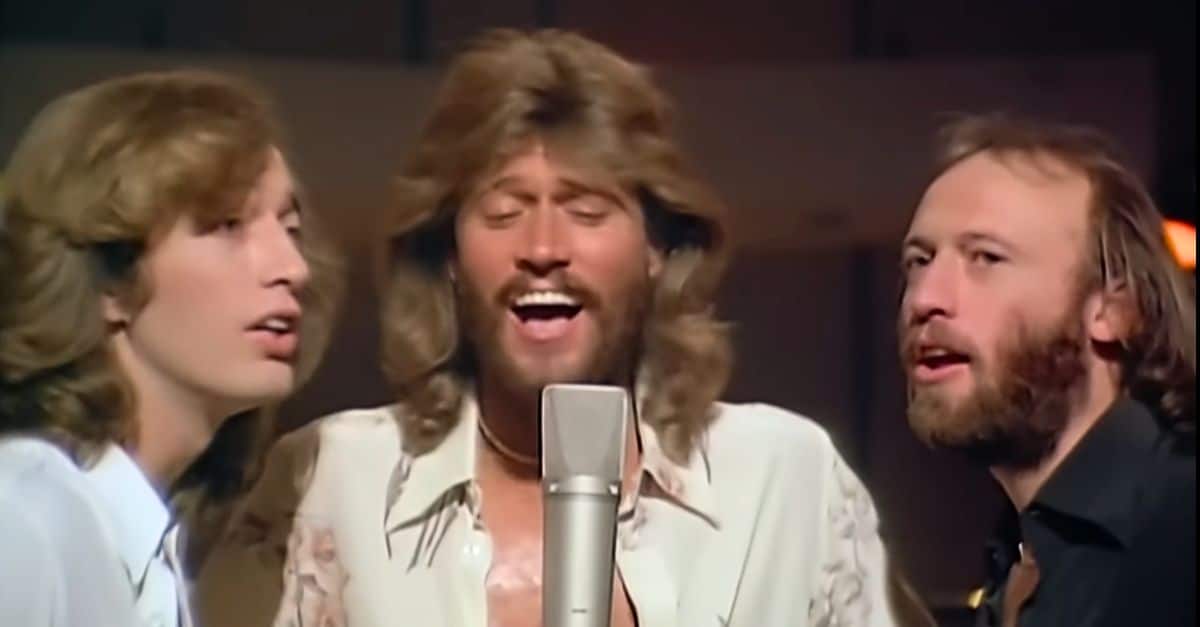
On Odessa, the Bee Gees built a grand double album, but “Sound of Love” lets Barry Gibb turn that scale into something almost private.
Released in 1969, Odessa remains one of the most ambitious records in the early Bee Gees catalog: a sprawling double album issued before disco became part of their public identity, before the white suits and dance-floor mythology narrowed the casual listener’s memory of what the group could be. Within that ornate, sometimes theatrical world, “Sound of Love” sits as a true deep cut, not one of the album’s most commonly cited songs and not a single built for easy summary. Its importance lies elsewhere. Anchored by a tender Barry Gibb lead vocal, the track reveals how the group could make baroque pop feel emotionally immediate, even when the arrangement around it suggested a much larger canvas.
Odessa arrived at a complicated moment. The Bee Gees were already established as gifted melodic craftsmen, yet the group was also stretching against expectations, moving through orchestral pop, folk shading, country touches, dramatic balladry, and the kind of late-1960s studio grandeur that treated an album as a world rather than a container for singles. The original release, remembered partly for its striking red flocked sleeve, carried the feeling of a band trying to make something weighty and cinematic. But “Sound of Love” does not need to announce that ambition loudly. It works more like a chamber inside the mansion: carefully designed, softly lit, and easy to miss if one only walks through looking for the famous rooms.
The song’s baroque pop character is central to its quiet force. The arrangement does not simply decorate the melody; it frames it with a sense of formality, almost like a small courtly procession built around a vulnerable human voice. In the Bee Gees’ late-1960s recordings, orchestral color was never just a luxury. It often became a way of enlarging private feeling without turning it into spectacle. On “Sound of Love,” those graceful textures allow the melody to move with patience and restraint. The result is intricate without becoming cold, ornate without losing touch with the plain emotional need at the center of the song.
That need is carried by Barry Gibb. For listeners who first came to the Bee Gees through their later disco-era dominance, Barry’s voice may be most strongly associated with falsetto brilliance and rhythmic lift. Here, the impression is different. His lead vocal is gentle, open, and almost careful in the way it approaches the lyric. He does not overpower the track. He seems to lean into it, letting the softness do the persuasive work. There is a youthful ache in the performance, but also a discipline that keeps the song from becoming overwrought. Barry sounds less like a singer demanding to be believed and more like someone trying not to damage the feeling by holding it too tightly.
That restraint matters because Odessa has often been discussed through the larger drama surrounding the Bee Gees at the end of the decade. The album period coincided with internal tensions, and Robin Gibb would briefly leave the group after this era, with attention often drawn to the single choice between “First of May” and “Lamplight.” Those facts belong to the album’s history, but “Sound of Love” should not be reduced to a clue in a band conflict. Its emotional power is subtler than that. It belongs to a record made under pressure, yet it stands as a reminder that even in a restless creative moment, the Bee Gees could still locate intimacy inside craft.
As a deep cut, the song rewards the kind of listening that does not rush toward the familiar landmarks. Odessa contains bigger gestures, stranger turns, and more often discussed recordings, but “Sound of Love” has a particular beauty because it does not fight for dominance. It asks for attention in a quieter register. The melody unfolds with the careful symmetry that marked the Gibb brothers’ strongest work, while the arrangement gives Barry’s vocal enough space to feel exposed. Nothing about it feels accidental, yet it never sounds mechanical. It has the delicacy of something handmade.
Part of the fascination now is hearing the Bee Gees before history simplified them. In 1969, they were not yet the global shorthand for the sound of the late 1970s. They were a group of young songwriters with unusually strong melodic instincts, using the studio to explore grief, romance, memory, theatricality, and pop elegance in ways that did not always fit neatly into one category. “Sound of Love” catches that early identity in miniature. It is polished, but not glossy. Romantic, but not naïve. Ambitious, but not inflated. The grandness of Odessa makes the song’s inwardness feel even more striking.
To return to “Sound of Love” today is to hear a band often remembered for dazzling public triumphs working in a more fragile language. The song does not need to be rescued from obscurity by exaggerated claims. It simply needs to be heard with the album’s scale around it and Barry Gibb’s voice at the center of it. In that setting, the track becomes one of those small, revealing pieces that deepen the portrait of an artist. It reminds us that the Bee Gees’ story was never only about reinvention or success. Sometimes it was about a melody held gently enough that its sadness could breathe.
