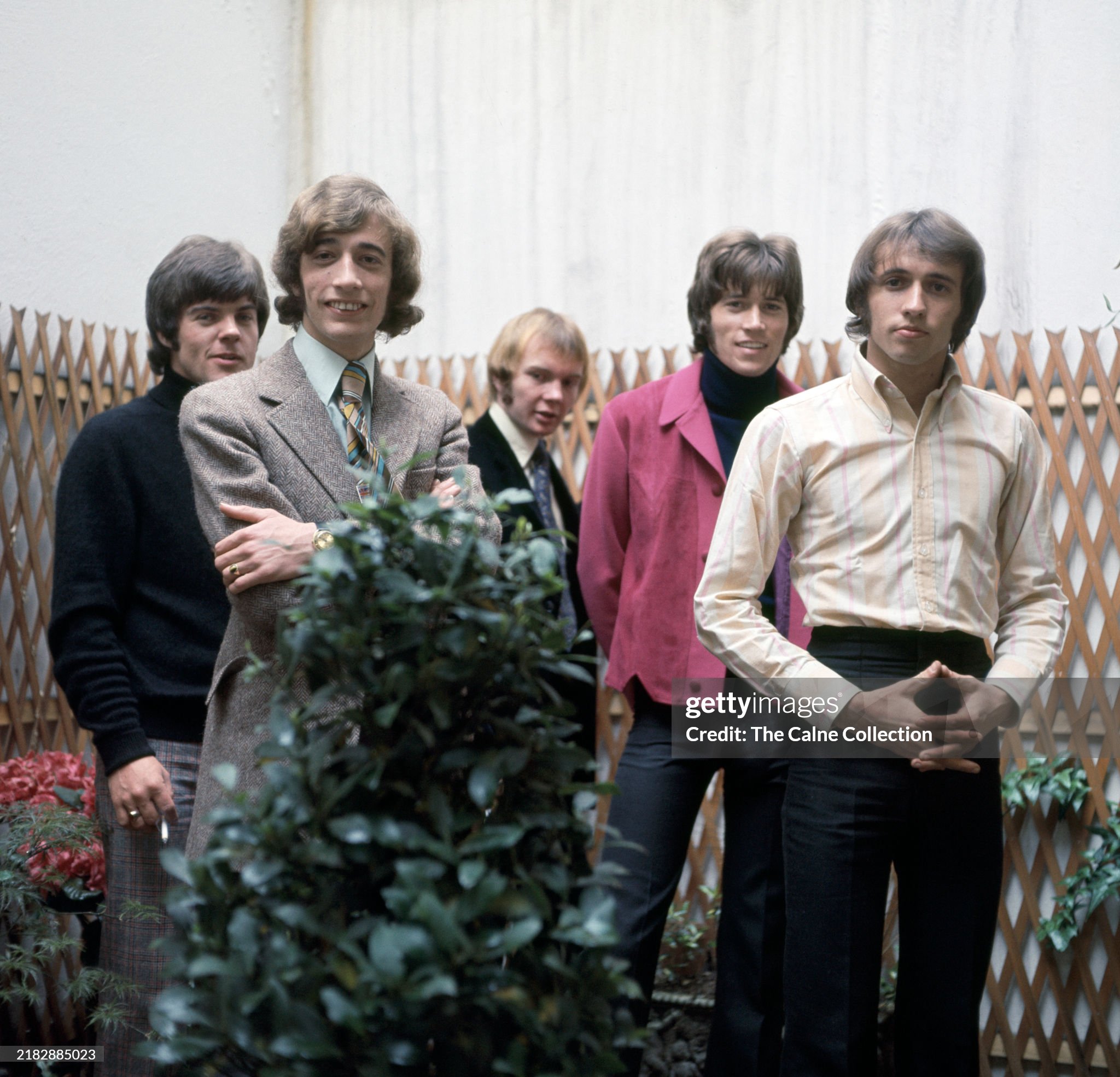
Before the Bee Gees became shorthand for reinvention, Give Your Best showed how far the Odessa imagination could travel, from ornate pop to country brightness and into the world of Melody.
Give Your Best was first released by the Bee Gees on their ambitious 1969 double album Odessa, a record often remembered for its orchestral sweep, maritime drama, and grand pop melancholy. Two years later, the same track gained another layer of association when it appeared in the soundtrack context of the 1971 film Melody, where Bee Gees songs helped frame a tender story of youth, friendship, and first love. That journey matters because Give Your Best is not the obvious face of Odessa. It is a side door into the album: upbeat, country-flavored, and almost mischievously light on its feet.
To hear it inside Odessa is to understand just how broad the brothers Gibb were willing to make their world at the end of the 1960s. The album spread itself across four sides and refused to settle into a single mood. There were stately ballads, orchestral passages, strange character sketches, dramatic arrangements, and songs that seemed to drift between chamber pop and private confession. In that setting, Give Your Best arrives like a sudden grin after a long, serious conversation. Its country swing does not feel like a novelty so much as a reminder that the Bee Gees were never only one thing.
Credited to Barry, Robin, and Maurice Gibb, the song belongs to a phase when their writing was becoming more adventurous in both scale and tone. By 1969, the group had already shown a gift for melancholy melody and close vocal architecture, but Odessa pushed that gift into a larger, riskier frame. Give Your Best breaks from the velvet weight often associated with the album. It leans into a rustic bounce, a playful rhythm, and a looseness that makes the brothers sound less like pop formalists and more like musicians enjoying the room around them. The track carries a country-flavored brightness without surrendering the unmistakable Bee Gees instinct for shape and tune.
That contrast is what gives the song its charm. On paper, Odessa sounds like the kind of album that should move only through grandeur and deep feeling, but great records often reveal themselves through their detours. Give Your Best is one of those detours. It suggests an artist group testing doors, not because every door leads to a career-defining anthem, but because curiosity itself was part of the music. Long before the public would associate the Bee Gees with later reinventions, this little country-tinged track showed a band already stretching the borders of its identity.
The later connection to Melody changes the way the song can be heard. The 1971 film, known for its youthful coming-of-age atmosphere and its use of several Bee Gees recordings, gave songs from this period a new emotional setting. Alongside pieces such as Melody Fair and First of May, Give Your Best could feel less like an album curiosity and more like part of a small cinematic world. In a story centered on young affection and school-age rebellion, its brisk, unbuttoned character makes sense. It carries motion. It has the feeling of feet crossing a courtyard, laughter breaking through rules, a day briefly opening wider than expected.
Soundtracks have a way of rescuing certain songs from the strict boundaries of their original albums. A track that once served as an eccentric contrast on a double LP can become, in a film, a color in someone else’s memory. Give Your Best benefits from that shift. On Odessa, it shows versatility. In the orbit of Melody, it becomes a flash of innocence and movement. The song does not need to carry the whole emotional burden of the film or the album; it simply brightens the space it enters.
This is also why the track remains worth revisiting. It reminds us that the Bee Gees were not merely chasing a sound. They were absorbing traditions, bending styles, and letting unlikely moods sit beside one another. Country, baroque pop, orchestral drama, soft balladry, and British pop imagination could all exist in the same period of their work. Give Your Best may be brief and buoyant, but it tells a larger truth about their musical confidence. The brothers did not have to announce their range. Sometimes they revealed it by placing a lively country-flavored number in the middle of one of their most ambitious albums.
Heard now, the song has a special kind of freshness because it refuses to behave like a monument. It does not ask to be weighed down with reverence. It asks to be played, smiled at, and noticed for the clever little surprise it is. The Melody connection only deepens that feeling, letting the track drift back toward youth, motion, and the open air of a story still beginning. In the long arc of the Bee Gees, Give Your Best stands as proof that even their lighter moments could reveal serious imagination.
