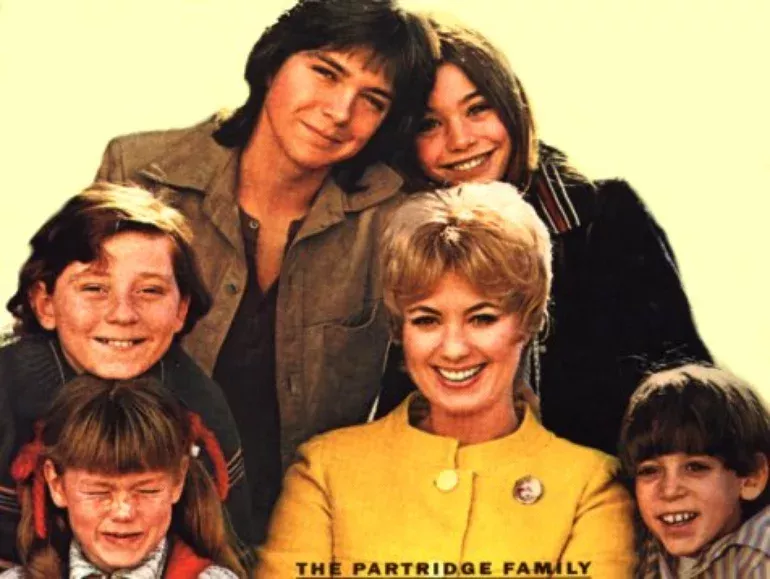
Not every Partridge Family song found its place on an album; this rare television-era performance lets David Cassidy’s lead vocal feel like the main event.
The Partridge Family’s It’s Time That I Knew You Better occupies a special corner of the group’s early-1970s story because it belongs to the television world more than the standard album catalog. Unlike the familiar Bell Records LPs that carried the fictional family band into real record stores, this track is remembered as a rare TV-era song, with David Cassidy taking the lead vocal and giving the moment a directness that feels unusually exposed. That distinction matters. It is not simply another entry in a discography; it is a piece of the show’s musical atmosphere, preserved in memory by viewers and collectors precisely because it did not settle comfortably into the normal album sequence.
The television series The Partridge Family ran on ABC from 1970 to 1974, during a period when pop music, prime-time television, and youth culture were beginning to overlap in new and commercially powerful ways. The family band was fictional, but the records were real, and the emotional center of many of those recordings came from Cassidy’s unmistakable voice, often supported by Shirley Jones and by professional studio musicians and singers. That arrangement was part show business, part pop craftsmanship, and part accident of chemistry. What audiences saw each week was a bright sitcom family with matching stage clothes and a painted bus; what they heard, at its best, was a young singer learning how to turn television lightness into something that could survive away from the screen.
That is why It’s Time That I Knew You Better feels so intriguing. A song tied to a TV performance has a different kind of life from a song placed on an LP. Album tracks have sleeves, credits, sequencing, and a physical place in a listener’s hands. A television song has to appear quickly, set a mood, and vanish back into the story. It can feel almost temporary. Yet sometimes that very briefness makes the music more personal. The listener leans in because the song is not framed as a major single or a carefully positioned album centerpiece. It arrives as a moment, and Cassidy’s lead vocal gives that moment its shape.
His singing on this kind of material carried a particular tension. Cassidy could sound polished enough for pop radio, but there was often a youthful urgency underneath the smoothness, a feeling that the words were moving faster than the character wanted to admit. In It’s Time That I Knew You Better, the title alone suggests a small emotional turning point: not a grand declaration, not a dramatic goodbye, but the quieter recognition that closeness requires honesty. Within the world of The Partridge Family, that kind of sentiment fit naturally. The show often wrapped music in color and charm, yet Cassidy’s voice could pull a song inward, making it feel less like a performance by a fictional band and more like a private thought slipping through the television speakers.
The fact that the track did not appear on a standard studio album adds to its aura. Fans who know the official album run can hear songs like this as missing rooms in a familiar house. They are not necessarily more important than the released hits, but they change the map. They remind us that the Partridge Family phenomenon was not contained only in the records people bought. It also lived in weekly broadcast moments, in songs half-remembered from an episode, in performances that were seen once and then carried around in memory until collectors and devoted listeners brought them back into conversation.
For David Cassidy, such tracks help explain why his appeal was never only about teen-idol visibility. The camera may have made him famous, but the voice gave that fame an emotional center. On a rare TV-era song like It’s Time That I Knew You Better, he is not surrounded by the usual weight of a promoted single or the permanence of an album release. He simply steps forward inside the format that made him known and lets the vocal carry the scene. Heard now, the song feels like a small but revealing document from a strange and fascinating pop moment, when a sitcom could produce real musical feeling and a performance left off the albums could still tell us something essential about the singer at its center.
