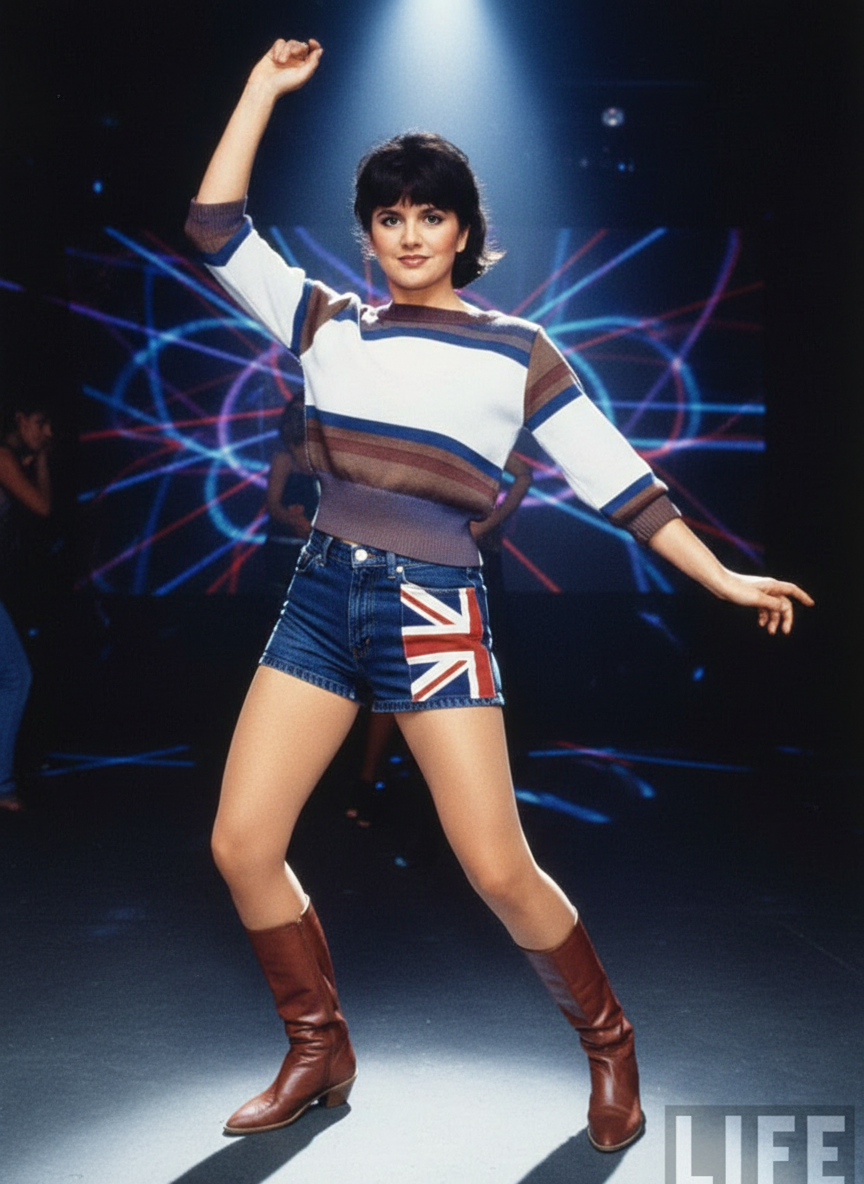
On Feels Like Home, Linda Ronstadt turned David Olney’s river song into a shadowed piece of American memory, where restraint says as much as sorrow.
When Linda Ronstadt recorded “Women ’Cross the River” for her 1995 album Feels Like Home, she was not simply adding another respected songwriter to an already wide-ranging catalog. She was choosing a song by David Olney, one of the sharper narrative voices in American roots music, and placing it inside an album that leaned back toward country, folk, bluegrass, and acoustic storytelling after years in which Ronstadt had moved freely through pop, standards, Mexican song, and adult contemporary balladry. That context matters. This was not a glossy showcase built around spectacle. It was an album concerned with return: to wooden instruments, to plainspoken melodies, to songs that seemed to carry dust on their boots and long distances in their phrasing.
Feels Like Home arrived in 1995 at a point when Ronstadt’s career had already proven almost impossible to contain within one genre. She had been a country-rock pioneer, a pop-radio force, a torch-song interpreter with Nelson Riddle, and a deeply committed singer of traditional Mexican music. By the mid-1990s, she no longer needed to prove range; the range was the story. What made this album compelling was something quieter. It suggested an artist using that range not for display, but for selection. The songs sounded chosen for the way they opened a room, not for the way they could dominate one.
That is why David Olney’s “Women ’Cross the River” sits so naturally within the record. Olney’s songwriting often moved like short fiction: suggestive rather than overexplained, filled with landscape, danger, memory, and moral weather. The title alone feels like an image from an older America, but not a romanticized one. A river in a folk song is rarely just water. It is boundary, escape, exile, baptism, danger, passage, and sometimes the line between what can be endured and what must be left behind. Ronstadt understood that kind of symbolism instinctively. She had always been at her most devastating when she allowed a song’s emotional pressure to rise from inside the melody rather than laying it on top.
Her interpretation of “Women ’Cross the River” is powerful because it does not force the listener toward one simple reading. Ronstadt’s voice, by this period, had lost none of its expressive command, but she used it with a different kind of authority than the youthful blaze of her 1970s recordings. Here, the drama is controlled. She does not turn the song into a grand confession. Instead, she sings as if she is carrying an old story carefully, aware that too much polish would damage it. The phrasing lets the words breathe. The emotional weight gathers in the spaces between lines, in the sense that the song knows more than it chooses to say.
The roots-oriented character of Feels Like Home sharpens that effect. Acoustic textures, country inflections, and folk-based arrangements give the album a human scale. Around Ronstadt’s voice, the music does not feel ornamental; it feels like terrain. The instruments help create the kind of setting where a song like “Women ’Cross the River” can live without being explained. There is a feeling of open land and unresolved history, but also of intimacy, as if the singer has stepped close to the listener to pass along something remembered from another generation.
As an album track, it may not have the immediate name recognition of some of Ronstadt’s biggest recordings, yet that is part of its fascination. Her catalog is full of songs that became public landmarks, but there are also performances like this one, tucked into albums, where her gift as an interpreter becomes especially clear. Ronstadt had a rare ability to enter another writer’s world without erasing its strangeness. With David Olney, that meant honoring the song’s rough edges, its narrative uncertainty, and its sense of movement toward a crossing that may or may not bring peace.
Listening to “Women ’Cross the River” within Feels Like Home also reminds us how Ronstadt’s finest work often depended on trust: trust in songwriters, trust in musicians, trust in silence, and trust in the listener’s ability to feel what is not spelled out. She did not need to solve the song. She needed to inhabit it. In doing so, she made Olney’s river feel less like scenery and more like a line running through American music itself, where personal grief, communal memory, and the search for safe passage all meet in one dark current.
There is no need to inflate the track into a world-changing event. Its force is more durable than that. It is the force of a great singer recognizing the gravity inside a lesser-known song and refusing to smooth it into something easier. On Feels Like Home, Ronstadt made room for the kind of music that does not announce its importance. “Women ’Cross the River” simply moves forward, patient and watchful, carrying its burden across the water.
