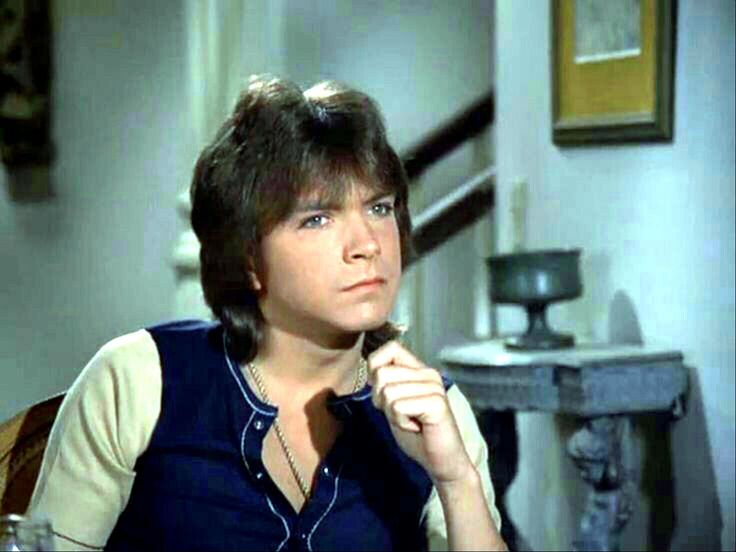
On “Half Past Your Bedtime,” David Cassidy sounds less like a teen-idol memory and more like an artist testing the quiet edges of adult pop.
David Cassidy recorded “Half Past Your Bedtime” for his 1976 album Home Is Where the Heart Is, a record that belongs to one of the more revealing and often overlooked chapters in his career. Co-written with Gerry Beckley of America, the song carries a different kind of weight than the public usually attached to Cassidy’s name. It is not built around the easy brightness of early 1970s television fame, and it does not ask to be heard as a souvenir from The Partridge Family era. Instead, it sits inside a quieter, more complicated moment: Cassidy trying to be measured not by screams, posters, or inherited expectations, but by the shape of a song.
By 1976, Cassidy was no longer just the young face that had filled magazines and living rooms. The television series had ended, the first fever of fame had cooled, and the problem facing him was one that many teen idols never escaped: how to become an adult artist in public when the audience still remembers you as someone younger. Home Is Where the Heart Is reflects that difficult passage. Its title alone suggests shelter, return, and private feeling, but the album is also a document of movement. It shows Cassidy looking toward the softer, more crafted side of mid-1970s Los Angeles pop, where melody, restraint, and atmosphere could say as much as volume.
That is why the Gerry Beckley connection matters. Beckley, as a member of America, helped define a kind of West Coast songwriting that made understatement feel expansive. His best-known work often carried a light surface and a more shadowed emotional center: clean lines, gentle momentum, and melodies that seemed simple until they stayed with you. On “Half Past Your Bedtime”, that sensibility gives Cassidy a useful frame. The song’s title has the quickness of a wink, almost as if it belongs to a more playful pop record, but the deeper impression is more adult than the phrase first suggests. It feels less like novelty and more like mood: a late-hour conversation, a private dare, a singer trying not to oversell what the melody can already imply.
For listeners who know Cassidy mainly through the giant pop-cultural outline of his youth, this track can come as a small correction. His voice was often discussed in terms of image, but in recordings like this one, the image falls back and the vocal choices become easier to notice. He does not need to push the song into drama. He works inside it, letting the smoothness of the arrangement make room for tension. The result is not a grand reinvention announced with a spotlight. It is subtler than that. It is the sound of an artist learning how much can be gained by lowering the temperature.
Overlooked songs often survive in a strange way. They do not become cultural shorthand. They are not the tracks that casual listeners name first. They wait inside albums, sometimes for decades, until someone returns with fewer assumptions and more patience. “Half Past Your Bedtime” benefits from that kind of listening. Removed from the noise that surrounded Cassidy’s celebrity, it begins to feel like evidence of a fuller musical identity. It belongs to a period when he was drawn toward collaboration, craft, and songs that could carry grown-up unease without losing their pop shape.
There is also something poignant about hearing Cassidy in conversation, through songwriting, with a figure like Beckley. America’s music was associated with travel, distance, longing, and the open-road softness of the 1970s. Cassidy’s public story, by contrast, was often about being trapped by visibility. Put those two sensibilities together and “Half Past Your Bedtime” gains a quiet tension. It suggests freedom, but not in a loud or rebellious way. It sounds like freedom as a change of scale: from stadium noise to room tone, from public demand to personal phrasing, from being looked at to being listened to.
That may be the real reason the song deserves a second life in the conversation around David Cassidy. It does not erase the fame that came before it, and it does not pretend that the earlier songs did not matter. But it widens the picture. It reminds us that a career can contain smaller rooms as well as huge stages, and that some of the most telling performances are not the ones history repeats most often. “Half Past Your Bedtime” is not simply an album cut from Home Is Where the Heart Is. It is a glimpse of Cassidy at a human scale, working with a songwriter from one of the decade’s defining soft-rock voices, and trying to let the song carry him somewhere more private.
To hear it now is to meet a familiar name without the old noise around him. The track does not ask for rescue, only attention. And once it has that, it reveals the quiet strength of a singer whose most overlooked work may tell us more about his artistic hunger than some of the hits that made him famous.
