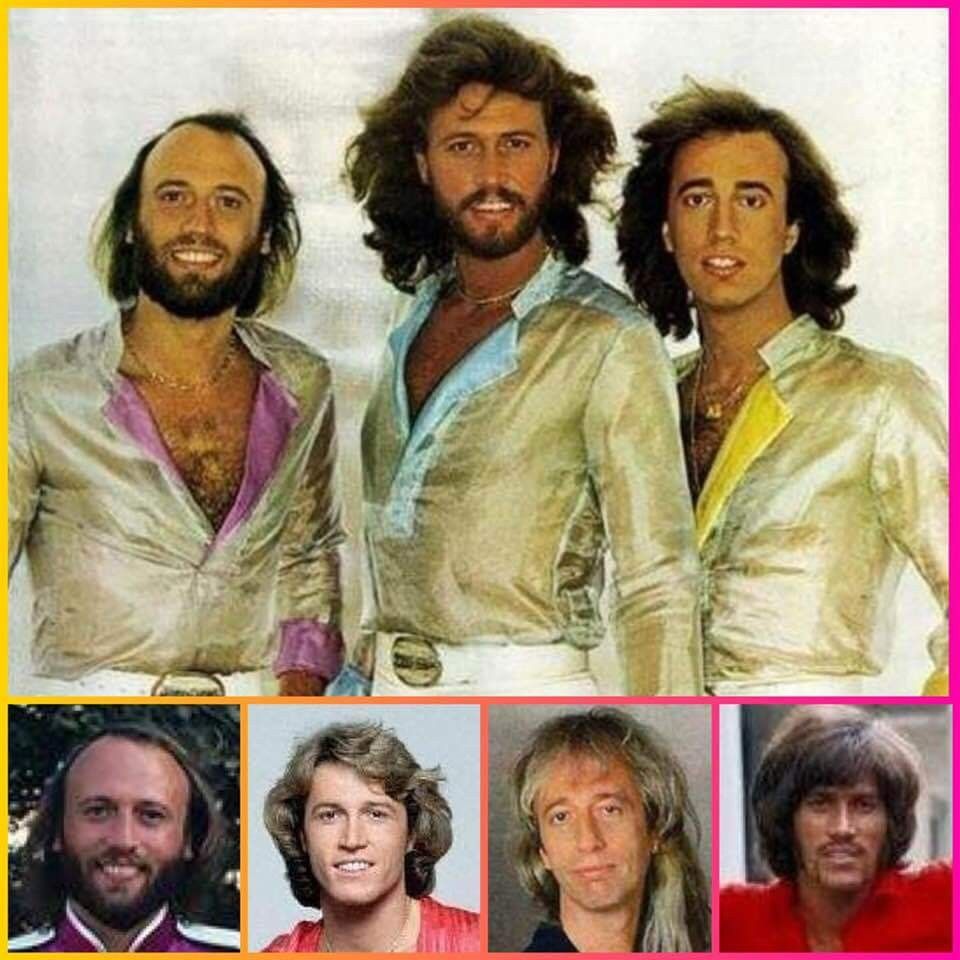
With Bodyguard, the Bee Gees did not simply revisit their past; they dressed their harmonies in the sleek machinery of 1989 and let a comeback speak in a new accent.
Released as the second American single from the Bee Gees’ 1989 album One, Bodyguard belongs to a very specific and revealing moment in the group’s long story. This was not the Bee Gees as a museum piece, not the brothers standing politely beside the memory of the 1970s, and not a band pretending that the musical climate around them had not changed. It was Barry, Robin, and Maurice Gibb stepping into the polished late-eighties pop world with their identity intact, but with the surface of the music newly sharpened by synthesizers, programmed textures, and a cleaner, more contemporary pulse.
The album One arrived after a complicated stretch for the group. By the late 1980s, the Bee Gees were already woven deeply into popular music history, but history can be both a crown and a cage. Their association with the disco era had been so powerful that casual listeners sometimes forgot how wide their songwriting language really was: British beat melancholy, orchestral pop, country inflections, soul drama, adult contemporary balladry, and the kind of sibling harmony that could make even a simple phrase feel suspended in air. In the years before One, the brothers had also written major songs for other artists, proving their craftsmanship even when the spotlight was not centered on them.
Bodyguard, written by Barry Gibb, Robin Gibb, and Maurice Gibb, reflects that comeback-era tension beautifully. It does not abandon the Bee Gees’ emotional vocabulary, but it changes the frame around it. Instead of the warm, orchestral sweep that marked some of their earlier ballads, the track moves through a more modern synth-pop atmosphere: smooth keyboards, disciplined rhythm, a studio sheen that feels built for late-night radio, and vocal lines shaped with the precision of writers who understood how to let melody carry longing without overexplaining it.
What makes the song interesting is not simply that it sounds modern for its time. Many veteran acts in the 1980s tried to update themselves by adding contemporary production, and the results could sometimes feel like new paint on an old wall. Bodyguard works because the arrangement does not erase the Bee Gees’ central gift. Beneath the synthesizers and the polished production, the emotional engine remains the same: a voice reaching for protection, closeness, and assurance in a world that feels less stable than the surface suggests. The title itself carries a promise of devotion, but the song’s mood is not boastful. It is controlled, sleek, and quietly vulnerable.
As a second American single from One, Bodyguard followed in the wake of the album’s broader reintroduction of the Bee Gees to U.S. pop audiences. The title track One had given them a notable American return, reminding listeners that the brothers could still speak fluently in the language of contemporary pop. Bodyguard took a slightly different path. It was less about a grand comeback statement and more about atmosphere. It showed the group working inside the sound of the moment, not as outsiders chasing fashion, but as seasoned craftsmen translating their harmony-rich instincts into a late-eighties setting.
There is also a deeper emotional shade around the One era. The album came after the death of their younger brother Andy Gibb in 1988, a loss that cast a human shadow over the brothers’ work at the time. Not every song on the record should be read directly through that event, and Bodyguard is not best reduced to a single biographical key. Still, the atmosphere of the album carries a sense of maturity, resilience, and return after disruption. In that context, the careful polish of Bodyguard can feel less like commercial strategy and more like composure: three voices trying to move forward without surrendering the emotional seriousness that had always lived underneath their brightest records.
Musically, the track reveals how adaptable the Bee Gees could be when they trusted the song rather than the era. The synthetic textures give it a clean, metropolitan edge, but the melodic instincts remain unmistakably theirs. The phrasing has that Gibb-family way of bending pop structure toward ache. The harmonies do not arrive merely as decoration; they act almost like memory entering the room. Even when the production places the song firmly in 1989, the voices carry decades of shared experience, making the modern frame feel inhabited rather than borrowed.
That is why Bodyguard deserves to be heard as more than a secondary single from a comeback album. It is a small but telling document of reinvention. It captures the Bee Gees at a point when they had nothing left to prove in the historical sense, yet still had something to negotiate with the present. They were old enough, musically speaking, to be judged against their own past, but restless enough not to live there permanently.
In the end, Bodyguard is compelling because it lives in that narrow space between recognition and renewal. You can hear the familiar Bee Gees architecture in the melody and harmonies, but the room around it has changed: brighter surfaces, sharper lines, cooler air. The song does not ask to be remembered as the loudest moment of the One era. Instead, it lingers as evidence of a group finding a modern shape for an old emotional promise, proving that a comeback can be measured not only by chart return, but by the courage to sound alive in a different decade.
