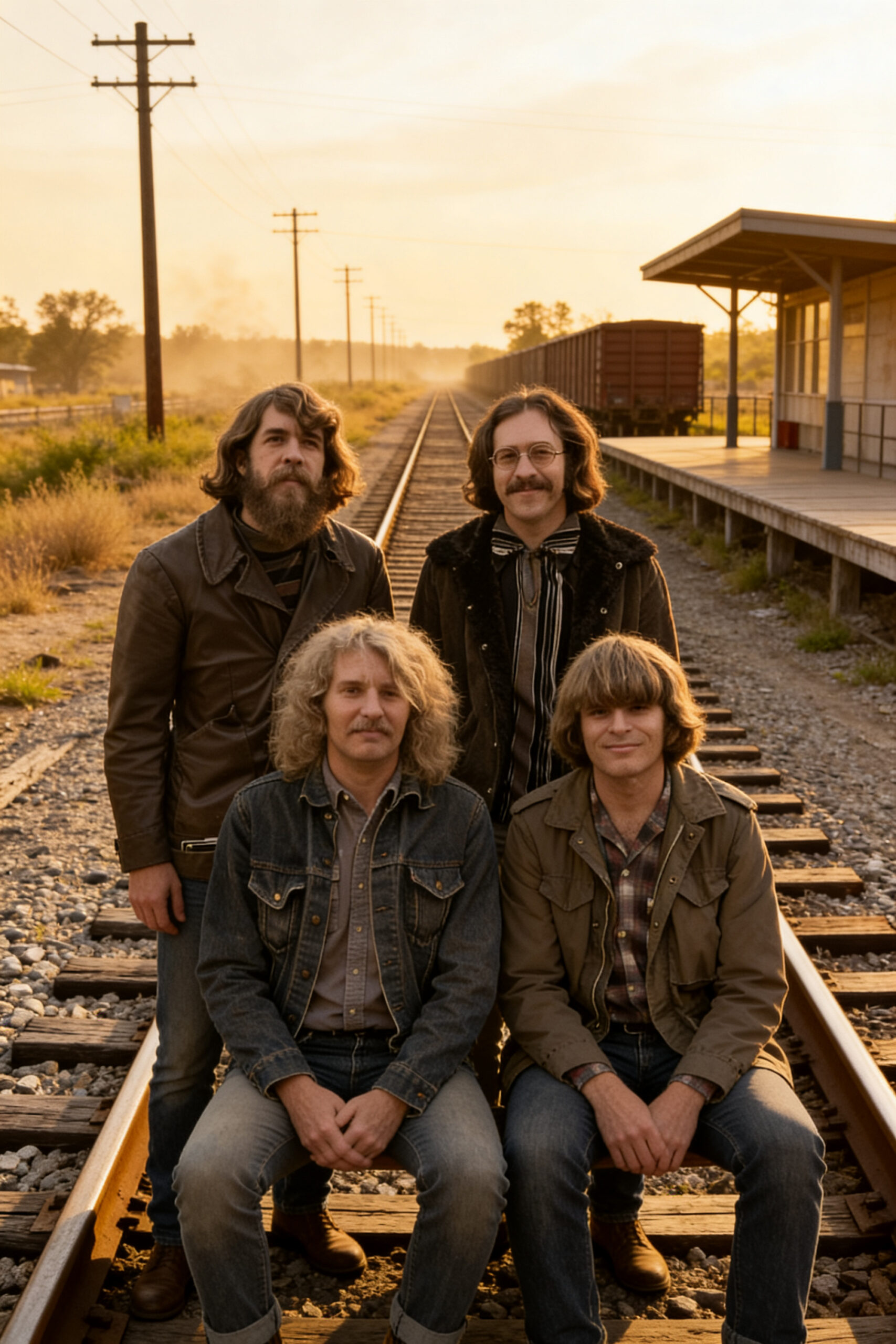
Before Creedence Clearwater Revival closed the book, Lookin’ for a Reason opened Mardi Gras with a country-leaning question that still sounds like a band standing at the edge of its own ending.
Lookin’ for a Reason is the opening track on Creedence Clearwater Revival‘s 1972 album Mardi Gras, released on Fantasy Records as the band’s seventh and final studio album. Written and sung by John Fogerty, the song arrives at a very particular moment in CCR history: after Tom Fogerty had left the group, when the remaining trio of John Fogerty, Stu Cook, and Doug Clifford were trying to move forward under circumstances that no longer resembled the astonishing run that had made them one of America’s most powerful rock bands.
That context matters because Mardi Gras was not simply another Creedence record with a new batch of songs. It was the sound of a working method changing under pressure. On earlier albums, Fogerty’s voice, writing, and production instincts had defined the band’s identity with unusual force, from the swampy drive of Bayou Country to the lean radio certainty of Green River, Willy and the Poor Boys, and Cosmo’s Factory. By 1972, the remaining members had moved toward a more democratic arrangement, with Cook and Clifford also contributing songs and taking lead vocals. That shift became central to the album’s reputation, and for many listeners it made Mardi Gras feel less like a unified Creedence statement than a document of a band trying to decide what it still was.
Placed first, Lookin’ for a Reason carries a strange and quiet weight. It does not burst through the door the way Travelin’ Band or Up Around the Bend once did. It does not swagger, preach, or snarl. Instead, it leans into a country-tinged plainness, with a relaxed gait and a voice that seems to be measuring every step. The song’s surface is modest, almost conversational, but that modesty is what makes it feel so revealing in hindsight. CCR had always carried traces of country, blues, rockabilly, and Southern American music, even though the band came from California. Here, that country flavor is not decoration; it feels like the natural language of uncertainty, the sound of a man looking down a road and wondering whether it leads anywhere worth following.
Fogerty’s vocal on the track is not one of his fire-breathing performances. He does not sing as if he is trying to conquer the room. He sounds closer to the ground, closer to the grain of the lyric, letting the melody move with a restrained, almost weary steadiness. That restraint gives the song its character. It is easy to overlook Lookin’ for a Reason because it is not one of CCR’s great radio monuments, but as the doorway into Mardi Gras, it tells the truth in a subtler way. It announces no grand farewell, yet it begins with the feeling of someone already negotiating with departure.
The country shading also places the song in conversation with the wider music landscape of the early 1970s. Rock bands were increasingly turning toward roots music, country-rock, and stripped-down Americana, searching for earthier textures after the turbulence and amplification of the late 1960s. Creedence had never needed to chase that movement; in many ways, they had been there all along, building short, tough songs out of older American forms and making them sound immediate. But on Lookin’ for a Reason, the roots influence feels less like a source of power than a place to pause. The twang is not triumphant. The rhythm does not race. The whole track seems to ask for space.
That is why the song becomes more moving when heard as part of the band’s final chapter. Mardi Gras would be the last studio album released by Creedence Clearwater Revival, and the group would break apart later in 1972. The album has often been discussed through the lens of disappointment, division, and the difficult aftermath of a once-dominant band losing its internal balance. Yet Lookin’ for a Reason deserves to be heard not only as a piece of that troubled record, but as a carefully placed opening gesture. Before the album’s divided voices become obvious, before listeners begin comparing one contribution to another, there is Fogerty setting down a simple question in a country-rock frame: what reason remains?
The answer is not made easy. That may be the song’s lasting power. Many Creedence hits sound like they know exactly where they are headed. They ride their riffs with hard confidence, turning restlessness into momentum. Lookin’ for a Reason does something different. It lets uncertainty remain unresolved. The band that once seemed unstoppable now begins an album by sounding human, reduced, and searching. It is not dramatic in the obvious sense, and it does not ask the listener to treat it as a grand statement. But the years have given it a shadow it may not have had on first hearing.
To play Lookin’ for a Reason now is to hear the opening door of Mardi Gras creak on its hinges. It is a small song at the entrance to a complicated record, and perhaps that is why it lingers. It does not explain the breakup. It does not settle old arguments. It simply stands there with a country pulse and a plainspoken melody, sounding less like a celebration than a last attempt to make sense of the road ahead. In that way, Creedence Clearwater Revival’s final album begins not with a roar, but with a question — and the question may be the most honest sound on the record.
