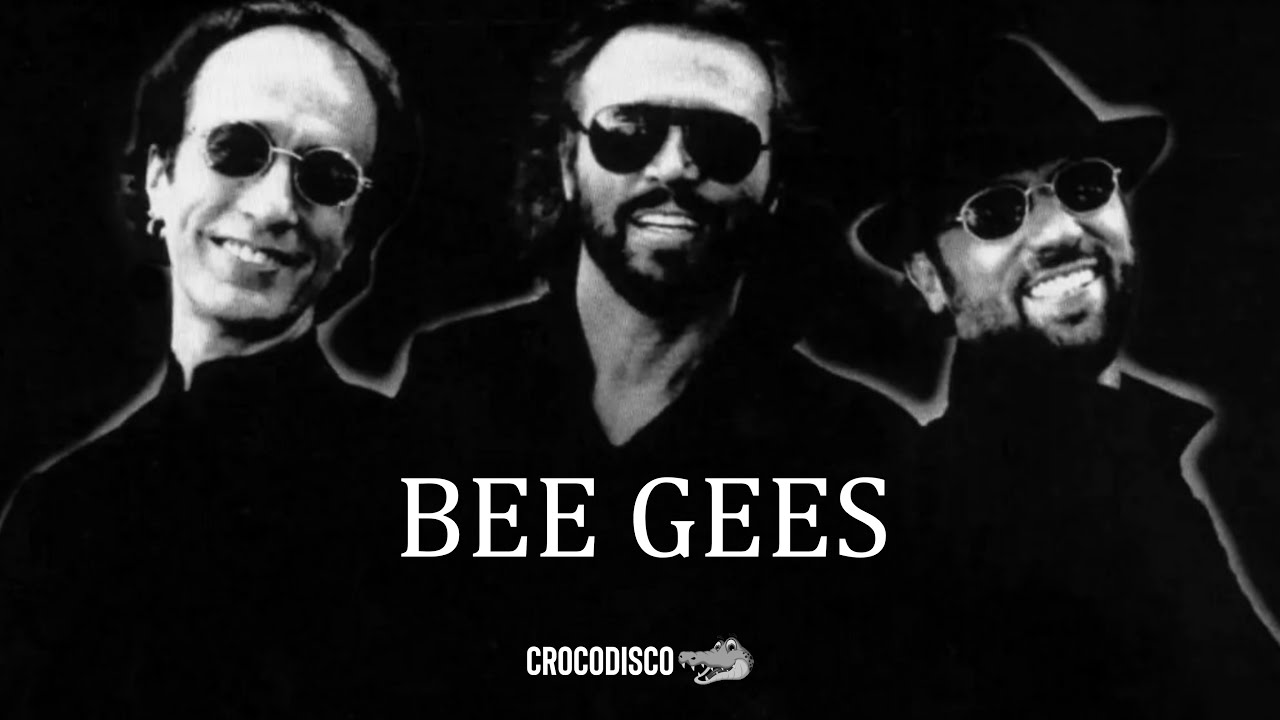
On a soundtrack built for motion, Bee Gees let Life Goes On stand still long enough to feel the ache behind the glitter.
Life Goes On, performed by Bee Gees for the 1983 Staying Alive film soundtrack, belongs to a very specific and revealing moment in the Gibb brothers’ career. The film, a sequel to Saturday Night Fever, brought John Travolta back as Tony Manero, with Sylvester Stallone directing a story that moved the character from the feverish dance floors of Brooklyn toward the ambition and strain of a Broadway stage. The soundtrack naturally carried expectations of rhythm, movement, and sleek early-eighties energy. Yet tucked within that world of dance, drive, and theatrical momentum, Bee Gees placed a ballad that does not rush. It does not try to dazzle the room. It listens.
Written by Barry, Robin, and Maurice Gibb, Life Goes On stands apart from the more kinetic identity often attached to Staying Alive. The movie itself was tied, inevitably, to the enormous cultural memory of Saturday Night Fever, a film and soundtrack that had made Bee Gees central to one of pop music’s most recognizable eras. By 1983, however, the world around them had changed. Disco had been celebrated, copied, mocked, and pushed aside in different corners of popular taste. Radio was moving through synth-pop, adult contemporary polish, rock ballads, and dance-rock hybrids. The Bee Gees were still master craftsmen, but they were also carrying the burden of being remembered too narrowly.
That is part of what makes Life Goes On feel so quietly important. It is not merely a soundtrack cut filling space between the more obvious film moments. It reveals the side of the group that had always existed beneath the shine: the writers of wounded melodies, carefully suspended harmonies, and choruses that could make survival sound less like triumph than persistence. The title itself could be mistaken for reassurance, but in the song’s emotional shape it feels more complicated. Life goes on, yes, but not always cleanly. Not always with answers. Sometimes it goes on because there is no other choice.
Within the context of Staying Alive, that feeling deepens. The film is remembered for bodies in rehearsal, ambition under pressure, and the spectacle of performance. Tony Manero is no longer only the young man who found brief escape under club lights; he is chasing a harder, more professional dream, one that asks for discipline, reinvention, and a willingness to be measured. A song like Life Goes On gives that world a different interior. It suggests the pause after rehearsal, the loneliness behind applause, the private reckoning that never fits neatly into a dance sequence.
Musically, the track draws from the Bee Gees’ gift for emotional architecture. Their greatest ballads often work by restraint before release: a vocal line carried with care, harmonies entering not as decoration but as memory, a melody that seems to rise because it has been holding something back. Life Goes On uses that language in a power-ballad frame suited to its era, but the Gibb signature remains unmistakable. The feeling is broad, yet personal. The production belongs to the early 1980s, but the songwriting reaches back to a much older instinct: a simple phrase, repeated until it becomes less ordinary and more human.
For listeners who come to the Staying Alive soundtrack expecting only dance propulsion, Life Goes On can feel like a door opening sideways. It reminds us that the Bee Gees were never just the sound of a crowded floor. Long before and long after their disco peak, they understood vulnerability as a musical force. They could write for motion, but they could also write for the still moment afterward, when the room empties and the emotional cost begins to speak.
That may be why the song continues to deserve a closer listen. It is not the loudest memory attached to the film, and it was not built to dominate the popular imagination in the way the group’s biggest hits did. Its power lies in its placement and its patience. Against a movie world of sweat, ambition, and choreography, Life Goes On offers a more inward kind of drama. It sounds like a promise made through fatigue, a melody that understands forward motion can still carry regret. In that sense, it becomes more than a ballad from a soundtrack. It becomes a small, emotional correction to the idea that Staying Alive was only about movement. Sometimes staying alive is also about standing still long enough to admit what the music has been carrying all along.
