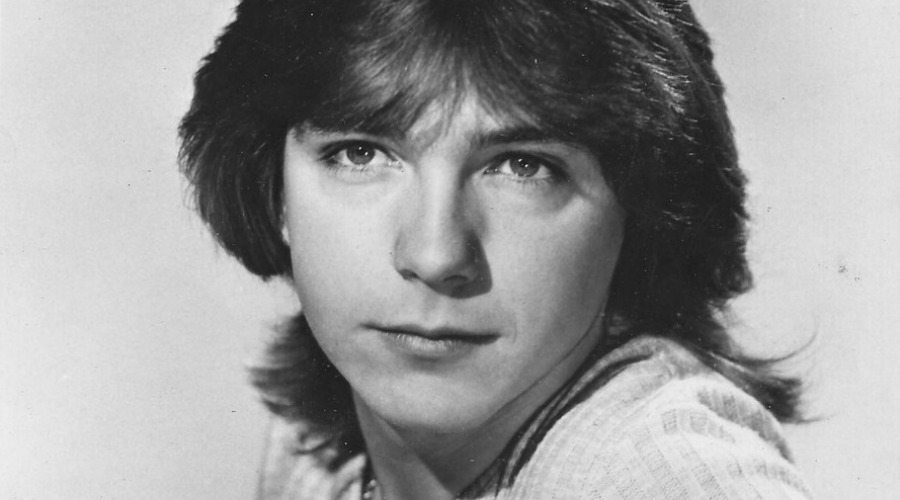
On Love in Bloom, David Cassidy stepped beyond the familiar glare of teen fame and found a quieter kind of musical confidence beside Richie Furay.
Love in Bloom, co-written by David Cassidy and Richie Furay, appears on Cassidy’s 1975 album The Higher They Climb, a record that belongs to one of the most revealing turning points in his career. By then, the bright television image of The Partridge Family had already made Cassidy one of the most recognizable young performers in popular culture, but recognition and understanding are not the same thing. The public knew the face, the hair, the screams, the posters, the carefully framed charm. What Cassidy seemed to be reaching for on this album was something harder to package: the chance to be heard as a musician making choices, forming alliances, and testing the edges of his own identity.
That is what makes the Furay credit so meaningful. Richie Furay was not simply another name on a songwriting line. He carried with him a rich country-rock history, having helped shape the sound of Buffalo Springfield and then co-founded Poco, where harmony, restraint, and American roots textures became part of a new musical language. His presence beside Cassidy on Love in Bloom quietly changes the way the song sits in the album. It suggests a meeting point between two very different public stories: Cassidy, still trying to move beyond the weight of manufactured celebrity, and Furay, associated with a more organic West Coast tradition where folk, country, and rock could lean into one another without forcing the moment.
The title Love in Bloom may sound, at first glance, like a simple romantic phrase. It has the softness of a greeting card, the promise of something new opening. But within the context of The Higher They Climb, it takes on a more interesting shape. The album arrived during a period when Cassidy was not merely adding songs to a catalog; he was trying to redirect the conversation around his artistry. A song like this does not need to announce rebellion. Its significance comes from the company it keeps, the craft behind it, and the suggestion that Cassidy was listening carefully to musicians outside the narrow boundaries people had drawn around him.
There is a particular poignancy in that. Teen idols are often treated as if their public image is a room they can never leave. The audience remembers the photographs, the lunchboxes, the television glow, the rush of adolescent devotion. But the person inside that image keeps aging, keeps hearing other music, keeps wanting the dignity of growth. Cassidy’s mid-1970s work is fascinating because it shows an artist negotiating that gap in public. He could not simply erase what had made him famous, nor should he have had to. Instead, he sought songs and collaborators that opened windows in the room.
With Furay, Cassidy found a collaborator whose musical instincts pointed toward warmth rather than spectacle. Furay’s background in harmony-rich, roots-conscious rock gave the collaboration a natural credibility, but the more important quality is emotional scale. Love in Bloom does not have to be framed as a grand statement to matter. It can be heard as a smaller gesture: two writers meeting in a space where melody and feeling are allowed to breathe. For Cassidy, that kind of song carried its own quiet argument. It said he was not only the product of a television moment. He was also someone drawn to songcraft, to collaboration, to the long work of being taken seriously after the applause had been simplified into noise.
The 1975 setting matters because the popular-music landscape was changing around him. The early-decade shine of television pop had begun to give way to more album-oriented expectations, while singer-songwriters, country-rock musicians, and West Coast studio players were building records that invited listeners to hear texture and personality. Cassidy’s move toward that world was not guaranteed to be embraced by the same audience that had once crowded around him in another context. That tension gives The Higher They Climb a compelling charge. It is not only an album; it is a document of transition.
Seen through that lens, the collaboration with Richie Furay becomes less like a footnote and more like a clue. It shows Cassidy reaching toward musicians whose credibility came from ensemble work, road-tested bands, and the patient blending of voices. It also shows Furay entering Cassidy’s story at a point when a careful song could do more than decorate an album. It could help reframe a listener’s expectations. Sometimes a co-writing credit reveals the hidden map of an artist’s ambition, and Love in Bloom is one of those cases.
What lingers is not the idea of Cassidy escaping his past, but the sound of him trying to widen it. The best way to hear Love in Bloom is not as a novelty from a famous former television star, nor merely as a curiosity for fans of Furay’s country-rock lineage. It belongs somewhere more human than that. It is a song from a moment when Cassidy was asking to be met in a different light, not with the old assumptions already in place, but with the patience owed to any artist attempting to grow.
That patience changes everything. A familiar name becomes less familiar. A soft title gains weight. A collaboration that might have been overlooked becomes a small act of musical direction. On The Higher They Climb, David Cassidy was not just climbing away from one image; he was moving toward a room where his voice could be measured by more than the noise around it. With Richie Furay beside him on Love in Bloom, that room feels a little more open, and the song still carries the quiet dignity of an artist asking to be heard anew.
