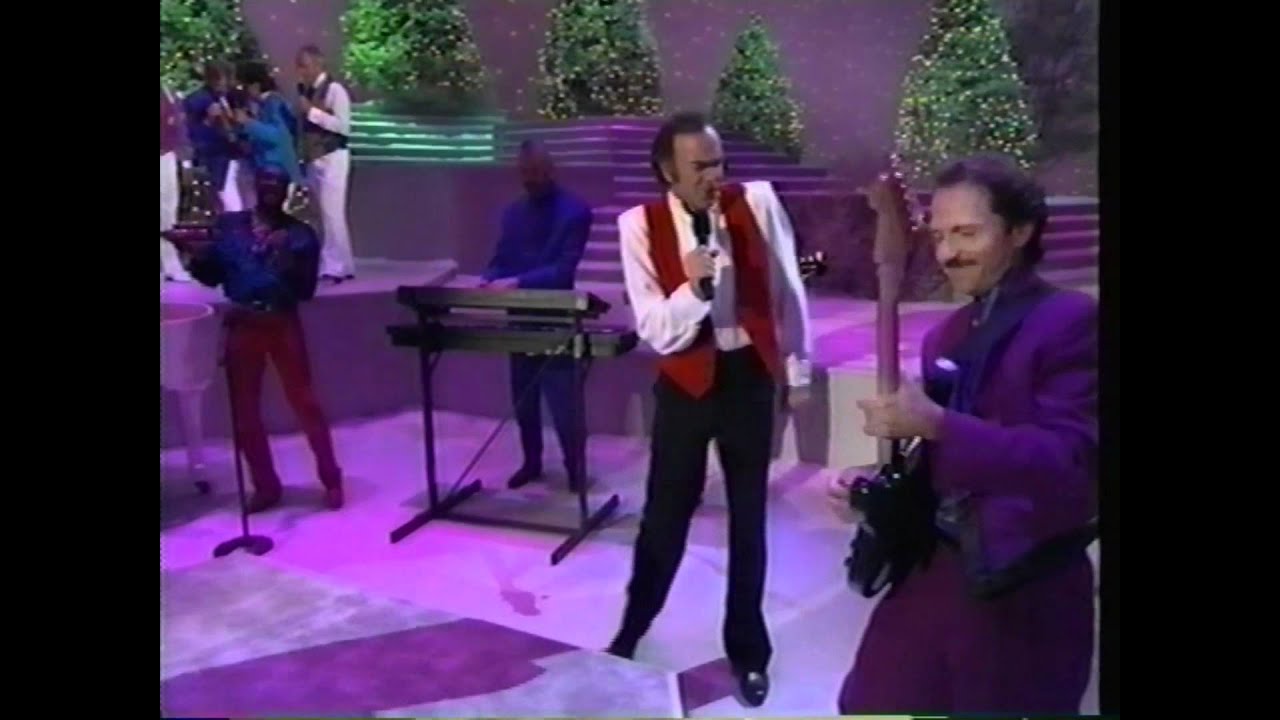
On September Morn, Neil Diamond leaves the public sweep of the hit single for something quieter. The Good Lord Loves You is the kind of 1979 album track that reveals how much warmth can live between the big moments.
In 1979, Neil Diamond released September Morn, a record that arrived when his voice was already deeply embedded in radio, concert halls, and the emotional vocabulary of pop. The title song would naturally draw much of the attention, but one of the album’s more revealing corners is The Good Lord Loves You, a track that belongs very much to the character of the LP itself. It was not the obvious headline piece, nor the song most likely to dominate the public memory of the album. What it offers instead is something many album-era listeners still value just as much: tone, atmosphere, and the sense that an artist is letting you hear the quieter rooms of his musical house.
That matters when talking about September Morn, because this was a particular moment in Diamond’s career. By the end of the 1970s, he was not struggling for identity or visibility. He had already become one of the era’s most recognizable singer-songwriters, capable of grand romantic statements, dramatic choruses, and performances that could sound both carefully produced and deeply personal. But major artists are often best understood not only through the songs that led the advertising or climbed the charts. They are also understood through album cuts that carried the emotional weather of a project. The Good Lord Loves You feels like one of those songs. It helps explain the temperament of September Morn beyond its most famous title.
Heard in the context of the original LP, the song gains even more shape. This is where the album-era perspective becomes important. Records like September Morn were meant to be lived with in sequence. A listener dropped the needle, stayed in the atmosphere, and gradually discovered which songs became companions over time. In that setting, The Good Lord Loves You does not feel secondary at all. It feels like part of the album’s breathing rhythm, a place where the record eases its shoulders and turns inward. Streaming culture tends to isolate songs into individual events. The old LP experience let a song like this work more subtly, as a piece of emotional pacing rather than a standalone declaration.
Musically, the track fits the smooth, polished world of Diamond’s late-1970s studio sound, yet it does not rely on sheer scale. What stands out most is the way he handles the material. Neil Diamond had a voice that could fill a room with authority in an instant, but here he seems less interested in command than in reassurance. He does not force the meaning. He allows it to settle. That is one of the most appealing things about the recording: the sense of control without coldness, the confidence of a seasoned performer choosing gentleness over display. A singer with his natural presence could easily have turned a title like this into something overly emphatic. Instead, he brings an almost conversational gravity to it.
The title itself suggests something larger than pop craftsmanship, and part of the song’s appeal lies in how lightly it carries that weight. The Good Lord Loves You does not need to sound like a sermon to leave a spiritual impression. What comes through is not dogma but comfort, the kind that travels well beyond any single interpretation. Diamond had always been able to make simple phrases feel lived in, and that gift is especially useful here. He sings as someone who understands that a line can offer steadiness without demanding agreement, and that distinction gives the performance much of its lasting softness. The effect is less about proclamation than about presence.
That softness is also what makes the song so revealing within the larger emotional landscape of September Morn. The album is often remembered for its polished romanticism and for the way it reflects the mature adult-pop sheen of the late 1970s. But records need contrast if they are going to feel complete. A title track may carry the ache of memory in broad strokes; an album cut like The Good Lord Loves You adds another emotional color entirely. It brings in calm, plainspoken grace, and a kind of humility that balances the more outward-facing songs around it. When people return to records from this era, they often find that these are the tracks that deepen over time. They are not attached to one giant public moment, so they remain open to fresh listening.
There is something very characteristic of Neil Diamond in that balance between reach and intimacy. He was always a public singer in the best sense, someone who understood how to meet a crowd and still sound emotionally direct. Yet his catalog also contains many moments where charisma gives way to character, where the performance becomes less about winning the room and more about keeping faith with the feeling of the song. The Good Lord Loves You belongs to that side of him. It suggests an artist who knew that warmth could be persuasive on its own. In an era when mainstream records could become bigger, glossier, and more eager to announce themselves, Diamond still knew the value of a measured tone.
That may be why the song continues to matter for listeners who care about album eras rather than just hit lists. It shows how September Morn worked as more than a delivery system for one well-known single. It was a full record with shifts of light inside it. Songs like this gave the album contour. They created space between the larger gestures, and in that space Diamond’s humanity comes through with unusual clarity. You hear not just the star presence, but the craftsman, the sequencer of moods, the singer who knew how an LP could guide a listener from longing into reassurance without ever breaking the spell.
If the most famous songs on September Morn gave the album its public face, The Good Lord Loves You helps reveal its inner voice. That is what makes it such a rewarding return for anyone listening beyond the obvious landmarks of the catalog. It does not ask to be rediscovered with fanfare. It simply waits, still calm, still generous, still carrying the quiet strength of Neil Diamond at a point in 1979 when experience had taught him something important: not every memorable moment on a record has to arrive with a spotlight. Some of them stay with you because they sound like a hand resting gently on the shoulder, and because in the flow of an album, that kind of song can become the one you trust most.
