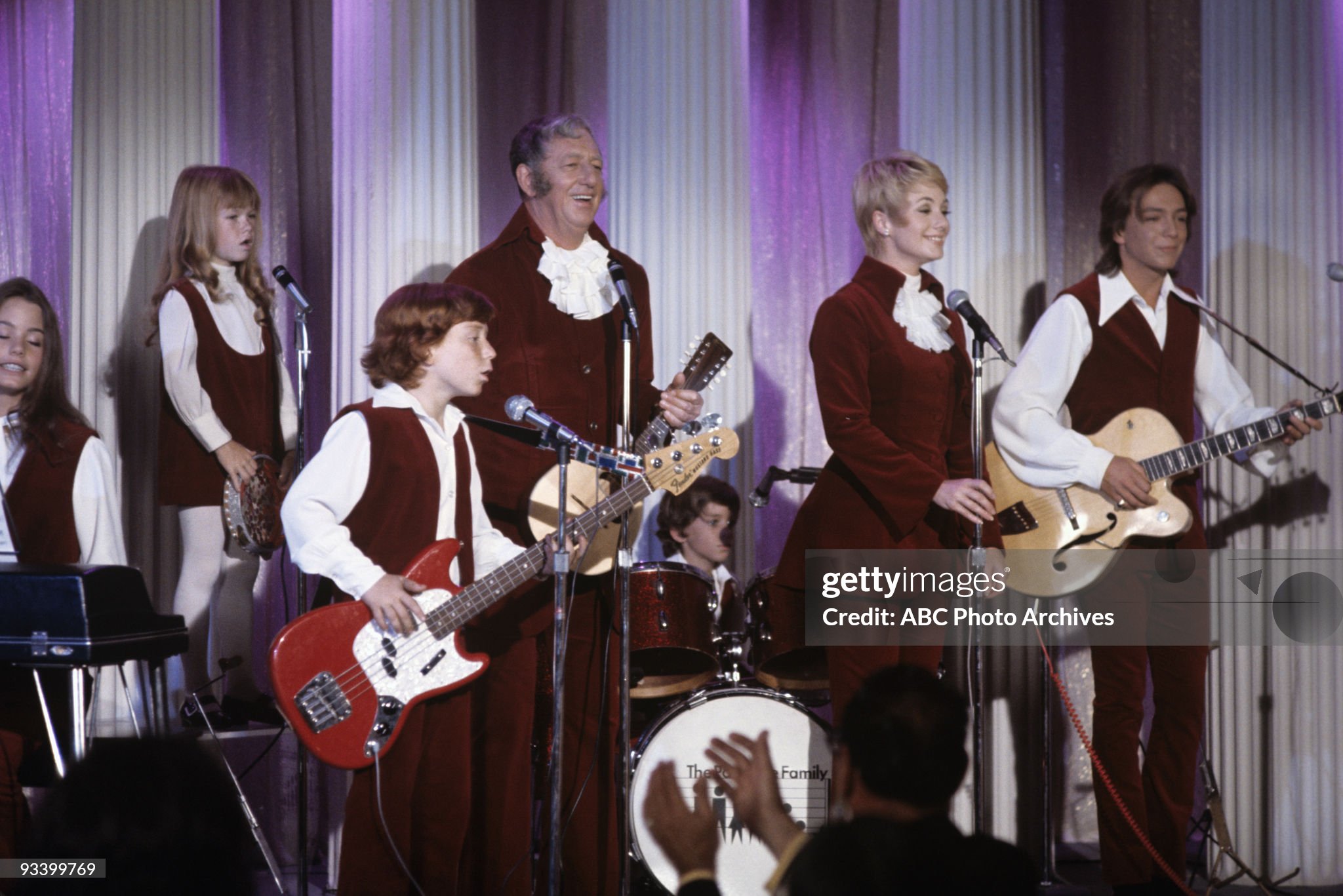
Inside a bright 1972 television-pop album, Every Song Is You carries a quieter kind of longing, the sort of feeling that slips past the hits and grows stronger with time.
Every Song Is You sits deep inside The Partridge Family album Shopping Bag, released in 1972 while the television series was still very much part of everyday pop culture. That detail matters, because songs from this world are often remembered in broad strokes first: the striped bus, the family-friendly glow, the run of catchy singles, the unmistakable center of David Cassidy as one of the era’s defining young stars. In that larger picture, album tracks can disappear. But Every Song Is You is exactly the kind of song that deserves a second look, because it reveals how much warmth and care could live beneath a package many people still reduce to bright surfaces.
That has always been part of the curious story of The Partridge Family. On paper, it was a television creation, a fictional family band turned into a real chart presence through smart production, strong melodies, and the star power of Cassidy and Shirley Jones. For some listeners, that TV origin became a reason to treat the music as disposable. Yet time has been kinder to the records than the old dismissals were. Strip away the branding, and what remains is often finely made pop, full of clean hooks, elegant arrangements, and performances that know when to smile and when to soften. Every Song Is You belongs to that softer side.
On Shopping Bag, the song does not arrive like a centerpiece demanding attention. It works more quietly than that. Even the title suggests a private feeling rather than a public statement. Every Song Is You captures the way affection can alter the whole world of listening, how every melody suddenly seems to carry one face, one memory, one imagined conversation. It is a simple idea, but simplicity is not the same as emptiness. In fact, one reason the song stays with you is that it does not overplay its hand. Its mood is gentle, its sentiment direct, and its effect comes from restraint rather than display.
That sense of restraint suits the familiar David Cassidy-led sound that gave so many Partridge Family recordings their emotional pull. Cassidy was not compelling because he pushed every line toward drama. Often, he was better when he let a melody breathe, when he allowed a phrase to land lightly and trusted the song to do the rest. Every Song Is You benefits from exactly that quality. There is no need for vocal strain or theatrical emphasis. The feeling comes through in a more careful way, as though the performance understands that a song about total devotion can sound truer when it stays close to the listener instead of trying to overwhelm them.
That is also why the track feels so different from the stereotype attached to the group. People who only remember The Partridge Family as a burst of cheerful, efficient pop may be surprised by how naturally a song like this opens up a more intimate atmosphere. The arrangement does not fight the group’s accessible style; it simply narrows the frame. Rather than racing toward the instant payoff of a big single, it lingers in a softer emotional register. The melody glides. The recording has room around it. The whole thing feels less like a product built to make noise and more like a thought carried carefully from one line to the next.
There is something especially appealing about finding that mood on Shopping Bag. Albums attached to popular shows were often treated as extensions of a brand, and in many cases that is partly what they were. But deep cuts are where those projects sometimes reveal a more human scale. The famous songs do one job: they introduce, they energize, they sell the moment. The overlooked songs do another: they show what the artists, producers, and songwriters could hold in reserve. Every Song Is You widens the emotional picture of The Partridge Family without ever announcing itself as a major statement. That quiet confidence is part of its charm.
Heard now, decades after 1972, the song carries an added layer of meaning simply because the noise around it has faded. The weekly schedule of network television is gone. The teen-magazine frenzy belongs to another cultural weather system. What remains is the recording itself, and that gives listeners a clearer chance to notice the craft. The tune is unforced. The feeling is specific. The polished studio sheen of the period is still there, but so is a kind of emotional modesty that can be more affecting than bigger gestures. The song does not ask to be rediscovered as a lost monument. It only asks to be heard on its own terms.
And maybe that is the most moving thing about overlooked songs. They wait without bitterness. They sit inside an album sleeve, between better-known titles, carrying their own small truth. Every Song Is You is one of those songs. It does not change the story of The Partridge Family; it deepens it. It reminds us that behind the television phenomenon, behind the polished pop machinery, there were still moments when melody, voice, and feeling met in a way that felt unexpectedly personal. In that sense, this deep cut from Shopping Bag is not just a pleasant curiosity. It is a gentle correction to memory, proof that sometimes the songs people pass over are the ones that reveal the most.
