
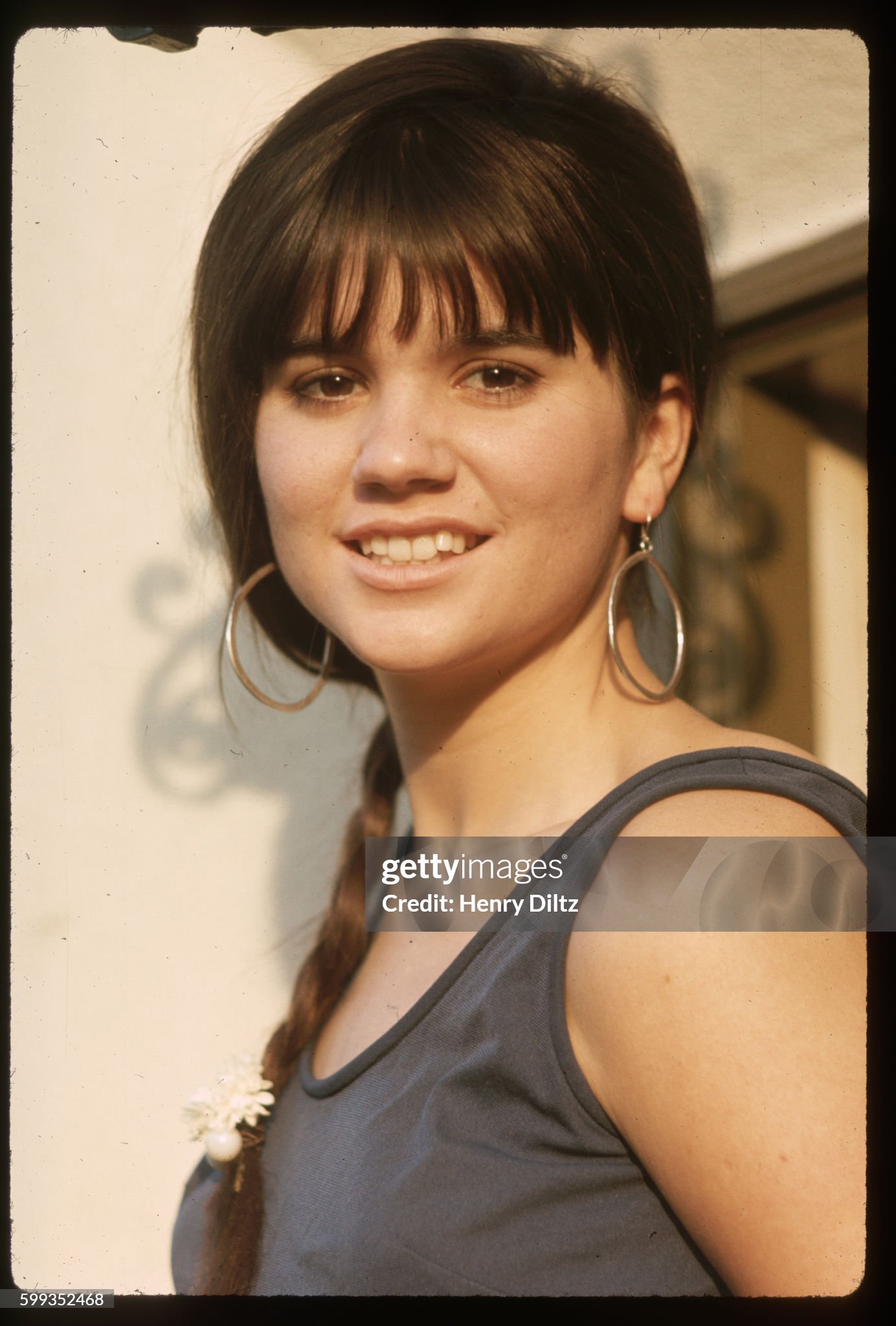
Before the arena years and the run of major hits, Linda Ronstadt sang “Will You Love Me Tomorrow” on Silk Purse as if she already knew that doubt can be just as powerful as drama.
When Linda Ronstadt included “Will You Love Me Tomorrow” on her 1970 album Silk Purse, she was still early in the long process of becoming the artist the world would later recognize so quickly. The record arrived after her time with the Stone Poneys and after “Different Drum” had introduced her voice to a wide audience, but before the defining commercial run that would make her one of the most recognizable singers of the 1970s. That timing matters. Her version of the song, written by Gerry Goffin and Carole King and first made famous by The Shirelles, does not sound like a star revisiting a classic from a position of certainty. It sounds like a gifted young interpreter testing how much feeling can live inside restraint.
Silk Purse was shaped in Nashville, and that setting gives Ronstadt’s reading a different weather from the Brill Building polish of the original hit. The question at the center of the song is the same, but the air around it has changed. What had once felt like the nervous honesty of teenage pop now carries a slightly older, more solitary shade. Ronstadt does not push the lyric toward melodrama. She lets it sit in the room. In 1970, that was a revealing choice, especially on an album that was helping define her early country-rock surroundings.
It is also striking to hear Ronstadt sing the song in 1970, before Carole King would record her own famous version on Tapestry in 1971. Ronstadt is not claiming the composition as confession in the same way King later would. Instead, she treats it as an act of interpretation, which became one of her greatest gifts. Again and again throughout her career, she found songs that already had histories and made them feel newly inhabited. On Silk Purse, you can hear that instinct taking shape. She is listening closely to the lyric, respecting its architecture, but also pulling it into her own emotional register.
What makes the performance linger is its balance between softness and unease. The arrangement is unhurried, with the kind of measured, Nashville-inflected calm that runs through much of Silk Purse. Nothing in the track tries to overpower the song’s central question. That gives Ronstadt room to do what she often did better than almost anyone: turn clarity into tension. Her voice is clean, open, and youthful, yet there is already that faint shadow behind the phrasing, the sense that the melody is carrying more than the words are willing to confess. She does not need to oversing a line like “Will you still love me tomorrow” for the uncertainty to register. It is there in the way she approaches the line, with a steadiness that never fully settles into comfort.
That is part of why this recording feels so important within her early solo years. People often remember Ronstadt first through the bigger landmark albums that came later, when her command of rock, country, folk, and pop felt almost effortless. But Silk Purse catches her in a more transitional place, and there is something deeply revealing about that. She had not yet arrived at the imperial phase of her career, yet the essential qualities were already present: discernment, emotional intelligence, and an unusual ability to make a familiar song sound as though it had been waiting for her particular voice. Even on an album better known for “Long Long Time”, her reading of “Will You Love Me Tomorrow” quietly shows how broad her interpretive range already was.
In a wider sense, the track sits at an interesting meeting point in American popular music. By 1970, the borders between pop, country, folk, and singer-songwriter introspection were becoming more porous. Ronstadt stood near the center of that movement, even before her biggest records made it obvious. Taking a song born in the early-1960s pop world and filtering it through the gentler, earthier atmosphere of Silk Purse was not a grand statement, but it was a meaningful one. It suggested that the old Brill Building craft could survive outside its original setting, and that Ronstadt’s strength would never depend on writing alone. She was one of the rare singers who could honor a composition’s past while quietly changing its temperature.
The contrast with The Shirelles version is part of the beauty. Their recording carries the bright vulnerability of a young voice standing at the threshold of adulthood, asking a question that feels both intimate and public. Ronstadt, by comparison, sounds more inward. She keeps the lyric closer to herself. The effect is subtle, but it changes the song’s center of gravity. With her, it feels less like a plea thrown into the world and more like a thought that arrives after the room has gone still. That inwardness would become one of her great strengths. She could sing with force when needed, but she also understood the quiet pressure of a line that does not ask for attention and earns it anyway.
That is why this early recording still matters. It is not merely a footnote before the hit-making years, and not simply an example of excellent taste in song choice. It is a small but telling portrait of Linda Ronstadt before the full scale of her career came into focus. On “Will You Love Me Tomorrow”, she sounds poised between inheritance and invention, between the songs she loved and the artist she was becoming. The performance does not announce itself loudly. It does something more lasting than that. It lets us hear a young singer discovering that one of her greatest powers would be to make uncertainty sound beautiful without ever trying to resolve it.
