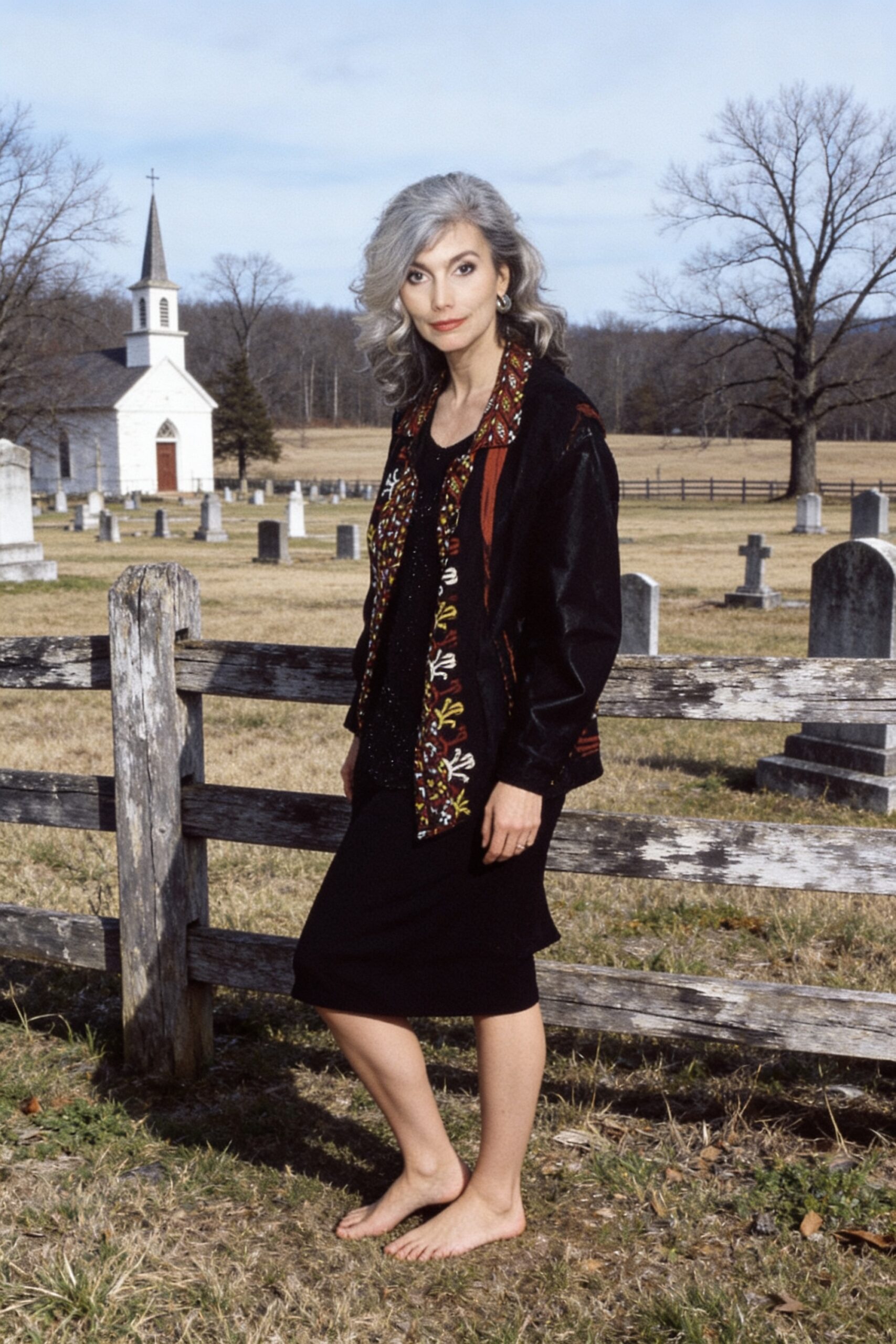
On Roses in the Snow, Emmylou Harris finds the quiet strength inside “Darkest Hour Is Just Before Dawn”, and Ricky Skaggs helps turn it into bluegrass consolation without a trace of excess.
When Emmylou Harris released Roses in the Snow in 1980, she was not simply changing instrumentation. She was changing the emotional temperature of her music. After a remarkable run of records that had already placed her at the meeting point of country, folk, and rock, she leaned into a more acoustic, roots-centered sound and made one of the clearest statements of her career. Near the heart of that album sits “Darkest Hour Is Just Before Dawn”, a song written by Dolly Parton. In Harris’s hands, and with Ricky Skaggs supplying that pristine harmony beside her, the song becomes more than a cover and more than a nod to tradition. It becomes an argument for simplicity, patience, and musical trust.
What makes the performance so memorable is how little it tries to prove. There is no push toward grandeur. No dramatic swell designed to tell the listener when to feel something. Harris sings the lyric with the kind of calm that can only come from deep understanding. The title itself sounds like an old saying, a phrase passed along in hard times, but she never delivers it as a slogan. She sings it as if it has to be tested each time it is spoken. That restraint is part of what gives the recording its dignity. The hope in the song does not arrive pre-polished. It is carried carefully, almost like a fragile object.
Roses in the Snow, produced by Brian Ahern, is often remembered for bringing a stripped-back acoustic sensibility into a mainstream country setting with unusual clarity. The album drew from bluegrass grammar without making it feel sealed off from the present. On “Darkest Hour Is Just Before Dawn”, that approach is especially moving. The arrangement leaves room for breath, for string tone, for the natural rise and fall of two voices listening closely to one another. You hear wood, wire, air, and space. That matters. It means the emotional force of the track comes from placement and balance, not from decoration.
And then there is Ricky Skaggs. His presence on the recording is not a small embellishment; it is one of the reasons the track settles so deeply. Bluegrass harmony, at its best, does not merely sit behind a lead vocal. It reframes it. Skaggs does exactly that here. His voice brightens the line without disturbing its stillness. He does not crowd Harris or turn the performance into a contest of tone and personality. Instead, he gives the song a second beam of light. The harmony is clean, high, and perfectly measured, the kind of blend that feels born from shared musical values rather than studio cleverness. It is easy to call a harmony beautiful. It is harder to explain why some harmonies feel necessary. This one does.
Part of the fascination lies in where both artists stood at the time. Harris was already one of the most distinctive voices in American music, admired for the grace with which she moved between traditions. Skaggs, before his later rise as a major country star, was already a formidable bluegrass player and singer with a deep command of the form. On this recording, you can hear those worlds meeting without friction. There is nothing self-conscious about it. No sense that one artist is borrowing the language of another. The performance sounds lived in, as though the song had been waiting for exactly this combination of voices to reveal its most natural shape.
That is especially important because Dolly Parton‘s writing here depends on emotional credibility. “Darkest Hour Is Just Before Dawn” carries a message of endurance, but it can easily become overly sweet in the wrong hands. Harris avoids that trap by refusing easy uplift. She does not sing like someone trying to convince the room. She sings like someone holding onto a hard-earned truth, quietly, steadily, without wanting applause for it. Skaggs strengthens that feeling. When their voices join, the song stops sounding like a private reassurance and starts sounding communal, almost like something passed from one weary soul to another.
There is also a larger story inside this track. Roses in the Snow was one of the records that helped make acoustic roots music feel newly central in a country landscape that could often drift toward polish. But the album’s importance is not just historical. Its deeper achievement is aesthetic. It shows that returning to older forms does not have to mean retreating into nostalgia. On “Darkest Hour Is Just Before Dawn”, tradition feels active, present, and breathable. The song is not preserved behind glass. It is used. It works. It speaks now as clearly as it did then because Harris and Skaggs approach it as musicians first, not curators.
That is why the performance lingers. Long after the track ends, what remains is not a flashy vocal turn or some oversized gesture of emotion. What remains is the blend itself: Emmylou Harris singing with luminous restraint, Ricky Skaggs answering her with that clear bluegrass line, and the whole arrangement trusting silence as much as sound. In a catalog full of rich interpretations, this one still stands apart because it feels so unforced. It offers comfort, but it never begs for reverence. It simply places two remarkable voices inside a beautifully plain song and lets the truth of the material do its work. That kind of musical honesty rarely dates. If anything, it grows more persuasive with time.
