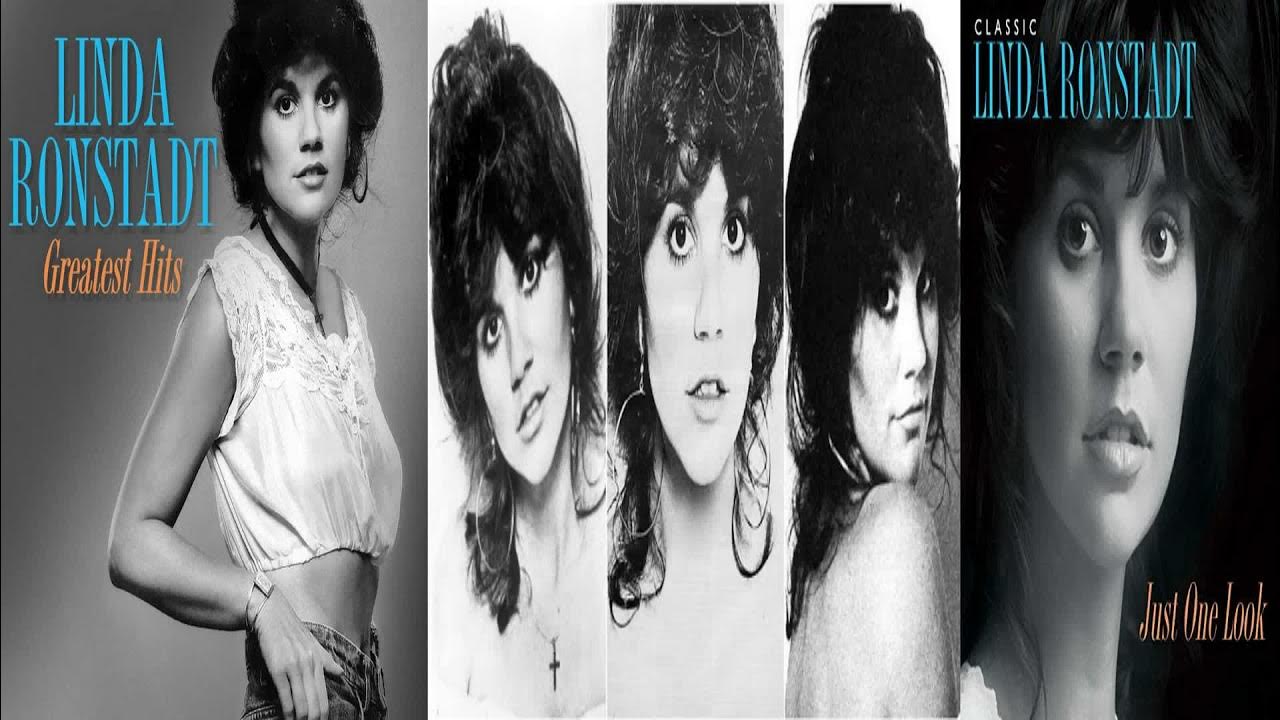
On Hummin’ to Myself, Linda Ronstadt turns Cry Me a River into controlled, grown-up fire.
In 2004, Linda Ronstadt included Cry Me a River on Hummin’ to Myself, an album devoted to jazz standards and the American popular songbook. The song itself, written by Arthur Hamilton, had long carried the cool authority of the standards era, especially through Julie London’s famous 1955 recording. Ronstadt did not approach it as a museum piece. She entered a well-known room and rearranged the emotional furniture with the care of a singer who understood that old songs change depending on who is brave enough to stand inside them.
By the time of Hummin’ to Myself, Ronstadt’s relationship with standards was already substantial. In the 1980s, her albums with arranger Nelson Riddle brought her into the orchestral world of pre-rock popular song, with recordings such as What’s New, Lush Life, and For Sentimental Reasons. Those projects had scale, glamour, and the sweep of classic arrangements. The 2004 album feels different in temperament. It is less about dramatic arrival than about refinement, the sound of a singer returning to a language she had learned deeply and now speaking it with fewer gestures.
Cry Me a River is a song built on injured elegance. Its speaker has been abandoned, then asked for sympathy when the emotional weather changes. The temptation for any singer is to sharpen every line into revenge, to make the song burn openly. Ronstadt chooses another route. Her interpretation keeps the blade polished. The hurt is present, but it is controlled; the anger has posture; the dismissal arrives not as a shout, but as a measured closing of the door.
That restraint is what makes the performance sophisticated. Ronstadt had one of the most powerful and recognizable voices in American popular music, a voice associated with clarity, force, and emotional directness. On this recording, the drama lies in how little she needs to prove. She lets phrases settle into the song’s contours rather than forcing them outward. The vowels are shaped cleanly, the line remains firm, and the emotional pressure comes through timing, not excess. In standards singing, the space between phrases can carry as much meaning as the words themselves; Ronstadt seems to understand that silence can be part of the arrangement.
The jazz character of the interpretation depends on that balance between precision and looseness. The song’s harmonies already carry a late-night sophistication, but Ronstadt does not merely lean on atmosphere. She sings as if the lyric is being considered in real time, allowing the irony to develop gradually. The performance is not smoky imitation, even though the song’s history makes that association almost unavoidable. Where London’s recording is often remembered for its spare, close presence, Ronstadt’s version feels more open-throated and classically poised. She brings the listener not into a whispered corner, but into a carefully lit emotional chamber where every inflection has been placed with intent.
Part of the fascination is hearing Ronstadt’s broader musical life behind the performance without letting it dominate. Her career had moved through rock, country, pop, traditional Mexican music, operetta, folk, and standards. That range matters here because Cry Me a River does not sound like an exercise in borrowed style. It sounds like another chapter in a lifelong practice of listening across borders. Ronstadt was never convincing in a genre because she decorated it from the outside; she was convincing when she submitted to the discipline of its phrasing, its histories, and its emotional codes.
In the early 2000s, standards albums were again visible in adult pop culture, but Ronstadt’s presence in that field carried a different weight. She had already taken artistic risks with this repertoire decades earlier, at a time when moving from rock radio into orchestral standards was not an obvious commercial gesture. Hummin’ to Myself can be heard as a later, quieter return rather than a trend. It would become her final solo studio album, though that fact gains its poignancy only in hindsight. The album does not announce itself as farewell. It simply reveals an artist still choosing songs that demanded concentration, taste, and emotional honesty.
Ronstadt’s Cry Me a River matters because it understands the standards era as an art of compression. These songs often contain whole emotional histories inside a few minutes: courtship, betrayal, pride, memory, surrender. The singer’s task is not to explain all of it, but to let enough light fall on the right details. Ronstadt finds the song’s adult center. She does not make heartbreak young again; she allows it to sound experienced. There is dignity in the way the performance refuses to plead for sympathy, and there is even more dignity in how it refuses to become cruel.
Heard now, the recording feels like a lesson in artistic restraint. It shows that interpretation is not only a matter of vocal beauty, but of judgment: when to press, when to withdraw, when to let the lyric do the work, and when to let a lifetime of singing remain just beneath the surface. On Hummin’ to Myself, Linda Ronstadt turns Cry Me a River into a portrait of pain that has learned manners without losing truth. The performance suggests a different kind of strength: the strength to make pain intelligible without making it loud.
