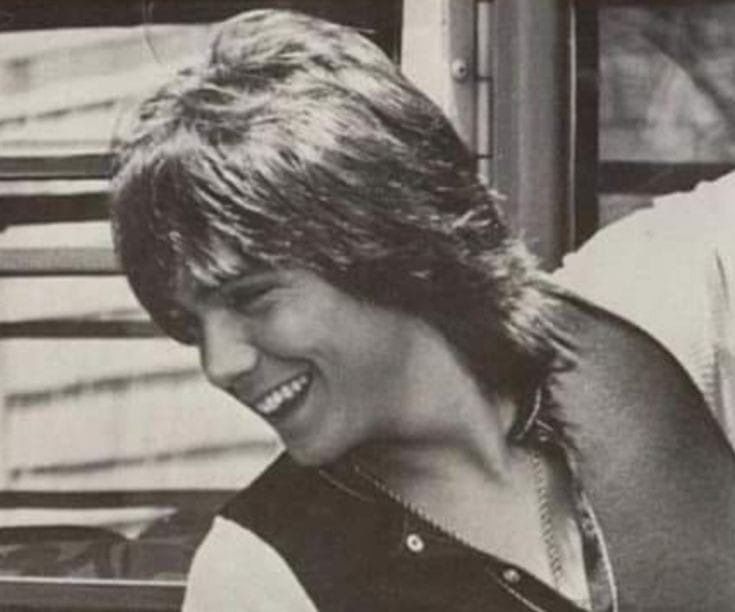
By 1990, David Cassidy was no longer singing from inside a memory. Message to the World captured a performer trying to be heard as a fully formed artist, not just remembered as a face from another decade.
In 1990, David Cassidy released Message to the World, a song he co-wrote with Sue Shifrin. That detail matters immediately. This was not simply another recording added to a familiar catalog, nor was it a casual attempt to trade on recognition. It belonged to a later phase of Cassidy’s career, a period when the noise surrounding his early fame had long since settled into something more complicated. The song arrived after the fever of The Partridge Family, after the teen-idol image had hardened in public memory, and after years in which he had been trying to reclaim authorship over his own musical identity.
That is what makes Message to the World so interesting now. Career reassessment often begins with the biggest hits, the moments the culture already knows how to celebrate. But artists are not always best understood through the songs that made them famous. Sometimes the clearer portrait appears later, in work that received less fanfare but carries more intention. Cassidy’s public story was, for a long time, flattened into a familiar shape: television star, pop phenomenon, object of mass devotion. All of that was real, but it was never the whole of him. Songs like this remind us that he kept trying to move beyond the frame that had first made him visible.
Co-writing the song with Sue Shifrin adds another layer to its meaning. For Cassidy, authorship was part of the argument. Earlier in his career, he had often been talked about as a manufactured success, a performer people looked at before they really listened to him. By the time of this 1990 recording, there was a different kind of claim being made. Here was Cassidy not only singing, but helping shape the material itself. That changes the emotional weight of the performance. It asks us to hear him less as a symbol of 1970s pop hysteria and more as a working musician trying to say something in his own voice.
Musically, Message to the World carries the polished texture of its era. The production sits comfortably in the late-1980s to early-1990s pop landscape, where clean surfaces, measured rhythm, and bright melodic architecture were often used to deliver songs with a broad emotional reach. Yet the most striking part of the recording is not its sheen. It is the sense of restraint inside it. Cassidy does not attack the song as if he is trying to prove himself in one dramatic burst. He sings with the steadier authority of someone who has already lived through misreading, overexposure, and reinvention. That calm is part of what gives the record its dignity.
The title itself, Message to the World, suggests a public address, but the performance feels more personal than grandiose. There is an earnestness to it that might easily have tipped into overstatement in another singer’s hands. Cassidy keeps it grounded. He sounds like a man reaching outward without pretending to stand above the crowd. That balance is important, especially when listening to the song through the lens of his broader career. He had known a level of attention that could distort any artist’s sense of self. A song like this feels shaped by someone who understood the difference between being seen and being understood.
It also belongs to a period when Cassidy had already proved his durability in ways that the old teen-idol narrative rarely captures. He had continued performing, recording, and building a life in music beyond the first wave of celebrity. That persistence matters. Pop history can be unkind to artists who become famous young, especially men and women whose first image is packaged for mass consumption. They are often treated as if their most public beginning must also be their artistic limit. Message to the World quietly argues against that habit. It is the work of an adult artist still searching, still refining, still reaching for a bigger emotional and creative space.
There is also something revealing in the song’s relative obscurity when compared with Cassidy’s most famous recordings. Because it was not stamped into collective memory in the same way, it can now be heard with fewer assumptions attached. That gives it unusual value in reassessing his legacy. Instead of asking whether it matches the hysteria of his early years, a better question is what it tells us about the musician he became. The answer is not flashy. It is more interesting than that. It tells us he cared about craft, that he wanted to participate in the making of his own material, and that he was still trying to connect through music rather than merely relive a former image.
For listeners willing to return to David Cassidy with fresh ears, Message to the World can sound like a correction to a long-standing misunderstanding. Not a dramatic reinvention, not a belated plea for respect, but a mature piece of evidence. It shows an artist who had moved past the glare of youthful fame and was still intent on saying something clear, melodic, and human. In that sense, the song does exactly what its title promises. It sends a message outward, yes, but it also sends one backward through his own career, asking us to hear him again with more patience than history first allowed.
