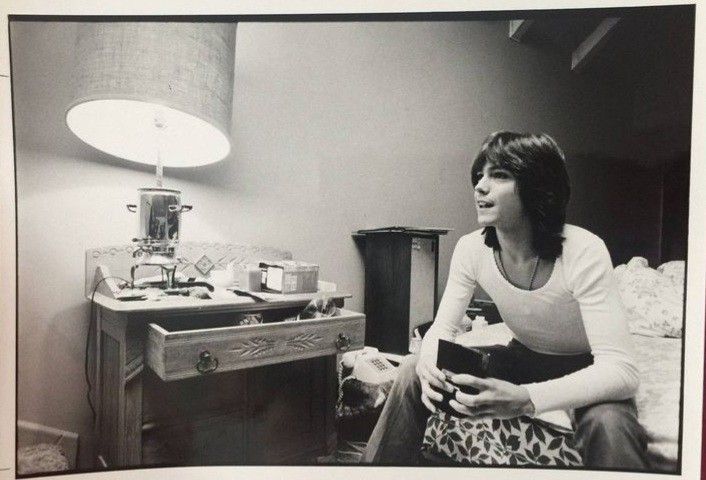
At the height of David Cassidy fever, I Lost My Chance let a quieter truth slip through: fame was bright, but the voice at the center of it could still carry regret, hesitation, and the ache of something missed.
In 1972, David Cassidy was one of the most recognizable young stars in popular culture, balancing television fame, a huge recording career, and the kind of public attention that can flatten a performer into a single image. That is part of what makes I Lost My Chance, heard on Cherish, so interesting all these years later. The song sits inside one of the most intense periods of Cassidy’s early career, yet it does not sound rushed, loud, or designed only to feed the machinery of celebrity. Instead, it feels inward. It pauses. It lets vulnerability breathe.
The 1972 album Cherish arrived during the period when Cassidy’s name was already associated with screaming crowds, magazine covers, and the crossover pull of The Partridge Family. But albums from that era often reveal more than the public myth does, especially when listeners move past the biggest singles and into the deeper cuts. I Lost My Chance belongs to that more private space. Even the title carries a very human sadness. It does not describe a dramatic collapse or a grand betrayal. It describes something smaller, and in some ways harder to shake: the realization that the important moment has already passed.
That emotional scale matters. Early-1970s pop could be glossy and immediately appealing, but the best records from that world often worked because they smuggled complicated feelings into elegant, accessible arrangements. I Lost My Chance fits that tradition. The song does not need oversized gestures. Its power comes from restraint. Cassidy’s voice, youthful but already capable of shading a line with disappointment, gives the material an emotional credibility that goes beyond his teen-idol image. He does not oversell the feeling. He stays close to it. That control is what gives the performance its lingering effect.
There is an emotional backstory here, even if it is not the kind of backstory built on sensational anecdotes. By 1972, Cassidy was living inside a public role so intense that many listeners saw the smile before they heard the singer. Songs like I Lost My Chance remind us that he was always more musically expressive than the packaging suggested. The tension between those two things, the manufactured brightness of stardom and the genuine melancholy of a performance, is what gives this recording its quiet depth. It sounds like a song from a young man singing inside a very crowded life, finding a few minutes of honesty in the studio.
That is also why Cherish remains such a revealing title in his catalog. The album name suggests affection, tenderness, and a kind of idealized devotion, yet I Lost My Chance introduces another emotional color altogether. It is not about holding on. It is about looking back. It carries the soft bruise of reflection. Heard in that context, the song broadens the emotional world of the album. It suggests that Cassidy’s appeal was never only about youthful charm. There was also a sensitivity in his recordings that listeners could return to after the posters came down and the headlines faded.
Musically, the track belongs to that polished early-70s pop world where arrangement and vocal tone are carefully balanced, but what lasts is the sense of emotional proportion. Nothing feels too heavy-handed. The production supports the song rather than drowning it. That allows Cassidy’s phrasing to become the real center of attention. He sounds present in the lyric, aware of the difference between sadness and self-pity. That distinction gives the song maturity. It is not merely wistful. It feels resigned in a way that many young pop records avoid.
There is something especially moving about hearing a song like this from an artist who, at the time, represented youth, glamour, and mass adoration. The public story said one thing: here was a star everyone wanted. But I Lost My Chance turns the emotional lens around and sings from the side of longing, from the side of not getting there in time. That reversal makes the performance memorable. It reveals how pop can complicate celebrity instead of simply decorating it.
For listeners returning to David Cassidy now, this track is a reminder that the most revealing moments in a catalog are not always the most famous ones. Sometimes they are the songs that stand a little to the side, carrying a mood the era did not fully stop to admire. I Lost My Chance is one of those recordings. On Cherish, amid the shine of 1972, it offers a more fragile and more enduring truth: even in the middle of immense visibility, a singer can still sound alone, reflective, and painfully aware that some chances do not come back.
