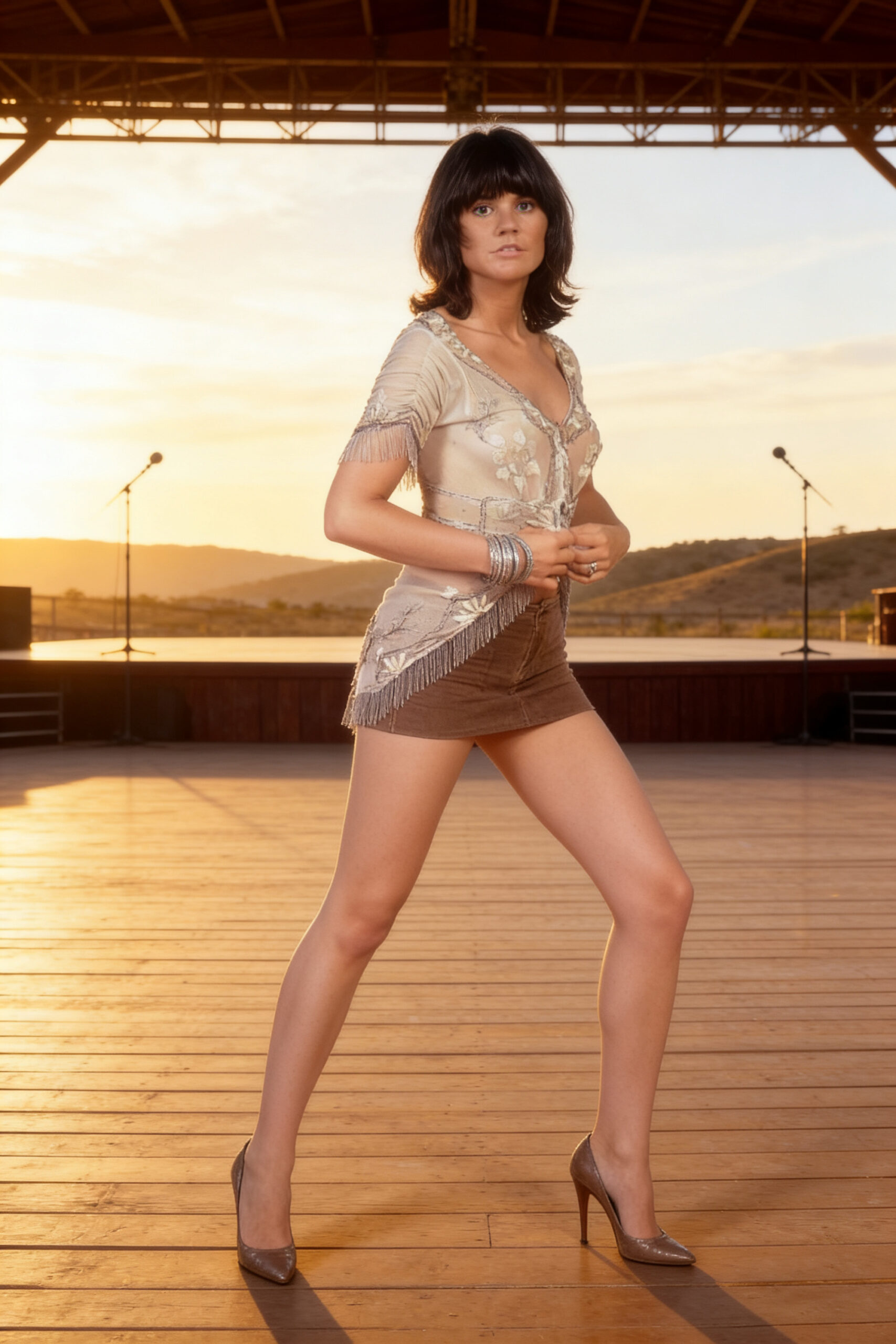
Buried inside Heart Like a Wheel, Linda Ronstadt found the hush, secrecy, and ache at the center of “The Dark End of the Street”—and made an already troubled song feel even more human.
When Linda Ronstadt placed “The Dark End of the Street” on Heart Like a Wheel in 1974, she was not simply covering a respected soul song. She was bringing a Southern confession into the middle of a record that helped define her as one of the great interpreters of her era. Heart Like a Wheel, released in 1974 and produced by Peter Asher, is often remembered for its larger breakthroughs: “You’re No Good”, “When Will I Be Loved”, the title track, the sense that Ronstadt had fully arrived. Yet tucked among those better-known performances is this quieter, more morally complicated song, written by Dan Penn and Chips Moman and first immortalized by James Carr in 1967. On Ronstadt’s album, it becomes something slightly different again—not less soulful, but more exposed.
That is part of what makes the track so easy to overlook and so hard to forget once it finds you. Heart Like a Wheel is a record of extraordinary range. It moves through rock, country, folk, and pop with a confidence that seems effortless now, though it was hard won. Ronstadt had already spent years proving that she could move between styles without losing herself. Here, she sounds completely centered. And because the album contains such direct, immediate songs, “The Dark End of the Street” can seem at first like a side corridor, a dimmer room off the main hall. But it is one of the places where the album reveals its emotional depth most clearly.
The song itself has always carried an unusual tension. Penn and Moman wrote a ballad about hidden love, public shame, and private need, and the power of it lies in how little it tries to excuse. There is longing in the lyric, but there is also consequence. People meet in shadows because daylight belongs to someone else. In many hands, that premise can tip toward melodrama. What Ronstadt understands is that the song is stronger when it is sung with restraint. She does not crowd it with excessive sorrow or theatrical guilt. Instead, she lets the phrasing do the work. Her voice, so often praised for its strength and reach, becomes especially compelling here because of how carefully it holds back.
That balance is the key to her 1974 version. Ronstadt never sounds detached, but she also never oversells the pain. She gives the song a steadier surface, and that steadiness makes the tension underneath more visible. The arrangement helps. Rather than trying to recreate the exact emotional grain of the James Carr recording, this version sits naturally inside the sound world of Heart Like a Wheel. The album’s blend of country-rock clarity and emotional sophistication gives the song a slightly different contour. The secrecy remains, but it is heard through a West Coast recording sensibility—cleaner lines, more air around the voice, and a feeling that the sorrow is being observed as much as confessed.
That contrast matters. By 1974, Ronstadt was becoming a major commercial force, yet her best work often came from choosing material with emotional ambiguity. She was never only a singer of straightforward declarations. Even when the melody was generous, there was often a shadow somewhere in the performance, some awareness that love songs are rarely simple for long. “The Dark End of the Street” gave her a perfect vehicle for that quality. It allowed her to sing not from the center of romance, but from its compromised edge. That is one reason the track still feels so quietly startling in the flow of the album.
It also says something important about why Heart Like a Wheel endures. Great albums are not built only from the obvious singles. They are shaped by the songs that deepen the emotional weather, the ones that widen the moral and musical world around the hits. Ronstadt’s decision to include this song suggests how serious her listening was. She knew the history in it. She knew that a country-rock audience could hear a Memphis soul composition and recognize something of their own lives in its tension between desire and decorum. She did not sand away that complexity. She trusted the song, and she trusted the listener enough to leave some of the unease intact.
What remains, all these years later, is the feeling of a great singer entering a difficult song without trying to dominate it. Ronstadt had the power to turn almost any melody into a major event, but here she chooses something finer than power. She chooses measure, tone, and emotional accuracy. In the process, “The Dark End of the Street” becomes one of the most revealing performances on Heart Like a Wheel. Not the loudest. Not the most celebrated. But perhaps one of the clearest examples of how deeply Linda Ronstadt understood that a song can carry beauty and discomfort at the same time, and that sometimes the performances that stay with us longest are the ones that seem, at first, to stand slightly off to the side.
That may be why this track continues to draw devoted listeners back. It does not announce itself as a centerpiece. It waits. Then, almost before you notice, it changes the emotional shape of the album around it. The brighter songs still shine, but this one gives them a shadow to lean against. And in that shadow, Ronstadt sounds not only gifted, but wise—hearing in an older soul song a truth subtle enough to survive any era: that some of the most affecting music happens where feeling and restraint meet, far from the spotlight, at the edge of the street.
