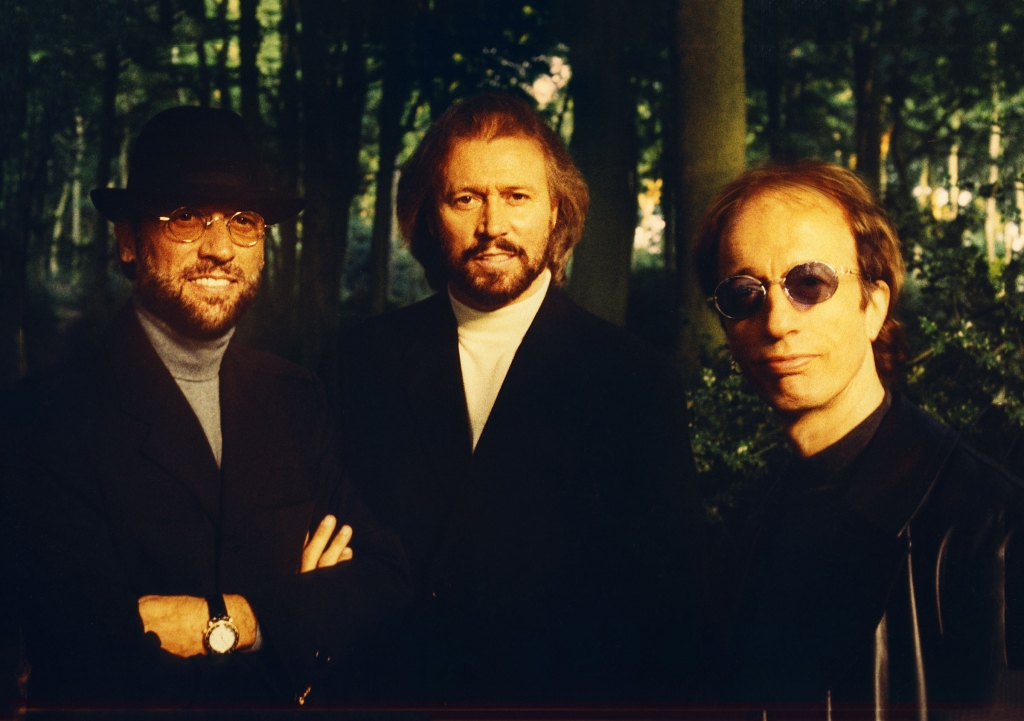
A love song became something even deeper when the Bee Gees sang Our Love (Don’t Throw It All Away) on One Night Only and let memory share the stage with family.
There are performances that entertain, and then there are performances that seem to suspend time. The Bee Gees rendition of Our Love (Don’t Throw It All Away) on the 1998 live release One Night Only belongs firmly in the second category. Recorded at the MGM Grand in Las Vegas in November 1997 and issued in 1998, the concert already carried the glow of a major comeback. But this particular moment reached beyond comeback, beyond nostalgia, even beyond showmanship. It became a family remembrance played out in front of thousands, with Barry, Robin, and Maurice Gibb performing alongside archival video of their younger brother Andy Gibb, creating one of the most tender and haunting passages in the entire show.
That is what made the performance so powerful: it was not simply a revival of a familiar song. It was a return to a shared history. Our Love (Don’t Throw It All Away) had long been associated with Andy, whose 1978 recording became a major hit in America, reaching No. 9 on the Billboard Hot 100. The song itself was written by Barry Gibb and Blue Weaver, and even before that chart success, it already carried the unmistakable melodic sensitivity that ran through so much of the Gibb family’s music. In Andy’s hands, it sounded youthful, pleading, romantic. In the hands of the Bee Gees on One Night Only, it took on a second life—older, wiser, and touched by the ache of remembrance.
What audiences saw in that live performance was simple on the surface and overwhelming underneath. The brothers stood onstage in full command of the room, as they had done so many times before, but the visual presence of Andy on the screen changed the emotional temperature immediately. This was not a gimmick. It did not feel like technology trying to manufacture feeling. It felt, instead, like an act of love. The arrangement allowed Andy’s earlier footage to converse with the live voices of Barry and Robin, while Maurice remained part of the musical frame that held the whole moment together. For longtime listeners, it was almost impossible not to feel the years collapsing into one another.
That emotional shift also revealed something deeper about the song itself. On paper, Our Love (Don’t Throw It All Away) is a romantic plea, built around regret, tenderness, and the fear of losing something precious. But songs do not stay fixed forever. They gather new meanings as life moves around them. By the time it appeared on One Night Only, the lyric no longer felt limited to a story of lovers trying to hold on. It sounded like a plea against distance, against time, against the small cruelties of life that pull people apart. In that setting, every line seemed to carry both personal memory and public tribute.
The beauty of the Bee Gees was always their instinct for emotional balance. They understood how to make even polished pop feel intimate, and how to bring family harmony into the center of popular music without making it feel sentimental in the weaker sense of the word. This performance is a perfect example. They did not oversing it. They did not drown it in theatrical excess. They trusted the song, trusted the history behind it, and allowed the contrast between the living moment onstage and the preserved image on screen to do the deeper work.
It also says something important about One Night Only as a whole. The concert is often remembered for reaffirming the Bee Gees as one of pop music’s great live acts, moving effortlessly from the grandeur of their ballads to the rhythmic pulse of their disco-era classics. Yet among all those crowd-pleasing moments, Our Love (Don’t Throw It All Away) stands apart because it reveals the heart behind the catalogue. It reminds us that the Gibb story was never only about hits, falsettos, fame, or eras. It was about brothers, about voices raised together, and about the strange way music keeps relationships present even when life has changed the room forever.
For many listeners, that is why this performance still lingers. The original hit mattered. The chart history mattered. The songwriting pedigree mattered. But on that stage, in that 1998 release, facts gave way to feeling. The song was no longer just an old success from Andy’s career; it became a bridge between chapters of the same family story. And that is why the performance continues to move people. Not because it is rare, though it is. Not because it is expertly staged, though it certainly is. It moves people because it shows what great music sometimes does at its most human: it lets love remain audible.
Seen now, years after its release, the Bee Gees performance of Our Love (Don’t Throw It All Away) from One Night Only feels less like a concert selection and more like a quiet conversation preserved in light and sound. It is graceful, restrained, and deeply personal. And for anyone who has ever understood how one song can carry an entire family history inside it, this remains one of the most unforgettable moments the Gibb brothers ever placed before an audience.
