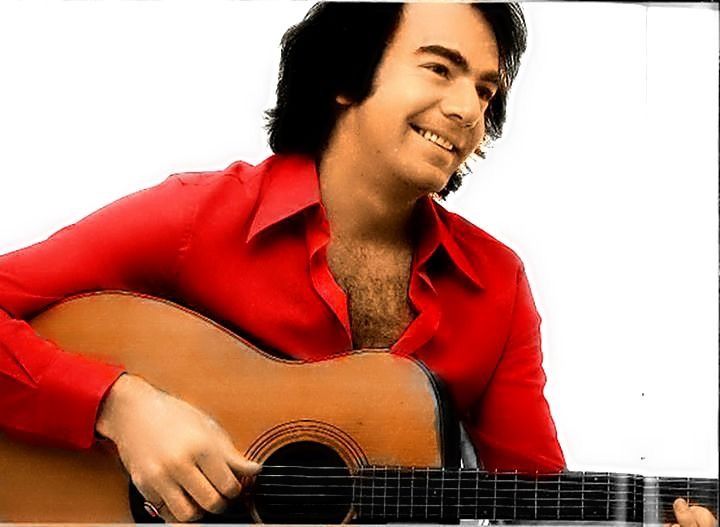
A Top 10 hit with the force of a prayer, Holly Holy showed how Neil Diamond could turn pop music into something communal, intimate, and almost sacred.
Released in 1969 and later featured on Touching You, Touching Me, Holly Holy rose to No. 6 on the Billboard Hot 100, and that chart milestone says a great deal about the moment. This was not a lightweight novelty, not a disposable radio confection, and not a song built around a quick gimmick. It was a slow-building, emotionally charged performance that sounded closer to a gathering, even a testimony, than to ordinary Top 40 pop. At the end of a decade filled with noise, experiment, and social strain, Neil Diamond gave listeners something warmer and deeper: a song that asked people to come together, lift their voices, and believe in connection again.
That is one reason the success of Holly Holy still feels so meaningful. On paper, No. 6 is a strong chart result. In spirit, though, the song seemed to achieve something bigger. It confirmed that Neil Diamond was no longer simply a gifted songwriter who could craft a memorable hook. By 1969, with songs like Sweet Caroline already helping define his breakout year, he was becoming one of the most distinctive voices in American pop: dramatic without being artificial, emotional without sounding fragile, and deeply melodic without ever losing his sense of weight and conviction. Holly Holy helped prove that a song could be spiritual in feeling, physical in language, and still connect with a mass audience.
What makes the song so memorable is its gradual rise. It does not rush toward the listener. It opens with patience, almost with reverence, and then begins to widen. The arrangement, produced by Tom Catalano, grows in layers, allowing Neil Diamond to move from intimate phrasing into something much more expansive. By the time the song reaches its repeated lines and swelling release, it feels less like a private confession and more like a shared experience. That slow climb is essential to the power of the record. It mirrors what the lyric is doing emotionally: moving from longing and tenderness toward unity, warmth, and affirmation.
The title itself has always carried a certain mystery. Holly Holy is not a conventional story song, and that is part of its beauty. Rather than telling listeners exactly what to think, it creates an atmosphere where sacred feeling and human touch seem to live side by side. The famous phrase that gave Touching You, Touching Me its album title captures the heart of the song. It is about closeness, certainly, but not in a narrow or casual sense. The touch in this song feels emotional, spiritual, and communal all at once. It suggests healing. It suggests surrender. It suggests the rare moment when loneliness eases because another soul is fully present.
That is why the song has lasted so well across the decades. Many hits from the period still charm the ear, but Holly Holy aims for something more interior. It does not merely ask to be remembered; it asks to be felt again. There is gospel energy in the way it rises, though the song is not confined to one religious meaning. Instead, Neil Diamond reaches for a kind of universal language, where belief can mean belief in love, belief in togetherness, belief in the possibility that people can still meet each other with sincerity. In 1969, that emotional generosity mattered. It still does.
Another reason this record stands apart is the way Neil Diamond sings it. He does not approach Holly Holy as a polished pop vocalist trying to stay elegant and distant. He leans into it. He presses into the phrases. He lets the words gather force until they feel almost physical. That intensity became one of his signatures, and songs like this explain why audiences responded so strongly. He could sound theatrical, yes, but never cold. Even at his biggest, there was always a beating human center in the performance. On Holly Holy, that center is impossible to miss.
The song’s chart success also matters in the story of his career. A No. 6 peak on the Billboard Hot 100 placed Holly Holy firmly among the major pop records of its day, but more importantly, it showed that Diamond’s ambition was not getting in the way of his accessibility. He was making records with substance, atmosphere, and emotional seriousness, and the public was following him. That balance is harder to achieve than it sounds. Plenty of artists can be popular for a season. Far fewer can make mainstream success feel personal, almost intimate, as if the record has found a private place inside the listener’s life. Holly Holy did exactly that.
It also became the kind of song that grew larger in performance. Over the years, Neil Diamond often turned it into a concert centerpiece, letting the communal pulse of the song stretch outward in a live setting. That makes perfect sense, because even on the original single, it already sounds as though it wants a room full of voices. It is one of those records that begins in solitude and ends in fellowship. Few artists understood that transition better than Diamond. He knew how to write songs that started with one heart and somehow reached an entire crowd.
Looking back now, Holly Holy remains one of the defining achievements of the Touching You, Touching Me era and one of the clearest examples of what made Neil Diamond so singular. It was a hit, yes. It was a Hot 100 success, yes. But it was also a statement of feeling. It showed that late-1960s pop could still make room for devotion, longing, uplift, and a sense of shared emotional purpose. That is why the record has never faded into mere nostalgia. When that chorus rises, it still feels alive. It still feels like a hand reaching across the years. And it still reminds us that sometimes a song becomes unforgettable not because it says more than every other song, but because it says one essential thing with uncommon conviction: we are meant to find each other, and when we do, music can sound almost holy.
