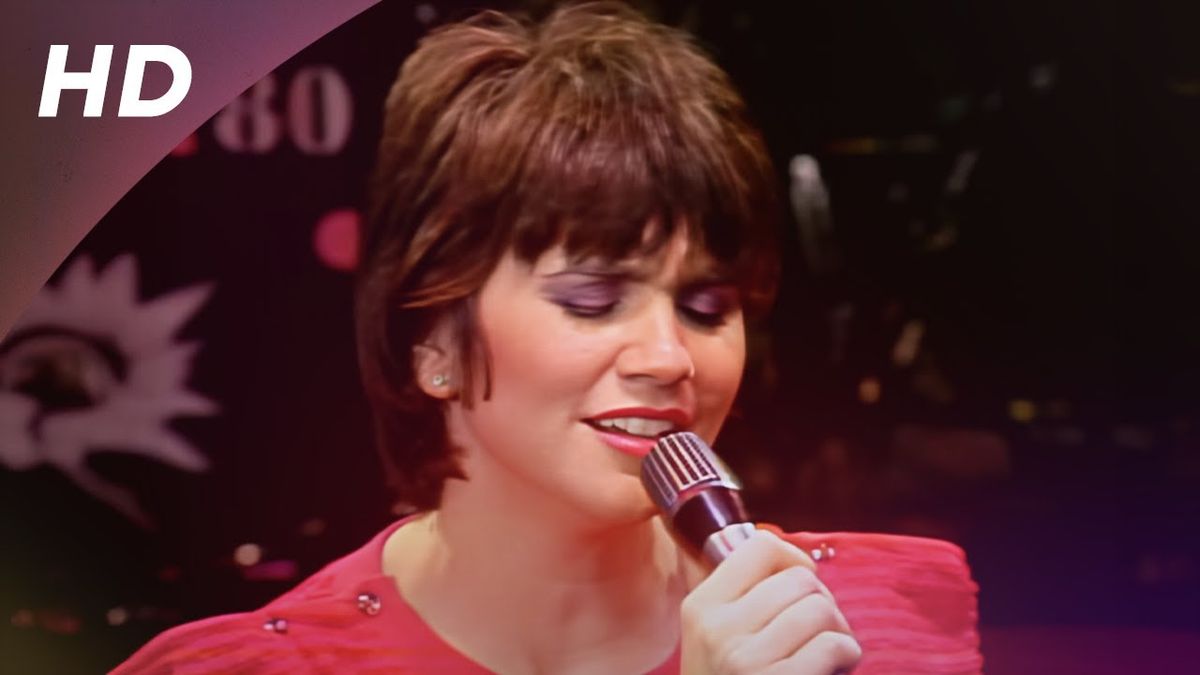
With ‘What’s New’, Linda Ronstadt did not simply record an old standard in 1983. She turned a quiet question into a statement of artistic courage, longing, and timeless emotional grace.
When Linda Ronstadt released ‘What’s New’ as the title track of her 1983 album What’s New, it felt like a remarkable turn in a career that had already given popular music so many unforgettable moments. By then, she was widely known for rock, country-rock, and pop performances of enormous range and authority. Yet here she was, stepping away from the rush of contemporary radio and into the world of classic orchestral standards. It was a risk, and a very public one. Instead of sounding cautious, however, Ronstadt sounded completely at home. The album What’s New went on to reach No. 3 on the Billboard 200, proving that this elegant detour was not a niche experiment at all, but a major cultural event.
That success matters because the song itself was never built for flashy chart combat. ‘What’s New’ began life in 1938, with music by Bob Haggart and lyrics by Johnny Burke. It belongs to that rare class of standards that seem simple on first hearing, only to reveal deeper shades of feeling with every return. Its opening question sounds conversational, almost polite: What’s new? How is the world treating you? But beneath that calm surface lies something more fragile. This is not small talk. It is the sound of someone standing in front of an old love, trying to speak normally while memory and regret quietly fill the room.
That emotional tension is exactly what made the song such a perfect choice for Ronstadt’s standards era. Working with the great arranger and conductor Nelson Riddle, and produced by her longtime collaborator Peter Asher, she did not modernize the song beyond recognition, nor did she treat it like a museum piece. Instead, she sang it with restraint, respect, and deep emotional intelligence. Riddle’s arrangement gives the melody space to breathe. The orchestra never crowds her. The phrasing is careful, almost conversational, yet every line carries the weight of things left unsaid. Ronstadt understood that a song like this does not need overstatement. It needs poise, tone, and trust.
And that is one of the enduring marvels of Linda Ronstadt on ‘What’s New’. Many singers approach standards by displaying technique first. Ronstadt certainly had the technique, but what she offered here was something more moving than display. She brought clarity. She let the lyric ache in its own time. There is no theatrical wink, no attempt to show how clever or historically informed the performance is. She simply enters the song and lives inside it. The result is luminous. What might have been a pleasant exercise in nostalgia becomes something far more intimate: a portrait of emotional self-control just beginning to tremble.
The backstory makes the recording even richer. Ronstadt had loved this repertoire for years, and her collaboration with Nelson Riddle finally gave her the setting she needed to sing it fully. This was not a casual side project. It was a serious artistic decision, one that surprised some listeners who expected another contemporary pop move from a singer already proven in several styles. But What’s New showed that Ronstadt’s musical curiosity was larger than the categories around her. In many ways, the title track served as the album’s mission statement. It announced, gently but unmistakably, that these older songs still had life in them, and that modern listeners could still be undone by their honesty.
There is also something especially moving about how the song’s meaning shifts when sung by Ronstadt in 1983. In the late 1930s, ‘What’s New’ carried the elegance of pre-rock popular songcraft. In Ronstadt’s hands, it gained another dimension: the wisdom of an artist who had already known acclaim, reinvention, and the burden of expectation. She sings the title not as idle curiosity, but as a question that already suspects the answer. The world has changed. People have changed. Time has done what time always does. Yet the old feeling remains, if only for a moment, in the sound of one voice asking what should have been an easy thing to say.
That is why the song still lingers. It is not merely beautiful; it is emotionally exact. It captures that distinctly adult moment when one tries to remain composed in the presence of unfinished feeling. Few songs do that with such economy, and few singers have delivered it with such dignity. Ronstadt never pushes the heartbreak. She lets the listener discover it line by line. That quietness is part of the performance’s power. It trusts the audience to hear the silence between the words.
Looking back now, ‘What’s New’ stands as more than a successful title track. It marks the beginning of one of the most graceful chapters in Linda Ronstadt’s career, one that would continue with later collaborations with Nelson Riddle and help reintroduce the Great American Songbook to a broad popular audience. But even apart from its historical importance, the performance endures for a simpler reason: it feels true. It reminds us that a song does not need noise to be powerful, and that sometimes the softest question can carry the deepest wound.
In the end, Linda Ronstadt did something extraordinary with ‘What’s New’. She took a standard already rich with memory and sang it in a way that made it feel present again. Not preserved. Not revived for novelty. Present. Alive. Human. And in that elegant, searching performance, she proved that the distance between past and present can be crossed by nothing more than a voice, an orchestra, and a question asked with perfect tenderness.
