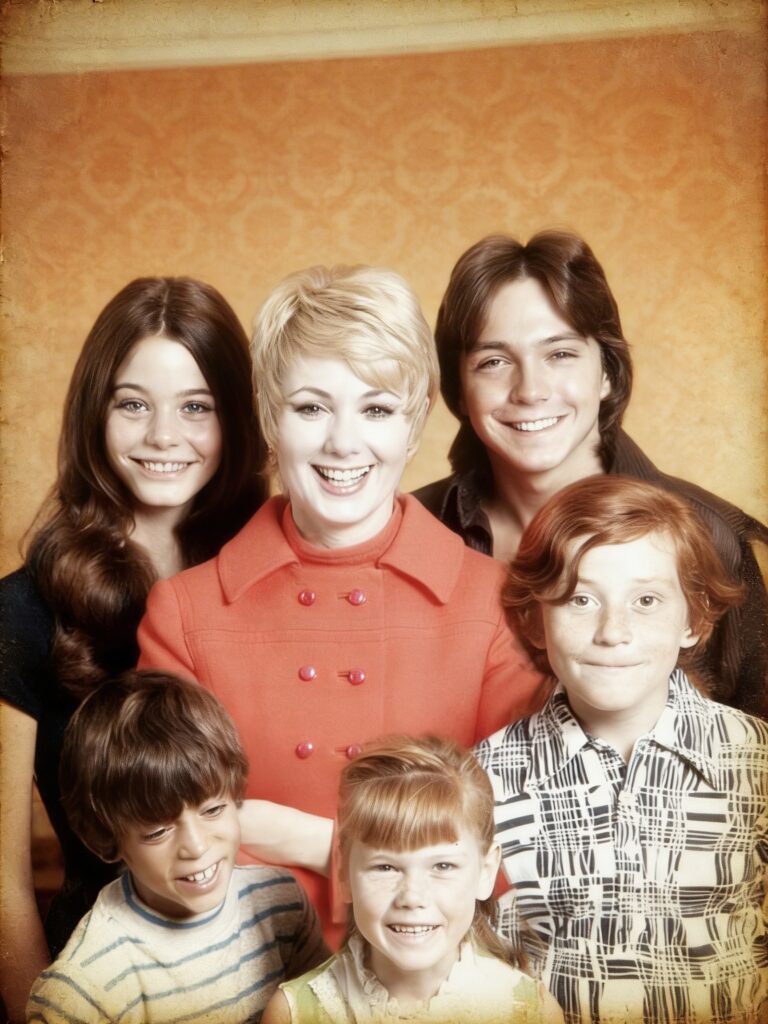
Sometimes the flip side says more than the hit. On Somebody Wants to Love You, David Cassidy gave The Partridge Family one of its clearest early vocal signatures.
In 1970, The Partridge Family arrived with a television premise, a bright California image, and a debut single that became impossible to ignore. That single, I Think I Love You, went all the way to No. 1 on the Billboard Hot 100 in November 1970, instantly turning the fictional family band into a real pop phenomenon. But on the back of that same 45 was Somebody Wants to Love You, a song that did not enjoy the same chart spotlight and was never the headline story. As a B-side, its fate was tied to the success of the A-side. Yet for anyone who flipped the record over and listened closely, it offered something just as important: an early, unmistakable portrait of David Cassidy as a singer.
That matters, because the story of The Partridge Family has always lived between fantasy and reality. The TV series, which premiered on ABC in 1970, gave audiences the image of a family making pop music together. Behind the scenes, the records were carefully crafted in Los Angeles under producer Wes Farrell, using top session musicians. But if the production was assembled with professional precision, the emotional connection still had to come from somewhere. In those early records, it came most clearly from David Cassidy. Along with Shirley Jones, he was one of the principal cast voices actually heard on the records, and before long his voice became the sound people recognized first.
Somebody Wants to Love You is one of the best examples of that transformation. It belongs to the same breakthrough moment that gave listeners The Partridge Family Album, and it carries the polished sunshine-pop sheen of the era. But what makes the track linger is not only the arrangement. It is the way David Cassidy sings it. His performance has that youthful lift that would soon become his hallmark: bright but not weightless, eager without becoming forced, tender without turning soft. There is a quickness in his phrasing, a small ache under the smile, that makes even a straightforward pop lyric feel personal.
That is why the song works so well as a signature-vocal moment. On paper, Somebody Wants to Love You is a simple reassurance song, built around the warm promise that love is closer than the lonely heart may think. It is not grand tragedy, and it is not ornate poetry. It is a compact pop message about being seen, wanted, and gently called out of uncertainty. In lesser hands, that kind of song can pass by as cheerful filler. In David Cassidy’s voice, it feels like a hand extended across the room. He does not attack the lyric with swagger. He leans into it with urgency and openness, and that balance is exactly what made so many listeners feel that he was singing to them rather than merely performing at them.
There is also something revealing about hearing this on a B-side. In the era of 45s, the flip side often held the less advertised truth. The A-side was the sales pitch. The B-side could show texture, instinct, and personality. I Think I Love You was the song that conquered radio and reached No. 1. Somebody Wants to Love You was the quieter companion, the song that helped explain why the success did not feel accidental. It showed that the voice at the center of the phenomenon was not just marketable. It was memorable.
Listening now, the record also captures a very specific moment in David Cassidy’s career: just before his image hardened into full-scale teen-idol mythology. Later hits would make his appeal obvious to everyone, but this earlier side already contained the essentials. You can hear the combination that made him stand apart: the clean pop timing, the emotional lift, the conversational intimacy, the sense that he could carry both excitement and vulnerability in the same breath. That is the kind of singing that survives changes in fashion.
So while Somebody Wants to Love You may never be listed first when casual fans name the biggest Partridge Family records, it deserves a closer listen. Historically, it sits in the shadow of one of 1970’s biggest singles. Emotionally, though, it tells another story. It reminds us that pop history is often hiding on the reverse side of the record, in the song that was not expected to carry the legend. On this one, David Cassidy was already there, already unmistakable, already turning a manufactured pop vehicle into something that felt human and immediate. That is why this B-side still matters. It did not top the chart. It revealed the voice.
