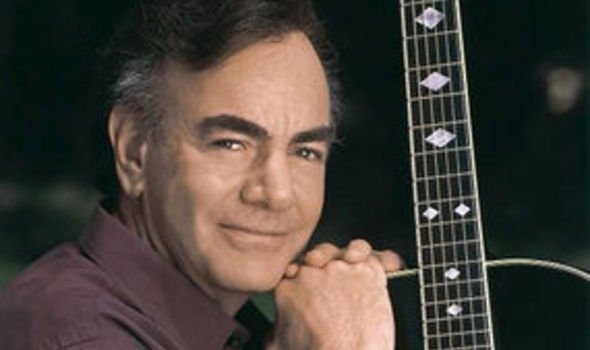
On Neil Diamond’s 2005 album 12 Songs, “Save Me a Saturday Night” feels like the sound of a veteran songwriter stepping away from spectacle and finding something warmer, wiser, and far more revealing.
In 2005, Neil Diamond released 12 Songs, a deliberately stripped-back studio album produced by Rick Rubin. That context matters immediately when talking about “Save Me a Saturday Night”, because the song belongs to the larger artistic reset Rubin helped bring into focus. Rather than surrounding Diamond with the kind of oversized production that had often framed major pop records in earlier decades, 12 Songs placed the writing, the phrasing, and the texture of his voice at the center. On this track, that choice becomes especially meaningful. The song does not push for drama. It lets maturity do the work.
By the time 12 Songs arrived, Diamond was long past the stage of needing to prove he could command a room. He had already written and recorded songs that lived in radio memory, in concert memory, and in the emotional furniture of American popular music. What made this album different was not ambition in the usual commercial sense, but a willingness to sound less armored. “Save Me a Saturday Night” comes out of that late-career openness. It carries the easy phrasing of a man who knows that charm and loneliness are often only a breath apart, and that a weekend evening can feel very different depending on where you are in life.
There is something quietly clever in the title itself. Pop music has spent generations turning Saturday night into a symbol of release, youth, movement, and promise. But in “Save Me a Saturday Night”, the phrase feels touched by experience. It suggests not just excitement, but rescue. Not just fun, but the wish to be pulled out of solitude, routine, or the dull ache of hours that arrive too slowly. That is part of the song’s appeal. It takes a familiar social image and tilts it just enough to reveal another truth inside it. Diamond does not overstate that truth. He lets it sit there in the grain of the performance.
Rick Rubin’s production is essential to why the song lands the way it does. Rubin’s work on 12 Songs was not about reinventing Neil Diamond as a different kind of artist. It was about removing the extra frame and trusting the artist already there. On “Save Me a Saturday Night”, that means room around the melody, a lightness in the arrangement, and an absence of clutter. The song breathes. You can hear the patience in it. You can hear how much the record depends on presence rather than pressure. Diamond’s voice is not treated as a monument here. It is treated as a living instrument, marked by time, capable of wit, tenderness, and a kind of unforced authority.
That is what makes the track such a rich late-career listen. Earlier in his catalog, Diamond could be grand, emphatic, and openly theatrical, and those qualities were part of his power. But “Save Me a Saturday Night” shows another strength: the ability to underplay without losing identity. He still sounds unmistakably like himself, only closer to the microphone and closer to the emotional center of the song. There is no need to oversell the hook. The personality is already there. The years are already there. And because of that, the song feels conversational in the best sense, as if it has been lived with before it was recorded.
Within 12 Songs, this matters even more because the album was widely received as a creative return to essentials. Listeners who knew Diamond from his bigger crossover moments heard something different here: not a retreat, but a refinement. “Save Me a Saturday Night” may not be the album’s most discussed title, yet it captures the mood of the project beautifully. It reminds you that late work from a major artist can carry its own kind of revelation. Not the revelation of novelty, but of clarity. The voice has less to hide behind. The song has less to distract from it. What remains is character.
And character is really the lasting subject of this recording. Diamond does not sing as though he is chasing youth or trying to recreate an earlier era. He sings from where he is, and that honesty gives the track its glow. The weekend setting, the lightly worn romantic tension, the sense of a man asking for connection without turning the request into self-pity, all of it belongs to the adult intelligence of the record. It is popular songwriting with a little weather on it, and that weather is exactly what makes it persuasive.
More than many comeback narratives allow, 12 Songs was not about returning to the past. It was about hearing Neil Diamond in the present tense again. In “Save Me a Saturday Night”, you can hear that present tense clearly: relaxed but alert, amused but vulnerable, seasoned without becoming distant. The song lingers because it understands something simple and difficult at once. Sometimes a Saturday night is not about celebration at all. Sometimes it is about the hope that music, company, and a human voice might keep the dark from settling in too early.
