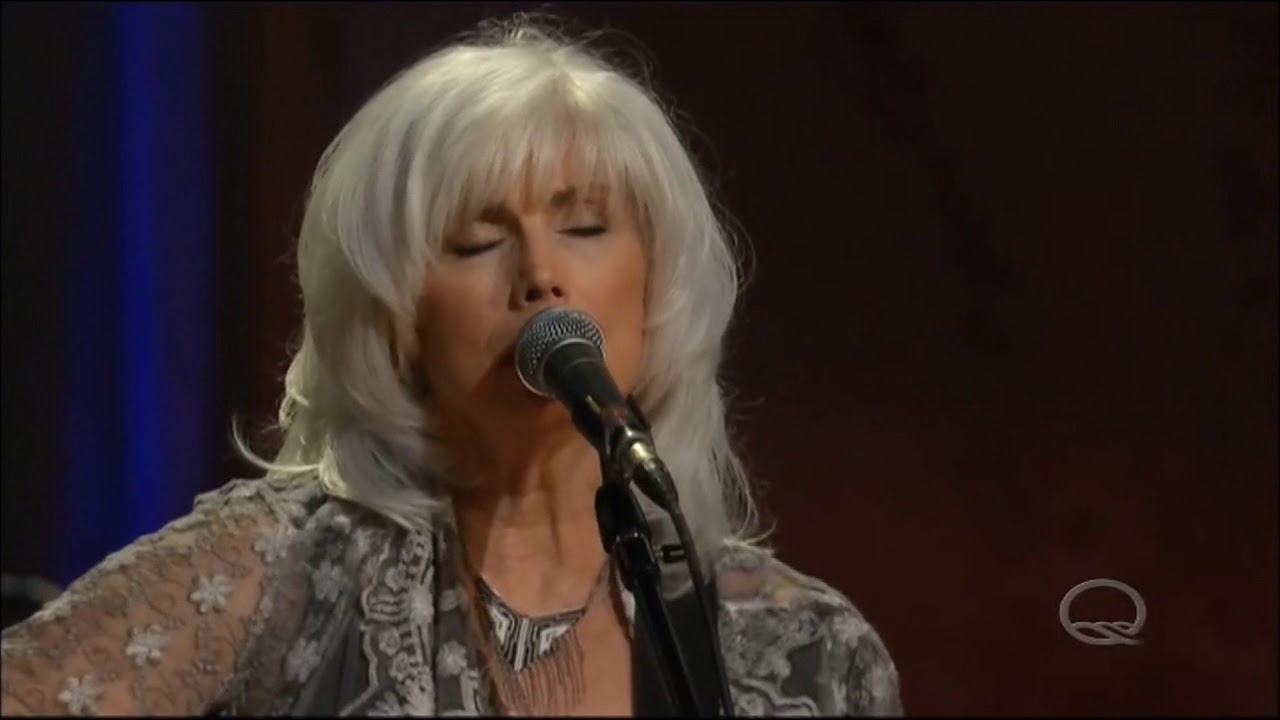
A song once haunted by prairie distance returns in older voices, where Emmylou Harris and Rodney Crowell turn Bull Rider into something gentler, wiser, and even more lonesome.
When Emmylou Harris and Rodney Crowell sang Bull Rider on Old Yellow Moon in 2013, they were not simply reviving an old song. They were allowing time itself to enter the performance. That is what makes this version so affecting. The song had always carried a western loneliness in its bones, but in this later partnership it found a more weathered kind of beauty, less dramatic, more human, and somehow more lasting.
The chart story is worth placing near the top because it helps frame the moment accurately. Bull Rider was not released as a major charting single from Old Yellow Moon, so it did not post its own Billboard peak. But the album made an immediate impact, reaching No. 4 on Billboard’s Top Country Albums chart and No. 29 on the Billboard 200. It later won the Grammy Award for Best Americana Album, an honor that felt entirely earned for a record built on mature artistry, understatement, and the deep trust of two musicians who already shared a long past.
That shared past is central to why this performance matters. Rodney Crowell had been connected to Emmylou Harris‘s musical life since the mid-1970s, first as part of her Hot Band circle and later as one of the most admired songwriters in the country-rock world she helped define. By the time they reunited for Old Yellow Moon, they were no longer young talents circling possibility. They were artists with decades of roads behind them, carrying memory, regret, humor, survival, and craft into every phrase. On a song like Bull Rider, those years are not background detail. They are part of the sound.
It also matters that this was already a meaningful song in Emmylou Harris‘s own history. Bull Rider was written by Anna McGarrigle, and Harris had first recorded it on her 1978 album Quarter Moon in a Ten Cent Town. That earlier version had its own haunting beauty, but the 2013 reading does something subtly different. It does not try to out-sing the past or modernize the song into something flashier. Instead, it listens back to it. The duet feels like a return not just to a composition, but to the life that has happened since it was first sung.
And what kind of song is Bull Rider, really? It is not interested in rodeo myth for its own sake. It does not romanticize danger or turn the western landscape into empty decoration. What it captures, more truthfully, is the solitude around that world: the miles, the risk, the silence after noise, the emotional distance that comes with a life always moving on. It hears the West not as bright legend, but as a place where longing has room to echo. That is why the song still lingers. It is less about action than aftermath.
On Old Yellow Moon, that aftermath is transformed by age, and age is the great secret of this version. The years in Emmylou Harris‘s voice bring an astonishing calm. She no longer has to reach for sorrow; she can simply stand inside it. Her phrasing is soft, but never frail. There is authority in the restraint, the kind that comes only when a singer has lived long enough to know that the saddest feelings do not always arrive loudly. Rodney Crowell answers her with equal intelligence. He does not turn the duet into a dramatic conversation or a showcase. He steadies it. His voice carries a grounded warmth that makes the loneliness feel companioned rather than solved.
That may be the most remarkable thing about this performance: together, they make isolation sound shared without making it any smaller. The sadness of Bull Rider remains intact, but it is now touched by recognition. These are not voices pretending to know hard country truths. These are voices that have traveled with them. In younger hands, a song like this can wound with immediacy. In older hands, it can reveal how sorrow changes shape over time. The ache is still there, but so is patience. So is acceptance. So is grace.
The album setting helps that feeling immensely. Old Yellow Moon, produced by Brian Ahern, carries a warm, unhurried, beautifully uncluttered sound. Nothing on the record feels rushed toward effect, and Bull Rider benefits from that atmosphere. The arrangement leaves space for breath, for pauses, for the tiny emotional shifts that matter more than any flourish. It is the kind of production that trusts songs with history. Rather than dressing the track in revisionist grandeur, it lets the years in the voices become the true arrangement.
That is why this duet remains such a rewarding rediscovery. It honors Anna McGarrigle‘s writing, recalls Emmylou Harris‘s earlier connection to the song, and uses the long artistic bond between Harris and Crowell to reveal something new. Bull Rider did not lose its western loneliness in 2013. It gained depth. It gained perspective. Most of all, it gained the weathered grace that only arrives when two artists stop trying to impress a song and instead allow it to tell the truth in its own slow, steady voice.
