
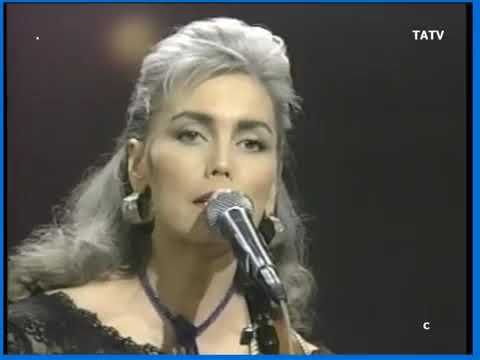
“Two More Bottles of Wine” sounds like motion, sparkle, and survival on the surface, but underneath it is one of Emmylou Harris’ slyest heartbreak performances—a song where the smile comes first and the loneliness catches up a second later.
There is something wonderfully deceptive about “Two More Bottles of Wine.” It moves so easily, with such bright rhythm and such apparent confidence, that it is tempting to hear it as a carefree country hit from 1978 and leave it there. After all, Emmylou Harris recorded it for Quarter Moon in a Ten Cent Town, released it as the album’s first single in April 1978, and took it all the way to No. 1 on the U.S. country chart that June. The album itself climbed to No. 3 on Billboard’s country albums chart. On paper, that looks like a triumphant chapter, and in commercial terms it certainly was.
But the song’s real brilliance lies in how little it behaves like a simple victory lap. What sounds breezy at first is not breezy at all. That is the secret sitting right in the middle of it. “Two More Bottles of Wine” is built on a narrator who has followed love westward, far from home, only to be abandoned there—“sweeping out a warehouse in West L.A.” and trying to laugh off the wreckage with that famously casual refrain. The title sounds easygoing. The groove sounds liberated. Yet the life inside the lyric is unsettled, makeshift, and wounded. The singer is not celebrating freedom. She is improvising her way through disappointment.
That is why the song still feels so sharp. It understands something country music has always known, but not every listener catches on the first spin: resilience can sound cheerful when it has no other choice. The line about “two more bottles of wine” is not really the language of ease. It is the language of getting through the night. The song does not collapse into self-pity, and that is exactly why it hurts. It keeps moving. It keeps smiling. It keeps acting as though the next day can be managed somehow. Beneath that forward motion is a person doing emotional arithmetic with whatever scraps are left.
And Emmylou Harris was almost uniquely equipped to bring out that tension. One of her greatest gifts was that she could sing pain without turning it theatrical. She did not need to underline sorrow in red ink. She could let the arrangement run bright while allowing the emotional weather underneath to darken quietly. On “Two More Bottles of Wine,” that gift is everywhere. Her voice does not plead. It does not brood. It stays light on its feet, which makes the song’s loneliness even more revealing. A heavier performance might have made the heartbreak obvious. Emmylou makes it sneak up on you.
That contrast was already there in the song itself, of course. Delbert McClinton wrote it and first recorded it for his 1975 album Victim of Life’s Circumstances. Harris did not invent the song’s emotional premise, but she sharpened its paradox beautifully. She took a lyric about displacement, abandonment, and low-rent survival and framed it as a hit that practically bounces. That is not a contradiction by accident. It is the whole achievement.
It also helps to remember where the song sits in her larger story. By the time Quarter Moon in a Ten Cent Town arrived, Emmylou had already established herself as one of the most discerning voices in country and roots music, and the album around “Two More Bottles of Wine” was full of material that balanced polish with ache. The record included songs that others would later take to No. 1, like “Leaving Louisiana in the Broad Daylight” and “I Ain’t Living Long Like This,” which tells you something about the emotional and musical caliber of the project. Critics looking back have heard in it a “breezy ache,” and that phrase fits “Two More Bottles of Wine” almost perfectly. It rocks, yes—but it rocks with a bruise.
What I think gives the song its lasting power is that it never announces its sadness in the usual way. It does something more truthful than that. In real life, people often sound most casual when they are closest to unraveling. They joke. They shrug. They keep the motor running. They say they are fine with one more drink, one more shift, one more night, one more mile. “Two More Bottles of Wine” lives in that exact emotional territory. It is not carefree at all. It is coping set to rhythm.
And that is why the record endures as more than a great hit. It captures the strange dignity of carrying on when carrying on is all that remains. Emmylou Harris sings it with enough sparkle to make you move and enough understanding to make the lyric stay with you afterward. The first impression is freedom. The deeper truth is damage. Somewhere between those two lies the song’s greatness.
So yes, what sounded carefree in 1978 was not carefree at all. It was a woman left far from where she meant to be, dressing heartache in momentum and making survival sound almost jaunty. “Two More Bottles of Wine” proves that some of the saddest songs do not arrive in tears. Sometimes they arrive smiling, and that is exactly what makes them unforgettable.
