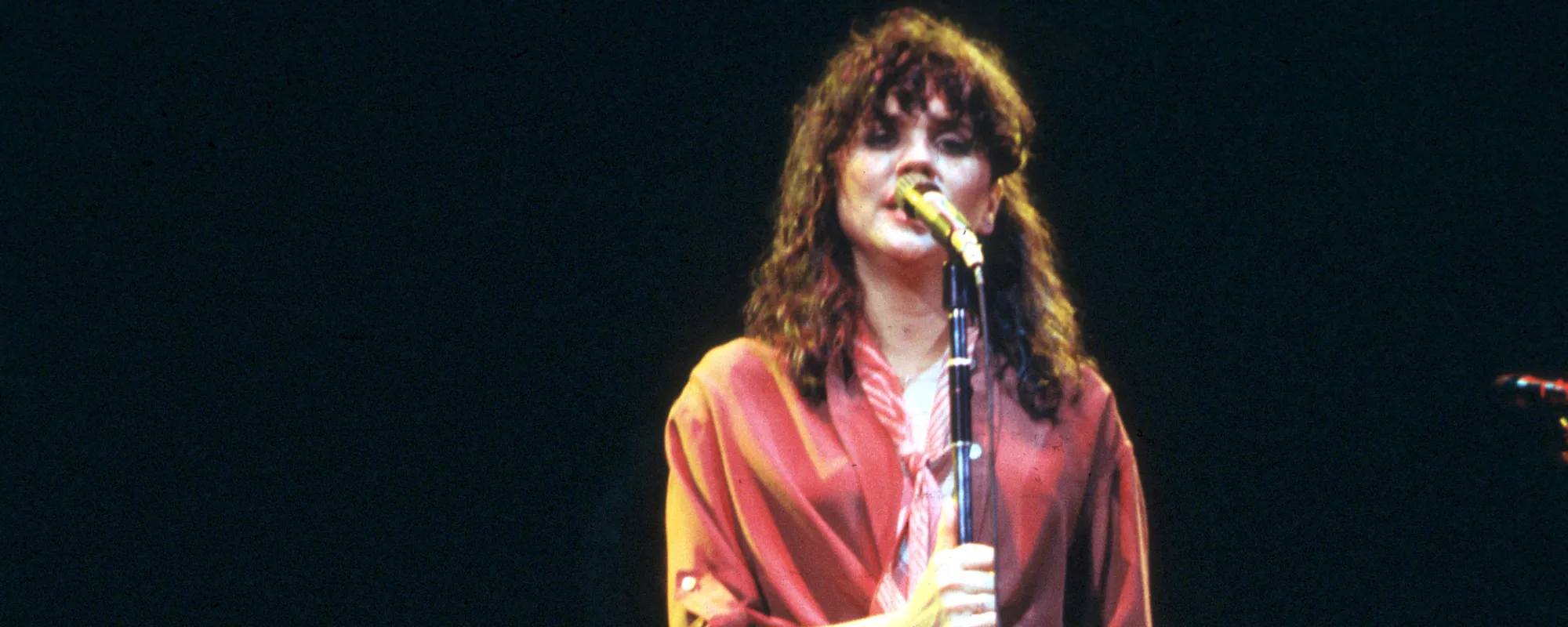
On Don’t Cry Now, Linda Ronstadt turns “Love Has No Pride” into something almost unbearably human: a song about surrender that refuses to raise its voice, and hurts more because it doesn’t.
When Linda Ronstadt recorded “Love Has No Pride” for her 1973 album Don’t Cry Now, she was not yet at the commercial summit that would arrive soon after. That timing matters. The performance belongs to a very particular moment in her career: the years when her gifts were already unmistakable, but the full scale of her fame had not yet fixed her image in the public mind. On this track, taken from an album released a year before Heart Like a Wheel changed everything, Ronstadt sounds less like a star being confirmed than an artist discovering just how much emotional weight her voice can carry without display.
“Love Has No Pride” was written by Libby Titus and Eric Kaz, and it had already found life before Ronstadt recorded it. But her version on Don’t Cry Now has a particular stillness that makes the song feel newly exposed. The lyric is built around humiliation, longing, and the stubborn refusal of feeling to obey common sense. It is about returning, or wanting to return, to something that has already cost too much. Many singers can deliver the wound in a song like that. Ronstadt does something more difficult. She delivers the self-knowledge inside the wound. She does not sing as though the narrator is blind to her own compromise. She sings as though she sees it clearly and walks toward it anyway.
That is one reason this recording remains so striking. There is no need for theatrical phrasing, no need to strain for impact. Ronstadt’s gift here lies in control, in the way she lets the melody hold the emotion rather than trying to force it outward. Her voice is clear, centered, and deeply musical, but beneath that poise there is an ache she never underlines too heavily. The result is not coldness. It is dignity under pressure. The song becomes less a plea than a confession overheard in a quiet room, the kind that lands harder because it sounds so composed.
Don’t Cry Now itself often lives in the shadow of the records that followed, which is understandable but also a little unfair. It arrived during a fertile period in Southern California rock and country-rock, when singers were drawing from folk, pop, honky-tonk, and singer-songwriter intimacy all at once. Ronstadt fit naturally within that world, yet she was never merely a stylist passing through fashionable sounds. What made her different was her ability to inhabit songs written by others so completely that they seemed to reveal something essential about her, even when they were not autobiographical statements. “Love Has No Pride” is one of the clearest examples. She sings it as if she has found the exact emotional temperature the song requires and refuses to disturb it.
There is also something revealing about where the performance sits in her larger catalog. Later, people would rightly celebrate Ronstadt for the brilliance of her range, her command, and the sweep of her repertoire across rock, country, pop standards, and beyond. But this earlier recording reminds you that one of her finest qualities was restraint. She knew how to resist the obvious climax. She understood that pain in music is not always most convincing when it arrives in a dramatic burst. Sometimes it comes through a voice that stays steady while the words grow more difficult. That is the tension that gives this track its staying power. The singer sounds in command, while the heart of the song is anything but.
It is also an overlooked performance because it does not advertise itself as a centerpiece. It slips into the album with the modest confidence of a song that does not need to compete for attention. Yet that modesty is part of its power. Some recordings become famous because they arrive with a grand gesture or a defining hook. “Love Has No Pride” works differently. It deepens with time. The more closely you listen, the more you hear how carefully Ronstadt shapes the emotional space around each line. She leaves room for regret, for pride already broken, for the embarrassing persistence of hope. Nothing feels rushed. Nothing feels decorative. The song breathes.
That breathing room matters because the lyric could easily tip into melodrama in less sensitive hands. Ronstadt keeps it grounded. She trusts the plain force of the words and the contour of the melody. In doing so, she reveals something central not only about this song, but about her art in general: she was one of the great interpreters of emotional contradiction. She could sound strong and wounded in the same phrase, self-possessed and exposed at once. On Don’t Cry Now, before the biggest albums fixed her place in popular memory, that ability was already fully there.
So when people return to Linda Ronstadt, they often begin with the obvious landmarks, and with good reason. But “Love Has No Pride” deserves a place much closer to the center of the story. It shows her not at her loudest or most triumphant, but at her most perceptive. The performance understands that some of the saddest songs are not about collapse. They are about composure held together just long enough to tell the truth. More than fifty years later, that is what makes this recording linger. It does not chase after greatness. It simply stands there, calm and exposed, and lets you hear how costly love can sound when the pride is already gone.
