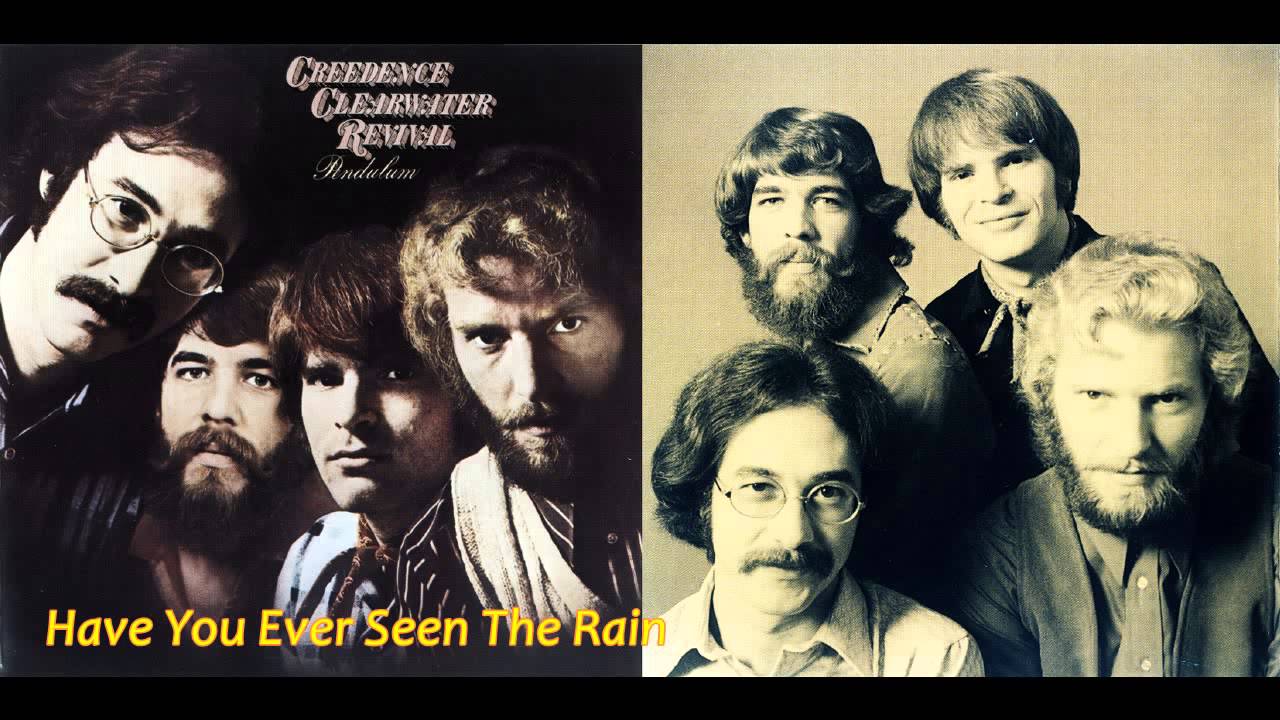
On Pendulum, Born to Move catches Creedence Clearwater Revival in a rare act of expansion, as John Fogerty opens the band’s lean attack to the richer pull of organ and sax.
Released on Creedence Clearwater Revival’s 1970 album Pendulum, Born to Move sits in a fascinating place within the band’s catalog. By then, CCR had already built one of the most recognizable sounds in American rock: compact, driving, swampy, and direct. They were masters of saying a great deal with very little. But Pendulum, the group’s sixth and final studio album with the original four-man lineup, nudged that sound outward. Under John Fogerty’s direction as songwriter, singer, and producer, the record made room for richer textures, and Born to Move is one of the clearest signs of that shift. The song still runs on the same tough rhythmic confidence that powered the band’s best work, yet the added organ and saxophone change the atmosphere immediately. The groove is not abandoned. It is widened.
That matters because Creedence Clearwater Revival had never depended on abundance. Their classic records often felt almost severe in their focus: guitar, rhythm section, a hard-edged vocal, and songs built to move fast and leave a mark. Even when they reached into older American styles, there was little excess in the presentation. Pendulum is different. It does not reject the band’s identity, but it shows John Fogerty thinking more like a studio architect, shaping color as carefully as momentum. On Born to Move, the organ does more than fill space. It gives the track a deeper floor, a rolling undercurrent that makes the song feel less like a straight-ahead bar-band blast and more like a performance unfolding in a larger room. The saxophone adds another layer of motion, a flash of rhythm-and-blues grain that pushes the song sideways into a fuller, more urban heat.
What makes the track so compelling is that these additions never feel decorative. Born to Move is not trying to become ornate, and it is not chasing polish for its own sake. The song still has the restless, muscular pulse that the title promises. It carries urgency in its bones. But the arrangement tells a subtler story. Instead of relying only on the attack of guitars, Fogerty lets the record breathe through a broader palette. The result is a song with more interior movement. You hear not just a band charging forward, but a producer listening for new angles inside a sound that could easily have become formula by 1970. That is one of the quiet strengths of Pendulum as a whole: it captures a hugely successful group refusing to stand still inside its own methods.
In that sense, Born to Move feels like studio exploration without losing physical force. The organ gives the rhythm a rounder body, while the sax introduces a different kind of edge, less jagged than a lead guitar but no less insistent. Those choices alter how the song lands emotionally. The earlier CCR records often hit with the force of something carved in wood or cut in steel. This one has more air moving through it. There is still grit, but also more color, more atmosphere, more sense that the arrangement itself is part of the drama. For a band so often celebrated for simplicity, that widening of the frame is revealing. It suggests that John Fogerty was not only writing strong songs; he was also testing how far the group’s language could stretch before it stopped sounding like Creedence.
Pendulum carries special weight for another reason. It would be the last studio album made by the classic lineup before Tom Fogerty left the group. That historical fact gives the record an added sense of transition, even if the music itself never announces it in dramatic terms. There is no theatrical farewell in Born to Move. What you hear instead is a band still capable of hard, committed playing, while the sonic world around that playing becomes a little more layered, a little more searching. The song does not sound nostalgic, and it does not sound uncertain. It sounds curious. For a group already associated with such a firm identity, curiosity may have been one of the boldest moves available.
That is why Born to Move rewards close listening today. It may not be the first song named when people talk about Creedence Clearwater Revival, but it reveals something important about the band’s late-period imagination. It shows John Fogerty resisting the trap of repetition and using the studio to open up the music’s emotional and physical dimensions. The organ and sax are not there to modernize CCR or to make the band fashionable. They are there because the song can carry them, because the rhythm can absorb them, and because Fogerty understood that even a group built on economy sometimes needs to hear itself in a larger space.
There is a particular pleasure in hearing that moment happen. Born to Move still has dirt under its nails, but it also has a new sheen of arrangement, a new sense of depth. It sounds like a band stepping a little farther into the studio light and discovering that its silhouette can hold more detail than anyone first assumed. On Pendulum, that discovery gives the song its lasting fascination. It is not merely a strong album cut. It is the sound of Creedence Clearwater Revival opening a door inside their own music and letting the room grow wider.
