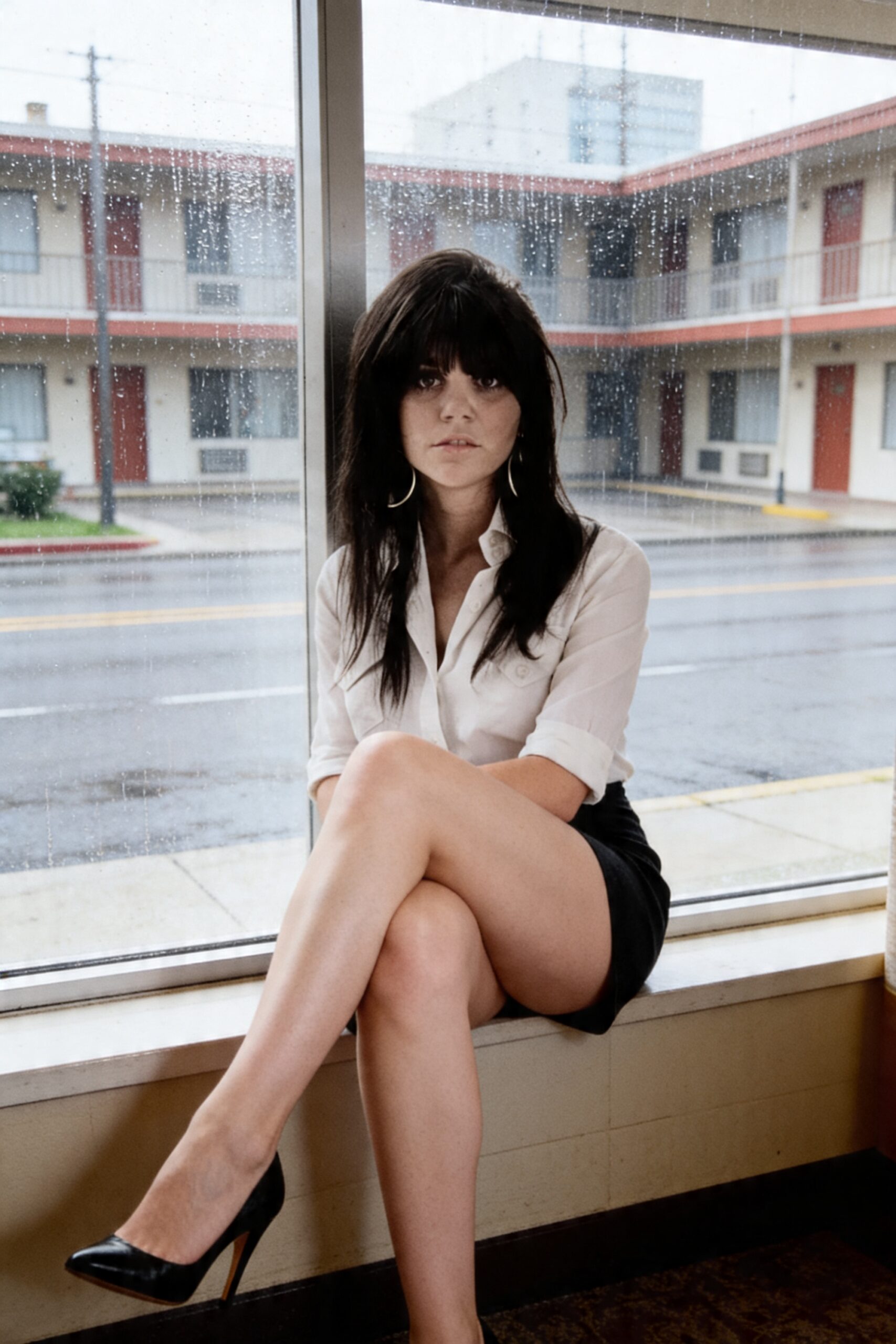
On Heart Like a Wheel, Linda Ronstadt found one of her greatest displays of strength by singing James Taylor’s lullaby as if power could be measured in restraint.
The version of You Can Close Your Eyes that closes Linda Ronstadt’s 1974 album Heart Like a Wheel is not the loudest performance on the record, nor the one most often placed at the center of her commercial breakthrough. Yet it may be one of the clearest windows into the discipline behind her gift. Written by James Taylor and first released by him on 1971’s Mud Slide Slim and the Blue Horizon, the song already carried the feel of a private benediction: plainspoken, melodic, and built around the kind of farewell that sounds gentle until you notice how much it is holding back.
Ronstadt’s interpretation arrives at the end of an album that helped reshape her career. Produced by Peter Asher and released by Capitol in 1974, Heart Like a Wheel brought together strands of country, folk, rock, pop, and old American balladry without making them feel like separate costumes. It held the force of You’re No Good, the country ache of I Can’t Help It If I’m Still in Love with You, the road-weary tenderness of Willin’, and the grave emotional patience of the title track. By the time You Can Close Your Eyes appears, the album has already traveled through desire, regret, memory, and endurance. Ronstadt does not end it with a flourish. She lets it exhale.
That choice is central to the performance. Ronstadt was already becoming known for the sheer reach of her voice, for the way she could lift a chorus until it seemed to widen the room around her. But on You Can Close Your Eyes, she proves something subtler: the ability to make a quiet line feel fully supported, fully alive, and emotionally exact. The song asks for steadiness, not display. It depends on trust between singer and melody. Push too hard, and it becomes too grand for its own words. Hold back too much, and it drifts away. Ronstadt finds the narrow path between them.
Her vocal mastery here is a matter of small decisions. She does not treat Taylor’s melody as a platform for embellishment; she treats it like a fragile object being passed from hand to hand. The phrasing is intimate but never casual. The breath is controlled so that the quieter notes do not collapse. Her tone has warmth, but it is not coated in sweetness. There is a clear line through every phrase, a sense that she knows exactly where the song must land before the listener realizes it. Even when the performance feels soft, it is not weak. It is soft because she has command enough to make softness carry.
Taylor’s own version has the natural conversational ease of a songwriter singing from inside his own language. Ronstadt’s version changes the emotional perspective without violating the song. In her hands, You Can Close Your Eyes becomes less like a campfire farewell and more like a promise made in the quiet after everything has been said. She understands that the lyric does not need theatrical sorrow. Its ache is built into its simplicity. The words are almost modest, but the situation beneath them is larger than they admit: someone is offering comfort in a moment that still contains separation.
That is why the track feels so important within Heart Like a Wheel. The album is often remembered as the moment Ronstadt’s interpretive range became undeniable, but this closing song shows that range at its most inward. She could inhabit material by writers as different as Hank Williams, Lowell George, Anna McGarrigle, and James Taylor, not by erasing their identities, but by listening deeply enough to find the emotional temperature each song required. With You Can Close Your Eyes, the temperature is low and glowing. Nothing is forced. Nothing is announced. The power lies in the feeling that she could sing more, but chooses not to.
There is also something meaningful in the way the song closes the record. After the album’s shifts of style and mood, Ronstadt leaves the listener not with triumph, but with repose. It is a musical goodnight, yet not a simple one. The final impression is of a voice standing close enough to be believed, but distant enough to leave mystery intact. Many singers can make a quiet song pretty. Far fewer can make quietness feel inevitable. Ronstadt does that here. She turns restraint into drama, control into tenderness, and a James Taylor song into one of the most revealing moments on her most important early album.
Listening now, the performance still feels almost daring in its refusal to plead for attention. It asks the listener to come nearer. It reminds us that vocal greatness is not only measured in range, force, or dramatic climax. Sometimes it lives in the steadiness of a held note, the patience before a phrase resolves, the exact shade of a vowel, the silence a singer permits around a line. On You Can Close Your Eyes, Linda Ronstadt gives the song back to us as something both familiar and newly vulnerable: a lullaby, a farewell, and a lesson in how much a great voice can say when it chooses to speak quietly.
