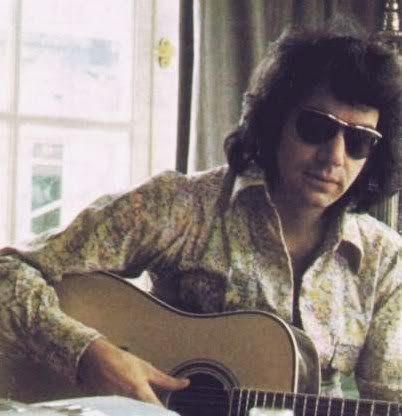
On “Melody Road”, Neil Diamond sounded less like a man chasing one more hit than a songwriter taking stock of the long road that had carried him home.
Released in 2014, “Melody Road” is the title track from Neil Diamond’s album Melody Road, a late-career collection that now carries a special weight because it stands as his final studio album of original material. The record arrived through Capitol Records and was produced by Don Was and Jacknife Lee, two figures capable of respecting Diamond’s history without trapping him inside it. At the time, the album did not announce itself as a farewell. It came forward gently, with the confidence of an artist who had already crossed almost every kind of musical terrain: Brill Building pop, folk-rock intimacy, arena-sized uplift, film songs, torch ballads, and the searching singer-songwriter language that had always run beneath his most public anthems.
The title itself, “Melody Road”, feels almost too fitting in hindsight. Diamond had spent decades turning motion into music. His catalog is full of travel, longing, return, escape, and belonging. He could write songs that sounded like they were meant for a stadium and songs that felt as if they had been whispered to one person in the dark. By 2014, his voice had deepened into something weathered but still steady, and that change mattered. He was no longer singing from the point of view of youthful urgency. He was singing from a place where memory had become part of the rhythm.
As an opening statement, “Melody Road” does not try to overwhelm the listener. It does not arrive dressed in spectacle. Its strength lies in its plainspoken grace: the sense that the road is not merely a route from one place to another, but a way of understanding a life spent following songs wherever they led. Diamond’s gift was never only the size of his choruses. It was the directness of his emotional aim. He wrote in broad strokes, yes, but the best of his work always carried a private pulse inside the public gesture. That quality is especially important here, because Melody Road is not the sound of an artist trying to compete with the noise of the moment. It is the sound of someone clearing space around the song itself.
The production helps that feeling. Don Was, known for his deep sensitivity to roots, soul, and classic American songwriting, and Jacknife Lee, associated with more modern textures, give the album a polished but uncluttered setting. The title track is allowed to breathe. The arrangement does not bury Diamond under fashionable tricks. Instead, it frames him as a writer still interested in melody as a living path: something simple enough to follow, but wide enough to hold regret, gratitude, humor, romance, and faith in the next mile.
There is also a quiet courage in the album’s late-career posture. Many artists with a history as large as Diamond’s can become curators of their own legend, returning endlessly to the songs audiences already know. Diamond certainly had more than enough beloved material to do that. But Melody Road offered new songs instead, and that choice matters. It showed that he still thought of himself first as a songwriter. Not only a performer of memories. Not only the voice behind “Sweet Caroline”, “I Am… I Said”, “Cracklin’ Rosie”, or “America”. He was still walking toward an unwritten verse.
In that sense, “Melody Road” becomes more than an album opener or a title track. It becomes a kind of self-portrait without needing to explain itself. The phrase suggests motion, but not restlessness. It suggests destination, but not finality. Listening now, after Diamond’s later retirement from touring following his Parkinson’s disease diagnosis, the song naturally gathers a deeper tenderness. That later knowledge should not turn the music into a monument of sadness, because the track itself is not built that way. It is warmer, more open, more accepting. It sounds like a man who understands that a song can be both map and companion.
What makes late-period recordings so moving is often not perfection, but perspective. Diamond’s voice on “Melody Road” carries the grain of years, and that grain gives the song its humanity. It reminds us that melody is not only something a musician writes. It is something a life accumulates. Every stage, every studio, every audience, every lonely hotel room, every comeback, every familiar chorus sung back by thousands of strangers — all of it becomes part of the road.
That is why Neil Diamond’s “Melody Road” deserves to be heard not simply as another track from a late album, but as a graceful closing chapter in his original studio work. It does not sound like a door slamming shut. It sounds like a road continuing beyond the frame, with the singer still listening for the next line, the next chord, the next small spark of feeling. For an artist whose career was built on the belief that a melody could carry people through distance, loneliness, celebration, and return, there could hardly be a more fitting title to leave glowing in the rearview mirror.
