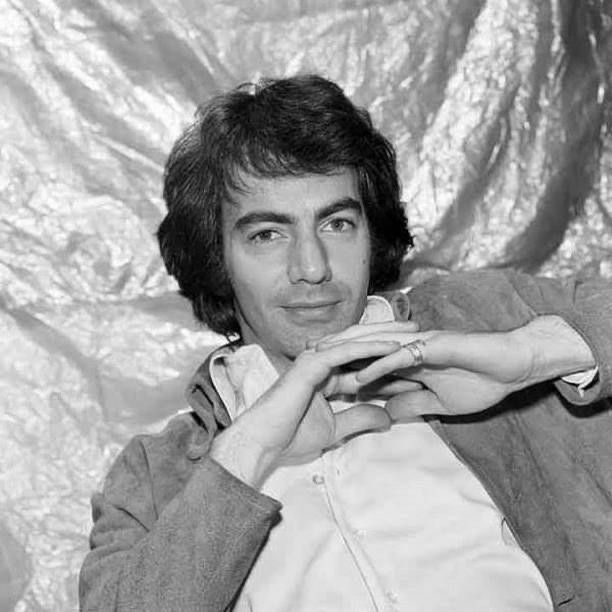
On Star Flight, Neil Diamond carried the bright polish of his 1982 Heartlight era into a deeper kind of motion, where escape felt less like fantasy than emotional survival.
Neil Diamond released Heartlight in 1982, and the album is still most often remembered for its title track, a major early-’80s recording written with Burt Bacharach and Carole Bayer Sager and famously inspired by the feeling surrounding E.T. the Extra-Terrestrial. But tucked inside that same album is Star Flight, a track that deserves to be heard not as a footnote, but as part of the record’s wider emotional weather. It belongs to the same skyward, searching world as the title song, yet it carries a different kind of charge: less public anthem, more private propulsion.
By 1982, Diamond was no longer simply the lean, intense songwriter who had cut through the late 1960s with songs like Solitary Man and Cherry, Cherry. He had become a full-scale adult-pop presence, a performer whose voice could fill arenas without losing its grain of loneliness. After the success of The Jazz Singer soundtrack at the start of the decade, his music entered the 1980s with a new sheen around it: broader arrangements, smoother surfaces, more cinematic reach. Heartlight sits right in that transition. It is not trying to be raw. It is trying to glow.
That glow is important when listening to Star Flight. The track comes from an era when pop production was changing quickly. Keyboards, polished rhythm sections, and spacious studio textures were becoming part of the emotional language of mainstream records. Some artists were swallowed by that gloss; Diamond, at his best, used it as a frame for something older and more stubborn in his voice. He could sing inside an 80s arrangement and still sound like a man standing alone with a confession. That tension gives the Heartlight album much of its personality. The sound may look upward, but the voice keeps pulling the listener back to earth.
As an album track, Star Flight does not carry the same public burden as Heartlight. It was not the song that gave the record its immediate identity, and that may be part of why it has room to breathe. Album tracks often reveal what the singles cannot: the atmosphere around a project, the choices an artist was making when the spotlight was not fixed on one obvious chorus. In the case of Star Flight, the very title feels connected to the record’s larger sense of lift, distance, and longing. It suggests movement away from the ordinary, but not necessarily escape from feeling. In Diamond’s world, flight is rarely just flight. It is desire in motion.
The early 1980s were full of songs that reached for the heavens, sometimes literally. Space imagery, glowing lights, electronic textures, and cinematic emotion all moved through pop culture at once. Heartlight arrived in the same year that movie audiences embraced a tender visitor from another world, and while Star Flight should not be reduced to that backdrop, it benefits from being heard within it. The album seems fascinated by signals: the signals people send out when they want to be found, forgiven, remembered, or loved. Diamond had always understood that kind of yearning. What changed in 1982 was the sonic costume around it.
There is something revealing about hearing Diamond in this polished environment. His voice was built for directness, but the production style of the period often favored smooth edges and emotional distance. The most interesting moments happen when those two instincts meet. The arrangement may suggest altitude and forward motion, but Diamond’s phrasing keeps the feeling human. He does not need to over-explain a song’s emotional center. He can lean into a phrase, darken a vowel, or push a line forward with that familiar mixture of command and ache. The result is a track that feels connected to the 80s without being trapped by them.
For listeners who come to Star Flight after knowing only the title song, the track can feel like stepping into a less crowded room inside the same house. The bright public memory of Heartlight may dominate the doorway, but beyond it are smaller corridors of mood: restlessness, romantic idealism, a need to rise above the noise. Diamond’s greatest gift was often his ability to make large feelings sound personal. He wrote and sang as if the big gesture and the lonely room were never far apart. That is why even his most expansive recordings can still feel intimate when heard closely.
The album also marks a particular moment in Diamond’s career when he was balancing durability with reinvention. He did not abandon the emotional architecture that had made him recognizable; he placed it inside the polished language of the decade. That choice can be heard throughout Heartlight, and Star Flight is part of that conversation. It reminds us that an artist’s catalog is not made only of the famous titles. Sometimes a deeper understanding comes from the surrounding tracks, the ones that reveal the color of the era and the emotional direction of the sessions.
Heard now, Star Flight feels like a small but telling window into the 1982 Heartlight world: a record lit by optimism, studio brightness, and a fascination with reaching beyond the visible. It may not be the track casual fans name first, but it helps explain the album’s atmosphere. It shows Diamond looking upward without letting go of the ache in his voice. And that combination—the lift of the arrangement, the gravity of the singer—is where the song quietly finds its place.
