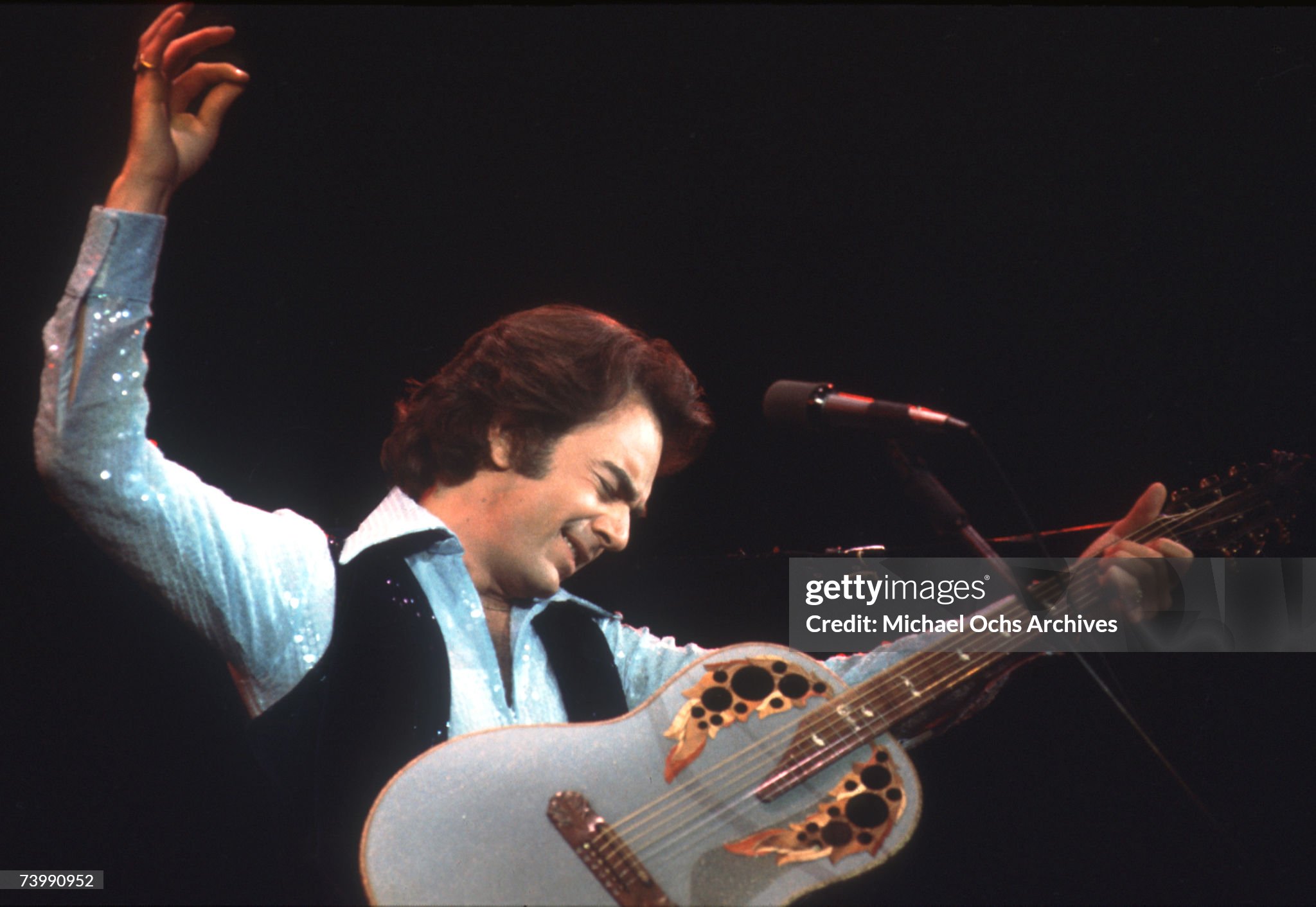
With “Song Sung Blue”, Neil Diamond made sorrow sound companionable rather than crushing, and that soft, steady feeling carried the Moods era to one of its most graceful chart victories.
There are No. 1 hits that arrive like a thunderclap, and then there are songs like “Song Sung Blue”, which seem to drift in almost modestly, as if they are asking for no more than a quiet place in the room. Yet in 1972, that unassuming little record did something remarkable: it climbed all the way to No. 1 on the Billboard Hot 100, giving Neil Diamond one of the defining chart milestones of his career. It also reached No. 1 on Billboard’s Easy Listening chart, confirming that its reach was not built on noise or novelty, but on recognition. People heard themselves in it.
Released from the album Moods, “Song Sung Blue” became one of those songs that proved how powerful restraint could be. This was not a giant dramatic production, not a sweeping declaration in the mold of some of the era’s biggest radio events. Instead, it moved with a simple melody, a conversational lyric, and a kind of emotional honesty that felt almost disarming. In a musical landscape that could often reward boldness, Neil Diamond won by sounding intimate.
That is part of what made this chart triumph so memorable. By the time “Song Sung Blue” arrived, Diamond was already a major name. “Sweet Caroline” had become a cultural fixture. “Cracklin’ Rosie” had already given him a previous Hot 100 chart-topper. But “Song Sung Blue” was different in spirit. Where some hits push outward, this one leaned inward. It did not ask the listener to be dazzled. It asked the listener to exhale.
The song’s meaning is one reason it has endured. At its heart, “Song Sung Blue” is about living with sadness without surrendering to it. That is a subtle distinction, and Diamond handled it beautifully. He did not write the blues as a collapse. He wrote them as something nearly universal, something people carry, sing through, and somehow survive. The song offers consolation without preaching. It recognizes disappointment, loneliness, and those ordinary gray stretches of life, but it never loses its balance. That emotional poise is one of the great strengths of the record.
There is also an intriguing story behind its construction. Neil Diamond acknowledged that the melody drew inspiration from the second movement of Mozart’s Piano Concerto No. 21, often popularly associated with the phrase Elvira Madigan. That may sound like a lofty source for such a plainspoken pop single, but perhaps that contrast is exactly why the song works. Diamond took something elegant and classical, filtered it through his own gift for direct communication, and turned it into a hit that felt accessible to everyday listeners. Nothing about the finished record feels academic. It feels lived in.
The production, handled with a light touch, deserves credit as well. Rather than overstate the arrangement, the recording gives the melody room to breathe. That matters because “Song Sung Blue” lives or dies by tone. If it had been over-sung or over-built, it might have lost its charm. Instead, Diamond delivered it with a voice that carried both weariness and warmth. He sounded like someone who understood the ache he was describing, but also understood that the morning still comes.
For the album Moods, the success of “Song Sung Blue” was enormously important. It gave that period of Diamond’s career a defining mainstream peak and helped establish the album as more than just a vehicle around a single hit. The title Moods now feels especially fitting, because “Song Sung Blue” captured a very specific emotional register: not heartbreak at its most theatrical, but melancholy in its everyday clothes. That may be why the song connected so widely in 1972. It did not speak to an extreme moment. It spoke to the quieter emotional weather people know well.
Its chart run also said something broader about popular music at the time. The early 1970s were rich with singer-songwriters, confession, softness, and a new willingness to let vulnerability sit at the center of a record. In that sense, “Song Sung Blue” fit the era perfectly. But even within that context, it still stood apart because of how little it seemed to demand. It just arrived with a tune, a truth, and a gentle hand on the shoulder. That was enough to make it a million-selling single and one of Diamond’s signature recordings.
Years later, the song still carries that same peculiar strength. It does not overwhelm the listener. It lingers. And perhaps that is the real story of its success. The triumph of “Song Sung Blue” was never only that it hit No. 1 in 1972. It was that such a mild, almost conversational song could rise to the top of the charts and stay in memory for decades. In a catalog filled with big choruses and bold emotional gestures, this was one of Neil Diamond’s quietest victories—and one of his wisest.
Sometimes the songs that last are not the ones that shout the loudest. Sometimes they are the ones that understand how people really move through disappointment: softly, stubbornly, and one familiar melody at a time. That is why “Song Sung Blue” still matters. It turned a passing mood into a shared experience, and for one memorable stretch in 1972, that gentle truth was enough to lead the nation’s charts.
